

A Practical Guide to 3D Printed Home Decor
Imagine filling your home with decor made just for you, each piece a perfect reflection of your style. That's the power of 3D printed home decor, a fusion of technology and artistry that makes bespoke design accessible. This guide will show you how to use it to turn your unique vision into a tangible reality.
The New Era of Personalized Interior Design
Let's be honest, mass-produced decor can feel impersonal. The future of interior design is moving towards personal, sustainable, and creative solutions driven by 3D printing. This isn't just a trend; it's a practical way to build a space that truly tells your story, one object at a time.
This technology reimagines how decor is made. Instead of items sitting in a warehouse, each piece is created on-demand. That means less waste, more purpose, and a deeper connection to the objects in your home.
From Digital Idea to Physical Art
The process begins with a digital file—a detailed blueprint of an idea. A 3D printer then builds the object layer by delicate layer, often using eco-friendly materials. The result is more than just a decoration; it’s a piece of art born from a sustainable process. Trailblazers like Griseo Interior are leading the charge, crafting elegant, minimalist decor that proves this method can deliver incredible quality.
At its heart, 3D printed decor is about empowerment. It gives you the tools to shape your environment with pieces that are not just beautiful, but also sustainable and deeply personal.
The journey from a simple idea to a finished piece is surprisingly straightforward. This diagram shows just how it works.
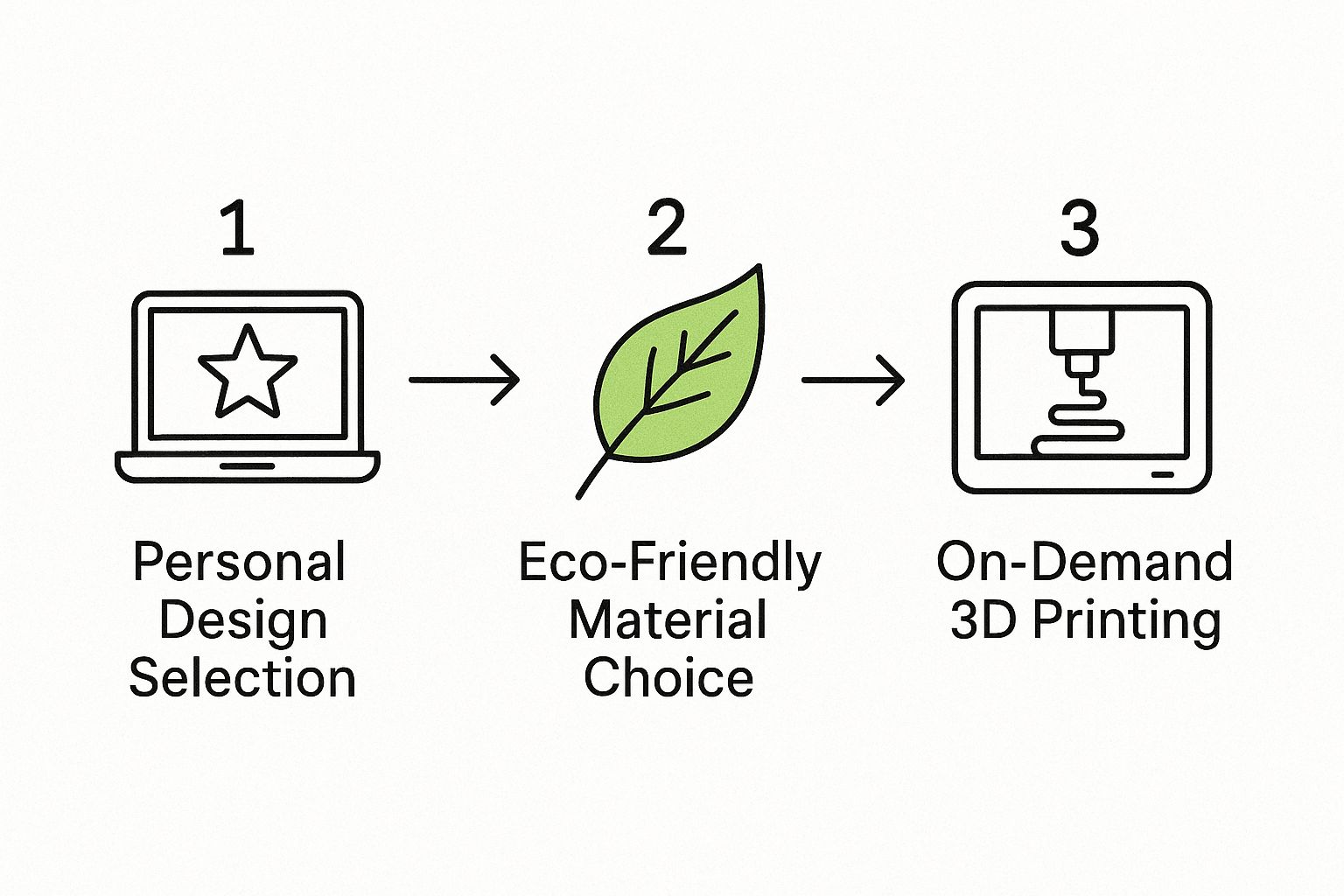
This elegant process is more than just a neat idea—it's making waves economically. The global market for 3D printed houses and decor was valued at around US$35 million in 2024. It's expected to rocket to roughly US$1.44 billion by 2031, growing at an astonishing 70.0% annually. If you're curious, you can learn more about this incredible market growth from recent industry findings.
How Digital Designs Become Physical Decor
Every piece of 3D printed home decor starts as a digital file. This blueprint dictates every curve and line of the final object. So, how do you turn this digital dream into a tangible object you can place on your shelf?
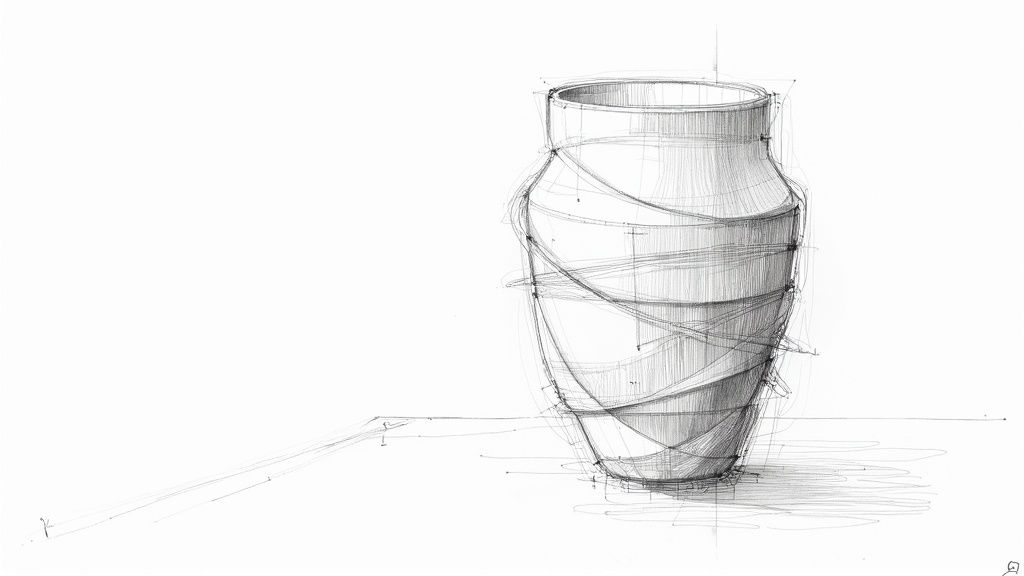
Think of a 3D printer as a precise sculptor. Instead of carving away material, it builds an object from the ground up, one thin layer at a time. This method, called additive manufacturing, adds material only where needed, resulting in almost zero waste.
First, a fine layer of material traces the design's base. Another layer follows, fusing to the one below. This process repeats until the complete form—whether a sleek vase or intricate wall art—emerges.
The Materials That Shape Your Style
The choice of material gives each piece its unique character, texture, and feel. To make an informed decision, it helps to know your options. Understanding the materials allows you to select decor that aligns with both your aesthetic and your values.
Here are some of the most common sustainable choices:
- Eco-Friendly Bioplastics (PLA): Made from renewable resources like corn starch, PLA is a durable and lightweight choice with a light environmental touch. Its smooth, matte finish is perfect for modern, minimalist designs.
- Elegant Resins: For objects requiring fine detail and a polished feel, resins are the solution. They produce stunning, high-resolution pieces that can be translucent or opaque, giving them a sophisticated quality similar to fine ceramic.
- Wood Composites: Blending recycled wood fibers with bioplastics, these materials create decor with the authentic look and feel of natural wood. Use them to bring warmth and organic texture into a room.
Actionable Tip: When choosing decor, consider the material's properties. Do you need something lightweight for a floating shelf? Choose PLA. Do you want a centerpiece with intricate detail? Resin is your best bet. Need to add natural warmth? Opt for a wood composite.
This insight turns you from a shopper into a conscious curator. You see not just the finished piece, but the thoughtful journey behind it. If you’re ready to see these materials in action, you can explore a curated collection of 3D printed sculptures to find a form and finish that speaks to you.
Why Choose 3D Printed Home Decor?
Beyond the innovative manufacturing process, what practical benefits does 3D printed home decor offer your home? It's about choosing objects with a purpose—pieces that bring a personal, sustainable, and creative energy into your life.
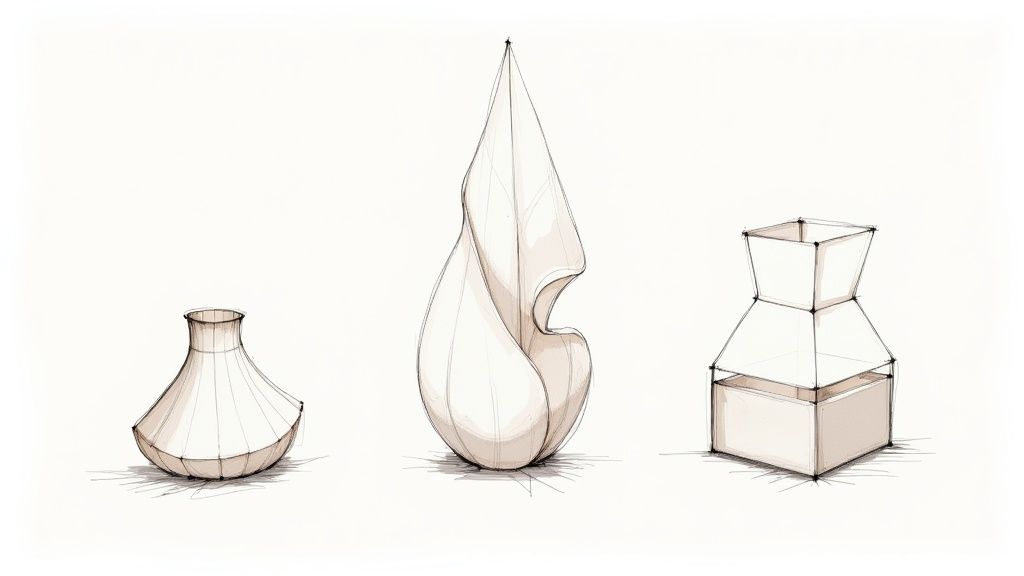
This desire for meaningful, personalized items is a huge part of why the 3D printing market, valued at USD 15.39 billion in 2024, is expected to soar to USD 35.79 billion by 2030. People are actively looking for unique lamps, vases, and wall art that reflect their personalities, and 3D printing is making that possible. You can dive deeper into this trend by checking out the latest 3D printing market analysis.
Unmatched Personalization and Freedom
Here is where 3D printing gives you direct control. Instead of searching for something that almost works, you can create decor that fits your vision perfectly.
Have you ever found a vase you love, but it's the wrong color for your living room? Or maybe it’s an inch too short for that bookshelf? With 3D printing, you can solve these problems directly.
- Tailor the Size: Measure your space—like a narrow console table or a wide mantel—and order an object with the exact dimensions you need.
- Select the Perfect Color: Choose from a spectrum of colors to either complement your existing palette or create a bold accent.
- Create a Cohesive Look: Order a collection of items in the same material and color palette to unify the design of an entire room.
This level of control ensures every piece you bring home feels like it was made just for you. Because it was.
A Conscious Commitment to Sustainability
In a world focused on reducing waste, 3D printing offers a more responsible manufacturing model. Traditional methods often produce massive quantities of items, leading to unsold stock and waste.
3D printing operates on a simple, powerful principle: make what is needed. Each object is printed only after an order is placed. This eliminates inventory waste and lessens the environmental impact.
This mindful approach is enhanced by using sustainable materials. Here at Griseo Interior, we are committed to using bioplastics made from renewable resources like corn starch. The result is beautiful decor that is also kind to the earth—a choice you can feel good about.
To see the practical differences, compare this approach to traditional manufacturing.
3D Printed Decor vs Traditional Manufacturing
| Feature | 3D Printed Decor | Traditional Decor |
|---|---|---|
| Production Model | Made-to-order; zero inventory waste | Mass-produced in anticipation of demand |
| Customization | Highly flexible; adjust size, color, & form | Limited to available options |
| Material Usage | Additive process; uses only what's needed | Subtractive process; often creates scrap/waste |
| Design Complexity | Easily produces intricate, complex shapes | Limited by molds and tooling constraints |
| Environmental Impact | Lower footprint; supports eco-materials | Higher footprint from overproduction & transport |
Choosing 3D printed decor is a practical step toward a more intentional, less wasteful way of living.
Designs Beyond Imagination
Finally, this technology unlocks design possibilities once considered impossible. Traditional methods are often limited by the constraints of molds and machines, favoring simple shapes.
Because 3D printing builds objects one layer at a time, it can produce stunningly complex designs—think spiraling geometric patterns, ethereal latticework, or flowing organic shapes, all created with absolute precision. This allows designers to craft functional art that can turn any corner of your home into a beautiful conversation starter.
Practical Ways to Style Your Space
Once you've found objects you love, the next step is integrating them into your home. Styling 3D printed home decor is an opportunity to play with form, texture, and personal storytelling. Forget rigid rules; the goal is to find creative ways to make these unique pieces shine.
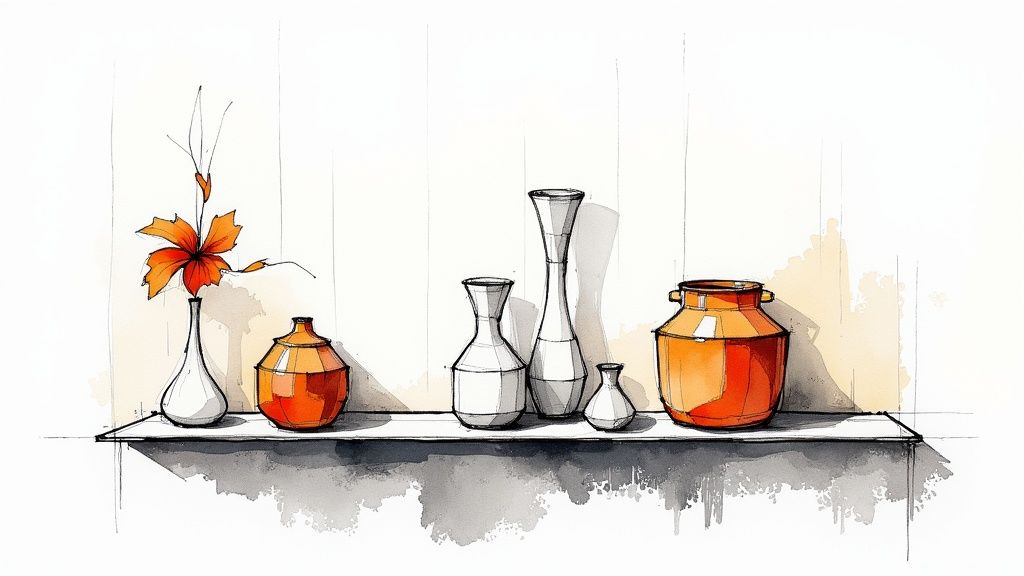
View each item as a tool for self-expression. Whether you're adding a final touch or building a look from scratch, these pieces offer incredible versatility. Here’s how to put them to work.
Create Stylish Vignettes
A vignette is a small, curated group of objects that tells a story. It's a powerful and simple way to create a focal point on a bookshelf, coffee table, or entryway console.
Here’s a simple formula to get started:
- Anchor with Height: Start with a taller piece, like a sleek 3D printed vase or sculpture, to draw the eye.
- Add a Horizontal Element: Place something lower and flatter next to it, like a stack of books or a decorative tray.
- Incorporate an Organic Touch: Finish with a natural element—a small plant, a piece of driftwood, or a few stems of dried flowers in your vase.
This "Rule of Three" creates a balanced and layered look. For example, pair a geometric vase with two art books and a tiny succulent for a simple but effective arrangement that makes any corner feel intentional.
Use Texture and Color to Make a Statement
3D printed pieces are brilliant for introducing new textures and pops of color. Their unique, layered finish adds a tactile quality that contrasts beautifully against smooth surfaces like wood or glass. This interplay between textures adds depth and warmth to your space.
Actionable Tip: To create a powerful focal point in a neutral room, place a single, vibrantly colored 3D printed object on a mantel or side table. This injects personality without overwhelming the space.
Use color to set a specific mood. A bright yellow vase can bring energy to a quiet corner, while a deep terracotta piece can add a grounding, serene feeling. Think of these objects as the final brushstrokes that complete your room’s color story.
Match Decor to Your Design Aesthetic
The beauty of 3D printed home decor is its versatility. To make it work with your existing style, simply choose shapes and forms that complement your aesthetic.
Here’s a quick guide for popular styles:
- For a Minimalist or Scandinavian Home: Choose pieces with clean lines and simple geometry. A vase with a stark, angular design will enhance a serene, clutter-free environment. A perfect example is the clean silhouette of Griseo Interior’s Prisma minimalist vase—it shows how simplicity can make a huge impact.
- For a Modern or Contemporary Space: Select bold, sculptural pieces. An intricate, organic form can act as functional art, becoming a conversation starter in your living room.
- For a Bohemian or Eclectic Vibe: Mix and match different shapes and textures. Pair an organically shaped planter with a structured geometric object to create a look that feels playful and personally collected.
Ultimately, styling is about experimentation. Move things around, try new combinations, and trust your intuition. These pieces are meant to be part of your story, so have fun bringing it to life.
Finding Quality and Sustainable Designs
The world of 3D printed home decor is expanding rapidly. With so many options, how do you choose pieces that are not just beautiful, but also well-made and sustainable? The key is to look beyond the object and evaluate the brand's philosophy and practices.
True quality is a combination of artistic vision, superior materials, and skilled craftsmanship. It’s what distinguishes a piece of curated art from a mass-produced item. A brand that cares isn't just selling a product; they are offering a piece of their creative spirit, designed to bring a specific feeling into your home.
This trend toward thoughtful creation is growing. The global market for 3D printing in construction—which includes decorative fixtures—was valued at USD 53.9 million in 2024 and is projected to skyrocket to USD 4.18 billion by 2030. This signals a strong consumer demand for innovative, well-made designs. You can find more details in these projections for 3D printing in construction.
What to Look for in a Brand
When choosing a brand, you are selecting a partner for your design journey. The best ones are transparent about their creation process and passionate about their materials, making it easier for you to invest with confidence.
Start by looking for a brand with a clear, defined identity. Do their collections feel cohesive and tell a consistent story? This is a great sign that the company values artistry as much as technology. A brand like Griseo Interior, for example, is rooted in Italian design heritage, blending timeless minimalism with modern production. This focus means every piece feels intentional.
Actionable Tip: Before buying, visit the brand's "About Us" or "Mission" page. A great brand does more than sell products; it offers curated decor that empowers you to express your style with purpose.
Your evaluation should also include sustainability. A brand’s commitment to the planet reflects its integrity and vision.
The Markers of a Sustainable Choice
A sustainable mindset should be integral to a brand's operations, not just a marketing buzzword. It's a holistic approach to creating with mindfulness.
Here are key things to look for:
- Eco-Conscious Materials: Prioritize brands that use renewable and non-toxic materials, like the plant-based bioplastics found in many of Griseo Interior’s pieces.
- On-Demand Production: Look for a made-to-order model. This eliminates overproduction and waste, meaning your piece was created specifically for you.
- Transparent Mission: A brand should be proud to share its values. Take a moment to read about a company’s principles, such as Griseo Interior’s mission, to understand the values you are supporting.
When you choose brands that champion these ideals, you are doing more than decorating. You are casting a vote for a more thoughtful and sustainable future.
It’s Time to Tell Your Story
Your home is your canvas, a space waiting to be filled with pieces that tell your unique story. Why settle for generic decor when you can choose items that are a true extension of who you are?
This is the opportunity 3D printed home decor provides: a way to blend deep personalization with a commitment to sustainable living.
Consider this your invitation to create a home that feels intentional, beautiful, and completely you. Each piece is a conscious choice—a vote for mindful consumption, a nod to your artistic flair, and a celebration of design freedom. The ability to shape a space that mirrors your personality and values is now at your fingertips.
Decorating is the art of storytelling. With 3D printing, you become the author, crafting a narrative that is authentic, sustainable, and entirely your own.
So, where do you begin? Start by exploring curated collections, get inspired by innovative designs, and begin transforming your living space into a sanctuary of personal expression. The perfect piece is the one that tells your story. Go find it.
Got Questions About 3D Printed Decor? Let's Talk.
Exploring 3D printed home decor is exciting, but it's natural to have questions. Understanding the practical aspects will give you the confidence to start curating pieces you truly love.
Here are answers to some common questions.
But Is It Strong Enough for My Home?
Yes. While some assume these pieces are fragile, high-quality 3D printed decor is made from durable materials like advanced bioplastics (PLA+) and specialized resins, chosen for their strength and longevity.
This means your new vase or sculpture is designed for the realities of a busy home. You get a lightweight design that is also surprisingly shatter-resistant. Reputable creators will always be transparent about the materials they use, so you can be confident you're getting a piece that will last for years.
Are These Materials Actually Safe to Have Around?
Yes, safety is a top priority for any conscious decor brand. The most common material, Polylactic Acid (PLA), is a non-toxic bioplastic derived from renewable resources like corn starch. It is odorless and free of harmful fumes, making it a safe addition to any room.
When you choose brands committed to using high-grade, eco-friendly materials, you can be sure every item is safe for you, your family, and your pets.
The real magic of modern 3D printed decor is that you never have to compromise. You get stunning design and total peace of mind, all in one piece.
How Do I Look After My New Pieces?
Caring for your 3D printed decor is simple. Follow these steps to keep it looking its best:
- Dusting: Use a soft, damp cloth to gently wipe away dust.
- Cleaning: Avoid harsh chemical cleaners and never put items in the dishwasher, as high heat can cause warping.
- Placement: To preserve the color, avoid placing decor in constant, direct sunlight, just as you would with any other piece of art.
Treat these items with the same care you give other treasured objects, and they will continue to shine.
How Much Can I Really Personalize a Design?
Customization is at the core of 3D printing. Most designers allow you to choose from a wide palette of colors and a range of sizes for their existing collections, making it easy to find a perfect match.
If you have a completely original idea, many creators also offer bespoke services to design something from scratch. The technology offers almost limitless freedom, so don't hesitate to reach out with a concept. This collaborative process can turn a simple object into a one-of-a-kind piece that tells your story.
Ready to shape a space that feels authentically you? Dive into the curated collections at Griseo Interior and see how minimalist, sustainable design can redefine your home. Start your design journey today.
Article created using Outrank