

contemporary italian interior design: Elegant home tips
Contemporary Italian design isn't just a look; it’s a feeling. Rooted in 'sprezzatura'—the art of effortless elegance—it blends a rich past with a sleek present to create spaces that are both chic and welcoming.
This guide provides actionable tips to help you master this philosophy, focusing on quality, intention, and crafting an atmosphere that feels clean yet full of warmth and soul.
Discovering The Soul of Italian Design
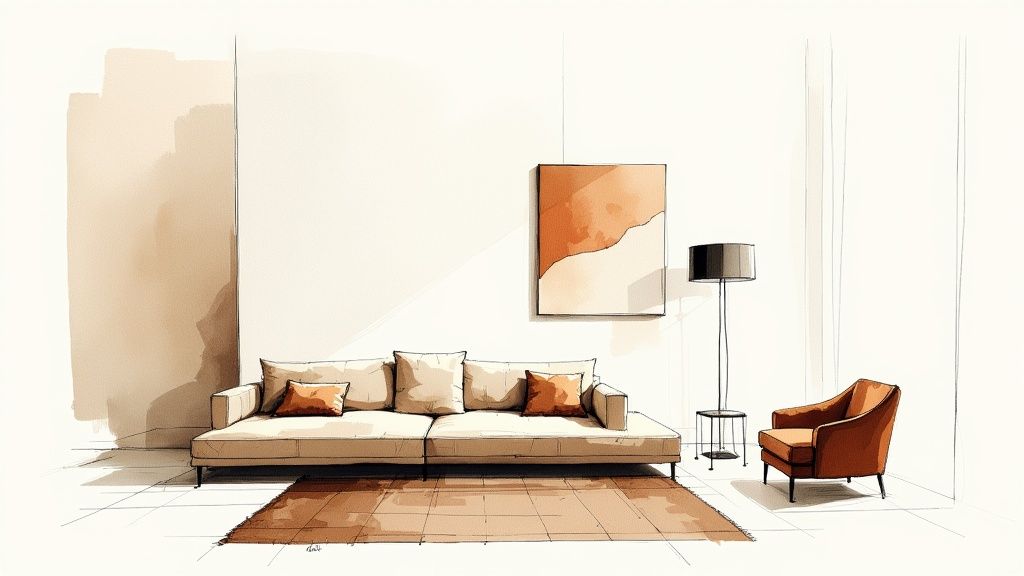
To achieve the magic of contemporary Italian style, think of your space as a canvas. Your goal isn't to fill it, but to curate it. Choose each piece with care, ensuring it’s as functional as it is beautiful. This approach creates a home that flows, where every object has a purpose and a presence without feeling forced.
The Philosophy of Intentional Simplicity
At its heart, Italian design follows a "less is more" rule. True luxury isn't extravagance; it's the quiet confidence of simplicity. Your focus should be on the inherent beauty of materials and the skill of the artisans who shaped them. To implement this, actively declutter and prioritize open space and clean lines for a calm, sophisticated feeling.
This philosophy is driven by a dedication to quality. The luxury Italian furniture market, valued at around $1.5 billion, is built on this commitment. Brands like Natuzzi and Molteni Group create pieces that are heirlooms, not just furniture. You can discover more insights about the Italian furniture market growth and see how heritage drives its value.
"The essence of interior design will always be about people and how they live. It is about the realities of what makes for an attractive, civilized, meaningful environment, not about fashion or what's in or what's out."
– Albert Hadley
Key Pillars of Contemporary Italian Style
To bring this look home, use these foundational principles as your guide. They aren't strict rules, but practical steps to help you create your own version of Italian elegance.
- Practice Quality Over Quantity: This is the golden rule. Invest in one beautifully made sofa that will last a lifetime rather than a room full of trendy, disposable items. Prioritize your budget for key anchor pieces.
- Maximize Natural Light: Make your home feel bright and airy by welcoming in as much daylight as possible. Use sheer curtains instead of heavy drapes, place mirrors opposite windows, and keep sills uncluttered to let light dance around the room.
- Fuse Old and New: This is where the artistry comes in. Mix minimalist modern pieces with subtle nods to history. For a practical application, pair a sleek, state-of-the-art kitchen island with a rustic, reclaimed wood dining table.
- Focus on Craftsmanship: The soul is in the details. When shopping, look for signs of masterful execution, like the perfect stitch on an upholstered chair or the smooth finish of hand-blown glass.
Crafting Your Italian Color and Material Palette
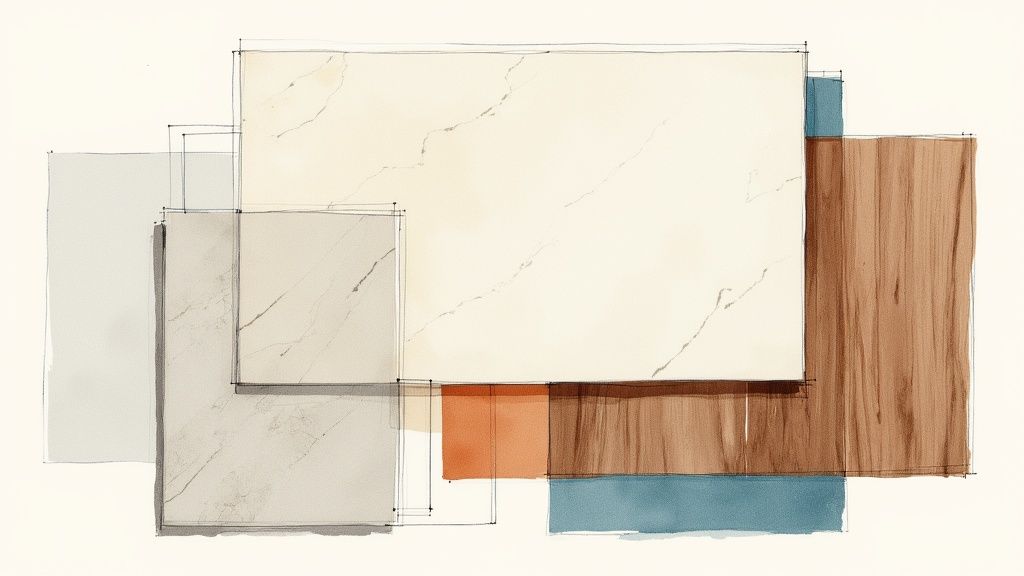
The soul of any breathtaking contemporary Italian interior design lives in its blend of color and texture. Your task is to build a palette that works in harmony to create a backdrop that feels serene, sophisticated, and personal. It starts with a sophisticated neutral base that captures the quiet beauty of the Italian landscape—the warmth of Tuscan stone or the smoothness of sun-bleached pebbles.
Building Your Neutral Foundation
Start by painting your walls with warm, inviting neutrals. These colors will allow your statement furniture and rich materials to stand out, creating an essential sense of light and space that pulls the entire design together.
Your go-to color choices should be:
- Soft Creams: Choose shades resembling aged parchment or creamy gelato to bring a gentle warmth and light-reflecting quality to any room, making it feel instantly brighter.
- Warm Taupes: Select from a range of light greige to deeper, earthy tones. Taupe adds a sophisticated, grounding element without feeling heavy or dark.
- Subtle Greys: Look for greys with warm undertones, like those found in natural stone, rather than cold, industrial shades. This ensures the space feels welcoming and chic.
This passion for beautiful living spaces has fueled incredible interest. The Italian home decor market was valued at over $18 billion and is on track to soar past $29 billion. This growth is a testament to a global appreciation for well-designed interiors. You can explore the full research about the Italian home decor market trends to see the data for yourself.
Layering with Strategic Accent Colors
With your neutral canvas in place, add personality with intention. Instead of a bold feature wall, weave in subtle hints of color through textiles, art, or a single decorative object. The goal is to evoke a feeling, not demand attention.
For an authentic touch, choose accent colors from Italy’s natural palette. Use a muted terracotta in a cushion to echo ancient rooftops, a deep olive green throw to bring the countryside indoors, or a soft sea blue vase to whisper of the Mediterranean coast.
These colors should be discovered as you move through the space, adding layers of interest that make the design feel collected and timeless.
Mastering the Art of Material Interplay
In Italian design, texture is as important as color. To create a dynamic sensory journey, you must artfully contrast different materials. This textural dialogue is the secret to a look that feels both modern and warm. For example, pair a cool, smooth marble countertop with the rich, visible grain of natural wood cabinets.
Here is a practical guide to the core materials of this aesthetic, highlighting not just what they are, but what they do for a space.
Core Materials in Contemporary Italian Design
| Material | How to Use It | Aesthetic Contribution |
|---|---|---|
| Natural Stone (Marble, Travertine) | Kitchen countertops, backsplashes, flooring, bathroom vanities | Brings a sense of timeless luxury and raw, organic beauty. Each slab is a unique piece of art. |
| Warm Woods (Walnut, Oak) | Cabinetry, flooring, custom wall paneling, furniture | Adds warmth, depth, and a connection to nature. The grain provides subtle, organic pattern. |
| Polished Metals (Brass, Bronze) | Lighting fixtures, hardware, furniture legs, decorative accents | Introduces a touch of sleek, modern glamour and a reflective quality that catches the light. |
| Natural Textiles (Linen, Wool, Velvet) | Upholstery, drapery, rugs, cushions | Provides softness, comfort, and tactile richness, balancing the harder surfaces in the room. |
By thoughtfully combining these elements, you move beyond just decorating. You begin to craft an environment that tells a story of quiet elegance and effortless Italian style.
Choosing Iconic and Functional Italian Furniture
In contemporary Italian interior design, furniture is the heart of the home. The philosophy is to invest in a few high-impact, beautifully crafted pieces instead of crowding your space. Let a single, incredible item—like a low-profile, clean-lined sofa—do the talking by anchoring the entire room with its quiet confidence.
Marrying Form and Function
The magic of Italian furniture is how it blends beauty with practicality. There is no battle between form and function—they are one and the same. This is what makes these spaces feel so elegant yet incredibly livable.
As you select pieces, ask yourself two questions: Does its shape inspire me? Does its purpose support my daily life? When the answer to both is "yes," you've found the right piece.
Your goal is to create a living gallery where every item is cherished for how it looks and how it enriches your life. This is functional art in its purest form.
How to Select Your Statement Pieces
Choosing furniture is about curating, not just decorating. Instead of asking what will "fit," start by asking what will "define" your space.
Here’s a step-by-step approach to selection:
- Identify the Anchor: In the living room, it’s the sofa. In the dining room, it’s the table. Start here. Allocate the most thought and budget to this anchor piece, as it will set the stage for everything else.
- Look for Sculptural Silhouettes: Seek out furniture with clean lines and a strong profile. Italian design celebrates form, so choose pieces that are stunning from every angle.
- Embrace Negative Space: The empty space around your furniture is as important as the furniture itself. By choosing fewer, more substantial pieces, you allow each one to breathe. This creates a sense of openness and calm.
Balancing Iconic Brands and Artisanal Finds
A truly personal home mixes celebrated designs with unique treasures. While iconic brands offer a benchmark of quality, artisanal pieces infuse a space with soul. To get familiar with the key players, explore this guide to the top Italian furniture brands.
Here’s how to strike the perfect balance in your own home:
- Anchor with an Icon: Invest in one major piece from a legendary brand like B&B Italia or Poltrona Frau. This becomes a testament to quality craftsmanship.
- Layer with Personality: Pair your iconic anchor with finds from smaller studios or a vintage shop. A hand-carved side table or a unique ceramic lamp tells a more personal story.
- Trust Your Gut: Above all, choose pieces you love. A home filled with objects that resonate with you will always feel authentic and inspiring.
By focusing on quality over quantity and treating each piece as functional art, you’ll curate a collection that is both beautiful and a true reflection of your story.
Mastering Light and Space for an Authentic Feel
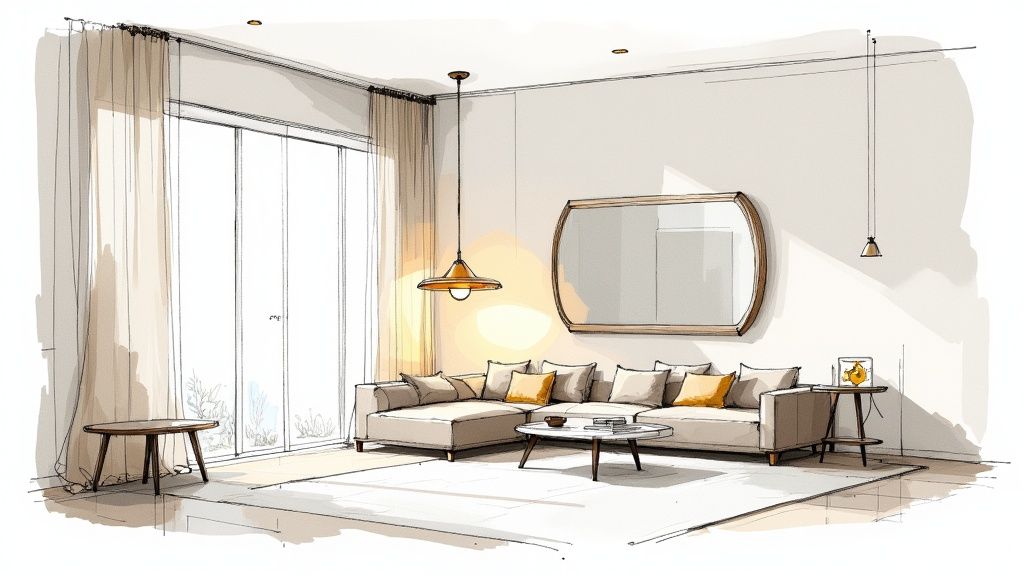
To capture the soul of contemporary Italian interior design, you must masterfully handle light and space. Getting this right is what transforms a house into a sanctuary. It’s about creating an atmosphere that breathes, flows, and feels profoundly welcoming.
Let the Sunshine In
Treat natural light as the main character in your design. The Italian approach is to give it the spotlight, letting it pour in to reveal the beautiful textures of your materials. The most crucial step is to remove any obstacles blocking the daylight.
Here are three simple changes that make a world of difference:
- Go for Sheer Curtains: Trade heavy drapes for lightweight linen or cotton. They offer privacy while allowing diffused sunlight to filter through, filling the room with a soft glow.
- Harness the Power of Mirrors: Position one large, well-placed mirror opposite a window. It will bounce light around the room and create an illusion of depth, making the space feel instantly larger.
- Keep Windowsills Clear: Avoid cluttering windowsills with trinkets. A clear sill creates an unimpeded pathway for sunlight and frames the view outside, making it part of your interior.
Layering Light Like an Artist
Once you've maximized natural light, plan your artificial lighting for the evenings. A single, harsh overhead fixture won't work. The key is to think in layers, with each light source having a specific purpose.
An elegant lighting plan combines three distinct layers:
- Ambient Lighting: This is your foundation—the soft, overall glow. Use recessed lighting or a simple, elegant central fixture to set the baseline mood.
- Task Lighting: This is practical, focused light for activities. Install under-cabinet lighting for kitchen counters or place a sleek reading lamp beside an armchair.
- Accent Lighting: This is the jewelry of the room. Use it to highlight a piece of art or an architectural detail. This is where your personality shines.
Treat light fixtures as functional sculptures. Iconic brands like Artemide and Flos are famous for designing lamps that are just as beautiful switched off as they are when on.
A seamless blend of these three layers gives you control, allowing you to create the right ambiance for any occasion. To see the impact one piece can have, explore how to choose a sculptural table lamp as a focal point.
Adding the Final Touches with Art and Decor
This is where a beautifully designed space becomes your home. Art and decor are how you add personality, but with contemporary Italian interior design, it’s a game of precision. Act like a gallery curator: every object must tell a story or serve a purpose. The final touches aren’t about filling every blank spot; they’re about adding one deliberate brushstroke that makes the entire composition sing.
Art Curation with Impact
In the Italian mindset, art is part of the architecture. Instead of a busy gallery wall, focus on the power of a single, show-stopping piece. This creates a natural focal point that invites you to pause, rather than overwhelming you with visual noise.
Here’s how to implement this strategy:
- Go Big and Bold: Hang a single, oversized abstract painting above a minimalist sofa to define the room. Its colors can subtly pick up accent tones from your cushions.
- Embrace Sculpture: Place an elegant, solitary sculpture on a console table or in a corner to add a three-dimensional quality and a sense of movement.
- Focus on Photography: Use a large, black-and-white photograph in a simple, slim frame to add drama and sophistication without clashing with your color palette.
The secret is to give your art room to breathe. The "negative space" around a piece elevates its importance, allowing its beauty to be fully seen. Aim for a personal gallery, not just a decorated house.
Selecting Accessories with Intention
Accessories are the final, intimate layer. In Italian design, every object must earn its place based on the principle of quality over quantity. It is better to have one exquisite, handcrafted object you love than a dozen trendy items that just fill a shelf.
Here’s a checklist for choosing accessories with an Italian sensibility:
- Introduce Artisanal Glass: A single Murano glass vase adds a whisper of color and a luminous quality. Its organic shape creates a gorgeous contrast to the clean lines of modern furniture.
- Layer with Luxurious Textiles: Instead of piles of pillows, drape a single, incredibly soft cashmere or merino wool throw over an armchair. It adds warmth and is an open invitation to relax.
- Incorporate Meaningful Objects: Display just a few carefully chosen items that tell your story: a beautiful art book on the coffee table, a unique ceramic piece from your travels, or a cherished vintage object.
By editing your space with this much intention, you create a home that feels collected, authentic, and completely you.
Bringing Your Italian-Inspired Home to Life
This is where it all comes together. The principles of contemporary Italian interior design are about a way of life. It’s about creating a personal sanctuary that grows with you for a lifetime.
True Italian elegance looks to the future. It’s about making thoughtful, sustainable choices that honor craftsmanship. Many celebrated Italian brands now champion eco-friendly materials and ethical production, so your beautiful home doesn't come at an ugly cost.
Embracing Smart and Sustainable Living
The future of Italian design is not only green but also clever. Designers are integrating smart-home technology so seamlessly you barely notice it's there, such as lighting that adjusts to your body's rhythm or audio systems hidden within wall panels.
These enhancements support the core Italian belief in functional beauty, making life simpler and more graceful. This forward-thinking approach is industry-wide. The Italian interior design market is on track to hit nearly $4 billion, with 80% of designers now using AI to push creative boundaries. It’s a powerful fusion of heritage and progress, a trend you can explore when you read the full analysis of the Italian design market.
The ultimate luxury is a home that works for you, intuitively and invisibly. It’s a space that is a showcase of style and a partner in a well-lived life.
Your Home as a Lasting Sanctuary
When you bring all these elements together—quality materials, sculptural furniture, layered lighting, and artful decor—you are crafting a haven that tells your story. This is your cue to create a home that feels uniquely yours.
As you start your journey, keep these final action items in mind:
- Trust the Process: A home that feels authentic isn't built overnight. Savor the hunt for pieces you love instead of rushing to fill a room.
- Invest in Quality: Always choose craftsmanship over quantity. One exceptional piece will bring more joy than a dozen disposable items.
- Edit Relentlessly: Every so often, step back and ask, "What can I take away?" The most sophisticated spaces are often the most edited.
A Few Final Thoughts & Common Questions
As you start to bring contemporary Italian interior design into your home, a few practical questions may arise. Here are answers to some of the most common ones to help you move forward with confidence.
How Can I Get the Italian Look on a Budget?
Achieving this look on a budget is about adopting the philosophy of quality over quantity. Instead of filling a room all at once, be patient. Focus your budget on one or two timeless anchor pieces, like a beautifully crafted sofa or a stunning light fixture. Build the rest of the room around them with simpler, more affordable finds. The goal is to sidestep fast-furniture trends and choose pieces that feel authentic and well-made, no matter the price.
What Is the Difference Between Modern and Contemporary Italian Design?
It's easy to confuse these terms, but the distinction is simple. Modern design refers to a specific past era, while contemporary design is the evolving style of right now.
- Modern Design: This refers to the mid-20th century (from the 1920s to the 1960s). It is characterized by rigid forms, sharp lines, and a defined, academic aesthetic.
- Contemporary Design: This is what’s happening in design today. It's more fluid and constantly evolving. It borrows the clean lines of modernism but adds warmth, inviting textures, and a greater focus on comfortable, livable luxury.
What Are Some Common Mistakes to Avoid?
That effortless Italian elegance is often about what you leave out. The most common mistakes happen when we forget the core principles of simplicity and purpose.
The number one mistake to avoid is over-accessorizing. Clutter is the enemy of this style, so resist the urge to fill every empty surface. Another pitfall is having too many statement pieces fighting for attention in the same room, which creates visual chaos.
Finally, don't overlook your lighting plan. The wrong lighting can make gorgeous materials and furniture fall flat. On that same note, always steer clear of low-quality materials that imitate luxury—their lack of authenticity will compromise the soul of the space.
At Griseo Interior, we believe authentic Italian design is a feeling, not just a formula. It should be personal and within reach. Discover our collection of minimalist, made-to-order decor and furniture and start bringing the soul of Italy into your home with intention and style.