

Your Guide to Eco-Friendly Home Accents for a Stylish Space
Eco-friendly home accents are more than just decorative items; they're a statement. These are the stylish pieces—from reclaimed wood frames to organic cotton throws—that bring beauty into your space without harming the planet. To get started, you'll need to learn how to identify accents crafted from sustainable, recycled, or natural materials. This guide will show you how to do just that, proving you don’t have to compromise on style to live a more conscious life.
How to Create a Greener, More Beautiful Home
Imagine a home that doesn't just look incredible, but feels deeply intentional. That’s the real magic of sustainable design, where every object tells a story of mindful living and natural elegance. Choosing eco-friendly accents isn't about limiting your style; it's about elevating it with conscious choices.
This shift toward conscious decorating is far more than a fleeting trend—it’s a movement gaining serious momentum. In fact, the global sustainable home decor market is expected to surge from around $388.7 billion to a staggering $663.9 billion over the next ten years. That kind of growth signals a massive collective desire for products that are as beautiful as they are ethically made.
Your Action Plan for Conscious Decorating
At its core, conscious decorating is simply about making deliberate choices. Your goal is to look past the allure of mass-produced, throwaway items and instead choose pieces that have character, longevity, and a story you can be proud of. This mindset transforms your home from just a living space into a genuine sanctuary that reflects your values.
Follow these key principles when you shop:
- Action Step 1: Prioritize Mindful Materials. Actively look for renewable resources like bamboo, recycled materials like glass, and organic fabrics like cotton.
- Action Step 2: Vet Your Sources Ethically. Support brands that guarantee fair labor practices and are transparent about where their products come from. Ask questions before you buy.
- Action Step 3: Choose Durability Over Disposability. Invest in quality, timeless pieces built to last. This reduces waste and saves you from the endless cycle of replacing cheap items.
Just a few popular sustainable materials can make a world of difference.
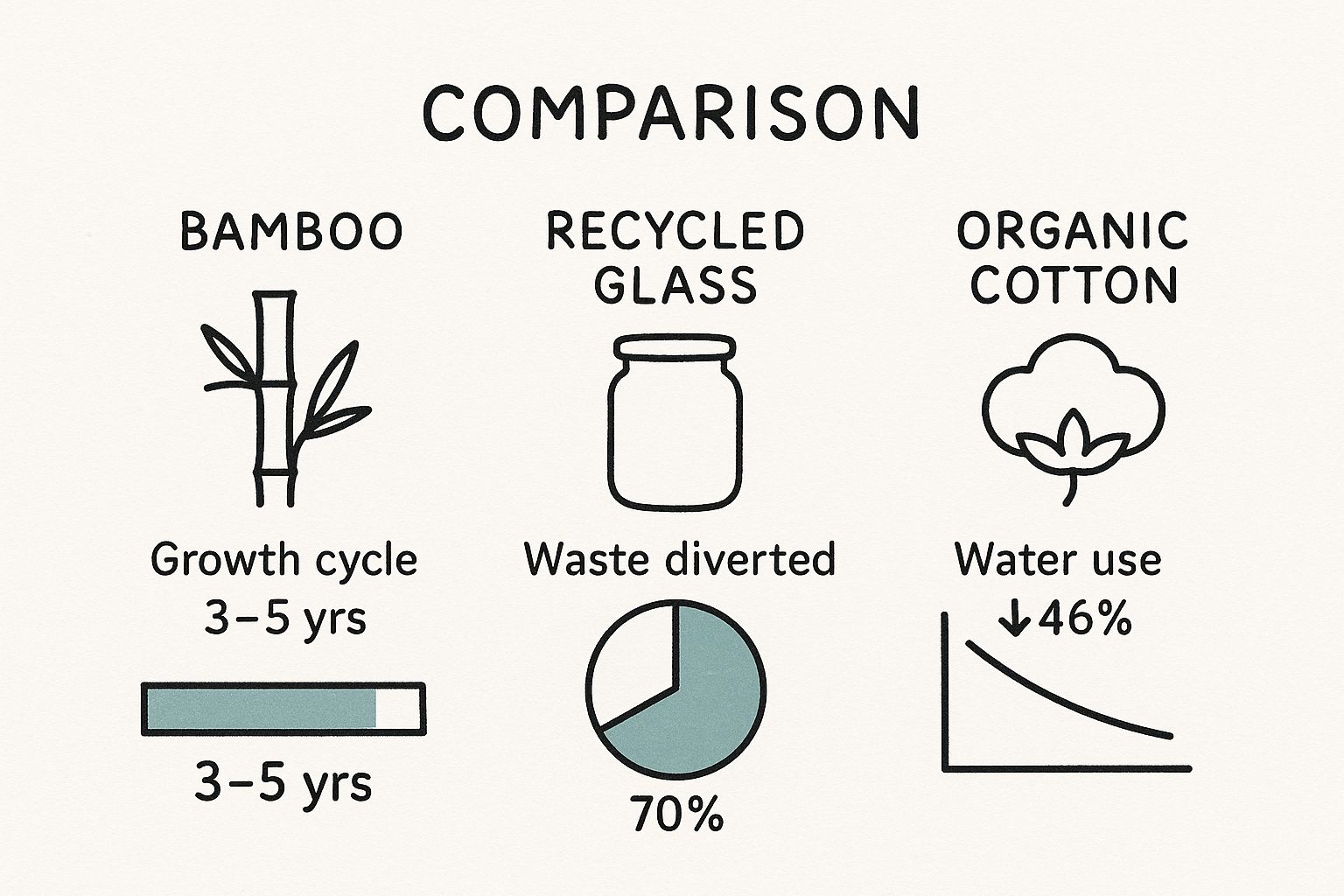
As you can see, each material brings its own unique environmental superpower to the table, from rapid renewability to a massive reduction in waste.
Small Actions, Big Impact
You don't need to do a complete renovation to build a more sustainable home. The journey starts with small, thoughtful additions that, together, create a significant positive ripple.
Start by swapping out a synthetic throw pillow for one made of organic linen or choosing a beautiful vase crafted from recycled glass. These are simple, actionable steps with real impact. Even in smaller rooms, these mindful choices can completely elevate the space. For a little inspiration on this, our guide on small living room design ideas shows just how powerful intentional accents can be.
By focusing on conscious consumption, you not only reduce your environmental footprint but also fill your home with objects that have meaning, soul, and a story worth telling.
Use this guide as your starting point for creating a home that is both gorgeous and green. We’ll walk through how to pick the right materials, find brands you can trust, and style your space with accents that you can truly feel good about.
Choosing the Right Sustainable Materials
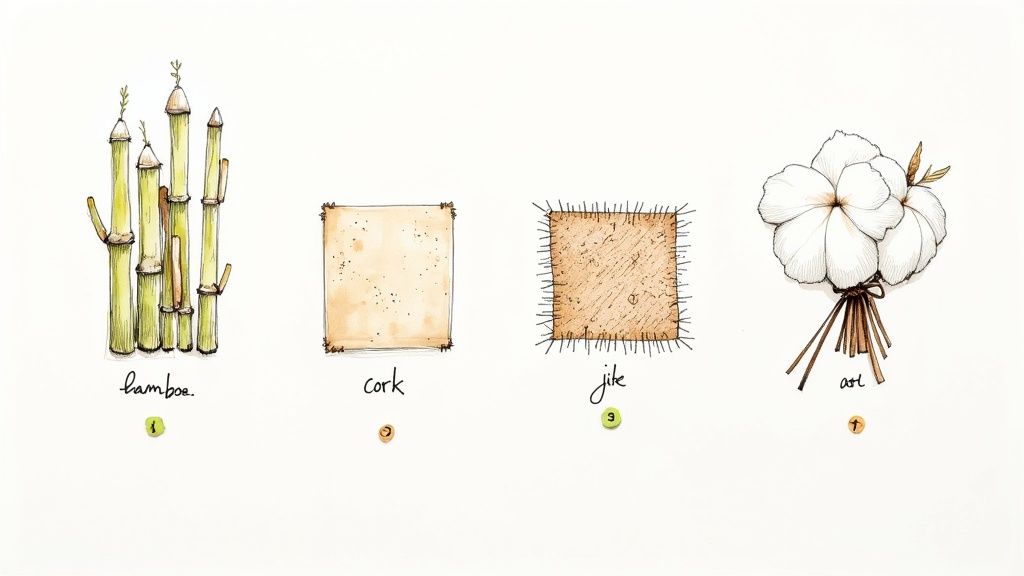
To dive into sustainable decor, you first need to get to know the materials. Think of this as your personal field guide to the building blocks of conscious design. Once you can confidently tell the difference between terms like reclaimed, recycled, and renewable, you'll be empowered to make choices that truly align with your vision for a beautiful, responsible home.
This isn't just about feeling good; it's about being part of a powerful movement. The demand for decor that marries stunning aesthetics with environmental integrity is soaring. In fact, market research predicts the sustainable home decor market will more than double, growing from about USD 4.5 billion to approximately USD 9.4 billion in the next decade. That incredible growth is fueled by people just like you choosing pieces made from renewable bamboo, repurposed metals, and organic textiles. You can read more about this exciting market growth and see what it means for conscious consumers.
How to Identify Renewable Resources
Renewable resources are nature’s champions of sustainability. They are harvested in a way that allows the source to regenerate naturally, creating a low-impact cycle. When you choose eco friendly home accents made from these materials, you’re helping to conserve the earth’s finite resources.
Here's what to look for:
- Bamboo: As a type of grass, some species can grow several feet in a single day. Look for bamboo accents like sleek cutting boards, small furniture, and decorative trays.
- Cork: Harvested from the bark of the cork oak tree without harming the tree itself, the bark regrows every nine years. Seek out cork coasters, placemats, and bulletin boards for their warm, textural quality.
- Jute and Hemp: These plant fibers grow quickly with minimal need for pesticides or fertilizers. Choose them for woven rugs, baskets, and wall hangings to bring an earthy, organic texture to any room.
How to Spot the Beauty of Recycled Materials
Recycled materials give old items a brilliant second act. This process intercepts waste that would otherwise go to landfills and transforms it into something beautiful and useful. By choosing recycled accents, you’re directly participating in a circular economy.
Every piece made from recycled materials carries a history. It’s a tangible reminder that waste is not an endpoint, but a potential new beginning for something beautiful.
Keep an eye out for these inspiring examples:
- Recycled Glass: Old bottles, jars, and windows are melted down and reformed into stunning new vases and candleholders. This process uses far less energy than creating new glass.
- Repurposed Metals: Scrap aluminum, steel, and brass can be melted and recast into sculptural objects, light fixtures, and decorative bowls. This avoids the massive environmental impact of mining for virgin ore.
How to Appreciate the Story Behind Reclaimed Wood
Reclaimed wood is salvaged from old barns, factories, and other structures destined for demolition. Instead of being lost to a landfill, this beautifully aged wood is given a second chance to shine. Each plank tells a unique story through its nail holes, saw marks, and weathered patina. Look for it in picture frames, floating shelves, and accent walls.
When you're shopping for any wood products, an actionable step you can take is to look for the Forest Stewardship Council (FSC) certification. This label guarantees that the wood was sourced from a forest managed with the highest regard for environmental, social, and economic standards.
A Quick Guide to Popular Eco-Friendly Materials for Home Accents
To help you make quick, informed decisions, use this cheat sheet for comparing common sustainable materials.
| Material | Primary Eco-Benefit | Common Accent Uses | Key Feature |
|---|---|---|---|
| Bamboo | Rapidly renewable; grows incredibly fast | Vases, trays, small furniture, kitchenware | Strong, lightweight, and versatile |
| Cork | Harvested without harming the tree | Coasters, placemats, bulletin boards, trays | Naturally water-resistant and textural |
| Recycled Glass | Reduces landfill waste and energy use | Vases, candleholders, decorative bottles | Often has unique colors and imperfections |
| Reclaimed Wood | Diverts old lumber from landfills | Picture frames, shelves, wall paneling | Rich with character, history, and patina |
| Jute & Hemp | Fast-growing with low water/pesticide needs | Rugs, baskets, wall hangings, macrame | Strong, durable, with an earthy texture |
| Recycled Metal | Conserves ore and reduces mining impact | Sculptures, light fixtures, decorative bowls | Can be polished or left with an industrial finish |
Choosing the right material is less about a single "best" option and more about what resonates with your style and values. Whether it's the warm history of reclaimed wood or the sleek feel of recycled glass, each choice is a step toward a home that is both beautiful and a reflection of your commitment to the planet.
Bringing Sustainable Style into Every Room
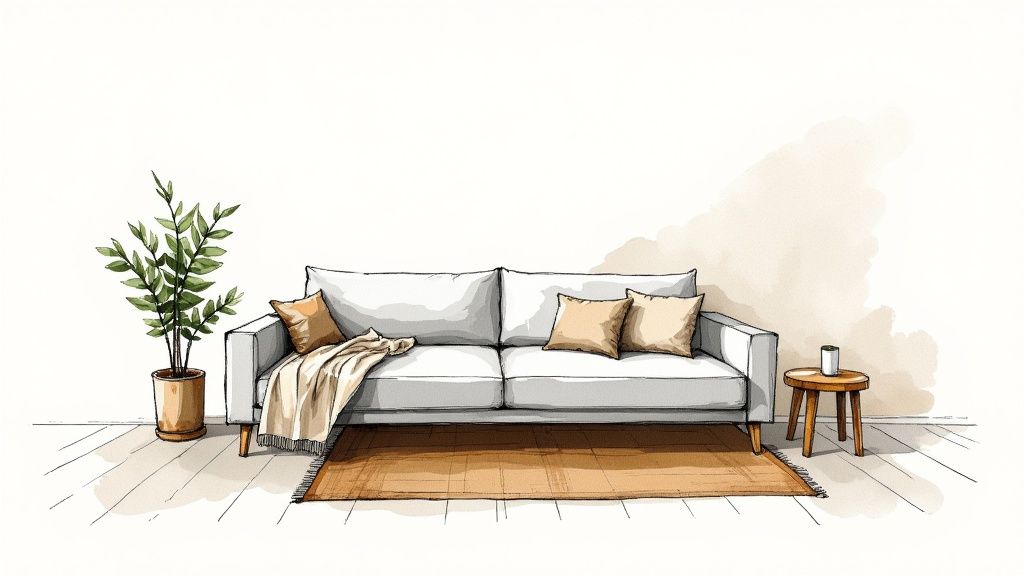
Turning your home into a sustainable sanctuary is about making small, intentional choices that create a stylish and meaningful space. Let's explore practical ways to bring inspiring eco friendly home accents into the heart of your home, one room at a time. This is your creative playbook for layering in pieces that tell a story of conscious living.
The Living Room: How to Create an Earthy, Textural Haven
The living room is for gathering and relaxing. Your action plan here is to create deep comfort through natural textures and thoughtful details.
Start from the ground up: lay down a handwoven jute or sisal rug. These durable natural fibers bring instant warmth and provide the perfect canvas to build upon.
Next, focus on comfort. Drape an organic cotton or recycled wool throw blanket over your sofa. Swap out standard pillows for ones made from natural linen or hemp, filled with plant-based fibers like kapok instead of synthetic polyester. These changes not only feel luxurious but help you avoid chemicals often found in conventional textiles.
Your living space should be a collection of stories. A reclaimed wood coffee table holds the history of its past life, while a set of cork coasters tells a tale of regenerative harvesting. Each piece adds a layer of depth and character.
Here are a few more actionable ideas:
- Action: Use large seagrass or rattan baskets to stylishly stash away extra blankets, magazines, or kids' toys.
- Action: Install simple floating shelves made from salvaged timber to show off your favorite books and small plants.
- Action: Group together vases made from recycled glass in different shapes and sizes to create a stunning, light-catching centerpiece.
The Kitchen: Your Plan for Functional Beauty and Conscious Choices
The kitchen is a workspace where sustainable accents must be as practical as they are beautiful.
Start by swapping out your plastic utensil holder for an elegant bamboo or acacia wood caddy. Bamboo is a fantastic sustainable choice for its strength and minimal environmental impact.
Next, embrace transparent storage. Store dry goods like pasta, grains, and spices in recycled glass jars. This looks organized, helps you see what you have to reduce food waste, and encourages buying in bulk to cut down on packaging.
You can also add a small countertop compost bin made from stainless steel or bamboo to easily collect food scraps, turning kitchen waste into valuable compost for your garden.
The Bedroom: How to Build a Serene and Restful Retreat
Your bedroom should be a sanctuary of rest and peace. Choosing natural, non-toxic materials here is key to creating a healthy and calming environment.
If you make one change, let it be your bedding. Upgrade to sheets and duvet covers made from organic linen or GOTS-certified organic cotton. These breathable materials get softer with every wash and are grown without harmful pesticides.
Bring in artwork that tells a sustainable story. Choose a piece of wall art crafted from reclaimed wood, a framed print on recycled paper from a local artist, or a macrame wall hanging made from natural cotton rope.
To complete this peaceful escape, add a large, floor-leaning mirror to create a sense of openness and light. Choose one with a frame made from reclaimed wood or sustainably sourced metal to add a final touch of conscious style. If you want to get this look just right, you can learn more about how to style floor leaning mirrors to enhance your room's design. This simple addition can be both a functional and beautiful eco-friendly statement.
How to Find Brands You Can Trust
Knowing which materials to look for is a great start, but the real magic happens when you know who to buy from. Supporting brands that are genuinely walking the talk is how you cast a vote for a better future. This is your guide to becoming a savvy, conscious consumer who can see past clever marketing to find companies with real heart.
The desire for sustainability is reshaping the home decor world. We're talking about a global market valued at over $747 billion that's seeing a massive shift. More of us are actively looking for eco friendly home accents made from recycled wood and other gentle-on-the-earth substances. This makes it more important than ever to know how to spot the truly authentic ones. You can get a deeper look at this global trend and how it's influencing consumer choices on Fortune Business Insights.
Actionable Tip #1: Look for Meaningful Certifications
Certifications are a trusted third-party stamp of approval—a shortcut that cuts through marketing fluff. They signal that a brand has gone the extra mile to prove its commitment.
Keep an eye out for these powerful symbols:
- Fair Trade Certified™: This guarantees that the artisans and farmers behind the product earned a fair wage and work in safe conditions.
- B Corporation (B Corp): This is the gold standard for ethical business. To become a B Corp, a company is legally required to balance profit with purpose.
- Forest Stewardship Council (FSC): When you spot the FSC logo on a wood or paper product, you know it came from a responsibly managed forest.
Actionable Tip #2: Prioritize Radical Transparency
A truly sustainable brand has nothing to hide. When you're checking out a company, look for a deep-seated commitment to transparency across their entire operation.
A trustworthy brand will be an open book about its:
- Materials Sourcing: Where do their raw materials really come from?
- Production Process: Who actually makes their products? What are they doing to minimize waste?
- Supply Chain: Can they trace their product’s journey from a raw material to your doorstep?
Vague claims like "eco-friendly" or "all-natural" without any proof are often a red flag. True sustainability is backed by specifics, not just buzzwords. Look for brands that tell you the how and the why behind their beautiful products.
Actionable Tip #3: Embrace the Power of Local Artisans
Often, the most incredible eco friendly home accents are made by passionate artisans in your own community. Choosing to support local and small businesses is one of the most direct and impactful ways to decorate with intention.
Here's why this is a smart move:
- A Human Connection: You get to know the person who made your piece and learn its story.
- A Lighter Footprint: Buying local drastically cuts down on shipping emissions.
- Truly Unique Pieces: You’ll discover one-of-a-kind treasures that infuse your home with character.
Start exploring local craft fairs, farmers' markets, and online marketplaces like Etsy. Try searching terms like "reclaimed wood art" or "handwoven basket" along with your city's name to uncover hidden gems. When you support a local maker, you're not just buying an object—you're bringing a beautiful story into your home.
Create Your Own Upcycled Home Accents

The single most sustainable accent you can find is the one you already have. Upcycling is the art of breathing new life into forgotten objects, turning trash into treasure. It’s a hands-on way to sidestep mass consumption, save money, and fill your home with a personal story that no store-bought item could ever tell.
When you create your own eco friendly home accents, you’re building a deeper connection to your space. Your home becomes a gallery of your own ingenuity.
Project One: From Wine Bottle to Minimalist Vase
That empty wine bottle sitting in your recycling bin can become a sleek, modern vase perfect for a single dramatic stem. It’s a simple project that delivers stunning, high-end results.
Materials You'll Need:
- An empty glass wine bottle with the label removed
- Non-toxic, low-VOC spray paint in your favorite color (matte black, white, or terracotta look fantastic)
- A well-ventilated space
Step-by-Step Guide:
- Prep Your Bottle: Make sure the bottle is sparkling clean and completely dry, inside and out. Soak it in warm, soapy water to remove stubborn label glue.
- Apply the First Coat: In your ventilated area, hold the spray can about 8-10 inches from the bottle. Apply a light, even coat of paint. Several thin coats are better than one thick one.
- Let It Dry and Reapply: Let the first coat dry for about an hour. Then, apply a second coat for full, opaque coverage.
- Cure and Style: Let the bottle cure for a full 24 hours to ensure the paint is durable. Once it’s ready, add a splash of water and your favorite flower cuttings.
Project Two: From Old Fabric to Charming Throw Pillow
Don't throw away that old sweater with a snag or a tablecloth with a small stain. Those textiles are a goldmine for creating unique decorative pillows. This project requires only basic sewing skills and is a wonderful way to preserve a piece of fabric that might hold a special memory.
This kind of creative reuse is becoming more popular, with some brands even exploring modern production methods that echo this spirit. If you’re curious about how technology is shaping design, you can learn more about the fascinating world of 3D printed home decor, which shares a similar spirit of on-demand, mindful creation.
Materials You'll Need:
- Scrap fabric (at least 18x18 inches for a standard-sized pillow)
- A pillow insert, or stuffing from an old pillow
- Scissors, pins, and a sewing machine or needle and thread
Step-by-Step Guide:
- Cut Your Fabric: Cut two identical squares or rectangles from your fabric.
- Pin and Sew: Place the two pieces together with the "right" sides facing each other. Pin around the edges, leaving a 4-5 inch gap on one side for stuffing.
- Stitch the Seams: Sew along your pinned lines, leaving the gap open.
- Turn and Stuff: Turn the fabric right-side-out through the gap. Poke out the corners for a crisp shape. Now, stuff the pillow with your insert until it’s plump.
- Close the Gap: Carefully fold the raw edges of the gap inward and hand-stitch it closed using an invisible stitch for a clean finish.
By upcycling, you’re not just making decor; you’re participating in a circular economy. You are intercepting the waste stream and proving that with a little imagination, value can be found everywhere.
Adopting this mindset changes how you see objects. Everything holds the potential for a second life. It’s an empowering way to decorate that puts creativity and sustainability right into your own hands.
A Few Common Questions About Sustainable Decor
Starting your sustainable living journey always sparks a few questions. It’s natural to wonder about cost, style, and where to begin. Let’s tackle some of those common hurdles right now to give you the confidence to start. The goal isn't perfection; it’s about making small, thoughtful choices that feel right for you.
Are Eco-Friendly Home Accents Just More Expensive?
This is a common myth. While some artisan-made pieces have a higher price tag—reflecting fair wages and quality materials—that’s not the full picture. Many sustainable materials, like bamboo or cork, are surprisingly affordable. Better yet, the most powerful sustainable decorating actions cost next to nothing. Thrifting, upcycling, and DIY projects are all incredibly light on the wallet.
See well-made sustainable pieces not as an expense, but as a long-term investment. Durability and timeless design are at the heart of eco-friendly decor. This means you’ll spend far less over time because you're not constantly replacing cheap, disposable items. Follow the philosophy: "buy well, buy once."
How Do I Spot Genuine Products and Avoid "Greenwashing"?
"Greenwashing" is when brands use misleading claims to seem more sustainable than they are. To avoid it, look for proof, not just buzzwords. Be skeptical of vague terms like "eco-friendly" or "green" if they aren't backed up with specifics. A truly committed brand will be proud of its process.
Here’s your checklist to find the real deal:
- Action: Look for reputable certifications like FSC on wood or GOTS on fabrics.
- Action: Dig into the brand's website. Are they transparent about where their materials come from and how their products are made?
- Action: Support small makers. Buy from local artisans or small businesses where you can often speak directly to the creator.
What’s the Single Best First Step I Can Take?
The most effective first step has nothing to do with buying anything new. It's a simple mindset shift: move from asking, "What can I buy?" to "What can I find, or what do I already have?" Before you shop, walk around your own home with fresh eyes. Can that old side table be transformed with non-toxic paint? Could that vase in the back of a closet become a focal point?
After "shopping your home," explore local thrift stores. Giving a pre-loved item a second life is the ultimate act of sustainability because it requires zero new resources. This simple habit—putting secondhand first—will dramatically reduce your footprint and save you money.
Will Sustainable Decor Limit My Style Choices?
Not at all. In fact, it will do the exact opposite. Choosing sustainable decor opens up a new world of beautiful textures and materials that you might have otherwise overlooked.
Sustainable decor isn't a single "look." It's a set of principles you can apply to any style—from sleek minimalism to cozy rustic farmhouse. Natural materials like wood, linen, rattan, and clay are the foundation of countless design styles. By focusing on craftsmanship and unique sourcing, you’ll discover pieces with more soul and story than anything mass-produced, allowing you to express your personal style more authentically than ever before.
At Griseo Interior, we believe that beautiful design and sustainability are natural partners. Our collection of minimalist vases and sculptural accents is crafted with a modern, made-to-order approach that blends Italian artisanal heritage with responsible production. Explore our designs and bring a piece of timeless, conscious elegance into your home. Discover the collection at Griseo Interior.