

Furniture Italian Living Room: Your Guide to Timeless Style
Welcome to the world of Italian living room furniture, where each piece isn't just an object, but a small masterpiece telling a story of art, heritage, and a life lived with passion. This isn't just about filling a space. It's about creating your own personal sanctuary—a place where timeless elegance and modern comfort come together to feel both luxurious and genuinely welcoming.
The Timeless Pull of Italian Living Room Design
There's something magnetic about Italian design, isn't there? It draws in homeowners and designers from all corners of the globe with its incredible ability to balance beautiful form with everyday function. This isn't a style born overnight; it's a philosophy steeped in centuries of artistic tradition, where master artisans have passed down their skills for generations. You can feel that history in every detail, from the gentle curve of a sofa's arm to the flawless finish on a wooden cabinet.
This legacy results in furniture that feels both substantial and light on its feet. It gracefully sidesteps fleeting trends, choosing instead to create living rooms that are as impressive as they are inviting. The real heart of it all is building a space that tells your story, reflecting your taste through pieces that don't just occupy a room, but bring it to life in perfect harmony.
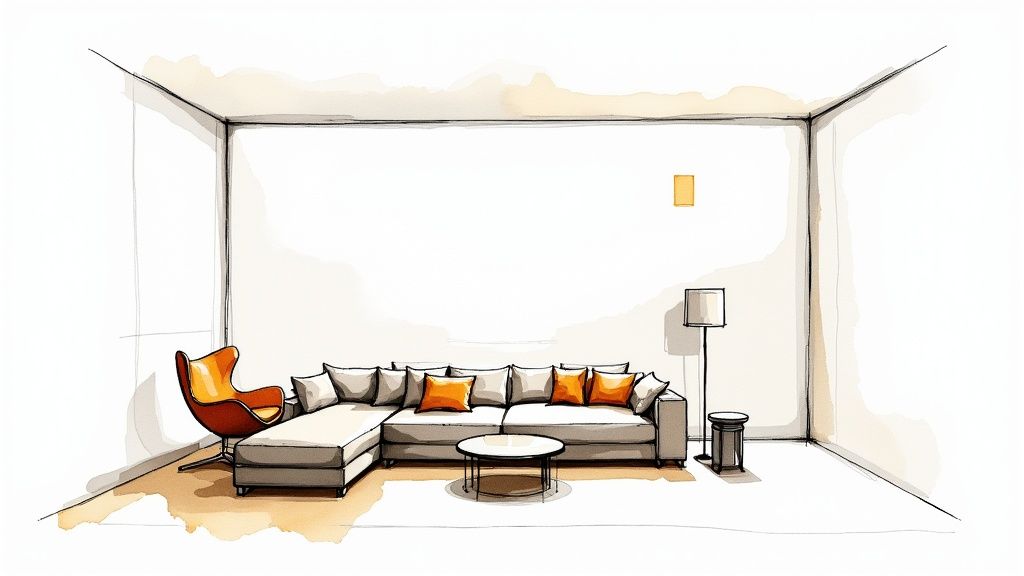
So, Why All the Love for Italian Design?
The worldwide admiration for this style is more than just a feeling; it's a powerful economic reality. Living room furniture is the single biggest player in Italy’s home furniture market, fueling a multi-billion-dollar industry that dominates both at home and abroad. In fact, the entire Italian furniture market is valued at over $21 billion annually, which just goes to show the massive influence of its living room collections. If you're curious, you can find more Italian furniture market insights on DeepMarketInsights.com.
At its core, Italian design is about la bella figura—the beautiful figure. This idea goes far beyond how one looks; it extends to the spaces we call home. It insists that our homes be more than just functional—they should be visually poetic and stir something within us.
This guide provides actionable steps for bringing that poetry into your own home. We’ll walk through the key elements that define this beautiful aesthetic, giving you the confidence to craft a living room that feels sophisticated, personal, and completely yours.
You will learn to:
- Identify the differences between classic, modern, and contemporary Italian styles to choose the right one for you.
- Select the signature materials and finishes that signal true quality and durability.
- Arrange your furniture with purpose to create a sense of flow and balance in your space.
Finding Your Signature Italian Design Style
Choosing the style for your Italian living room furniture is the first practical step in defining the soul of your home. This choice sets the mood for how you'll live, relax, and connect in your space. To make the right decision, let's break down the three dominant aesthetics—Modern, Contemporary, and Classic—and help you find the one that fits your lifestyle.
Think of each style as a design toolkit. Your job is to pick the one that gives you the right tools to build a vision that is intentional, beautiful, and a true reflection of your personality.
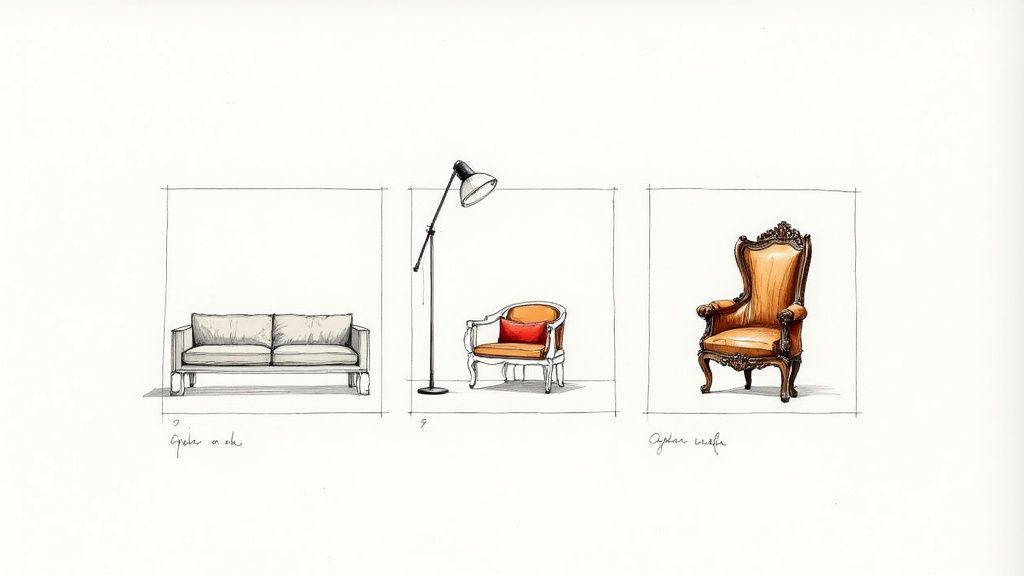
The Calm of Modern Italian Design
To achieve a Modern Italian look, focus on discipline and order. Strip away decorative extras to let clean lines and purposeful forms shine. Start with a low-profile sofa that has a crisp, geometric silhouette. Build your color scheme around soothing neutrals like whites, beiges, and soft grays.
In this style, every object must have a clear function. When selecting pieces, choose furniture that speaks through its perfect proportions and flawless materials rather than ornamentation. If your goal is a calm, uncluttered environment that feels both restful and deeply refined, Modern Italian is your most effective path.
The Boldness of Contemporary Italian Design
If Modern design is a settled philosophy, Contemporary is your opportunity to experiment. This style is fluid and adventurous. To bring it home, look for sculptural shapes, innovative materials, and dramatic, unexpected curves. While you can start with a minimalist base, don't be afraid to break the rules with a powerful pop of color or a single piece of furniture that acts as a work of art.
Actionable tip: seek out a coffee table crafted from a single piece of bent glass or an armchair with a bold, asymmetric form. If you want your living room to make an energetic, artistic statement, choose the Contemporary Italian style.
Your first step isn't about following rigid rules. It's about deciding on the core feeling you want your living room to evoke—be it tranquility, artistic expression, or timeless grandeur—and using that as your practical guide for every choice.
The Grandeur of Classic Italian Design
To execute a Classic Italian design, you'll need to source pieces inspired by the Renaissance and Baroque periods. Prioritize opulent materials like dark, hand-carved woods, sumptuous fabrics like velvet and damask, and intricate details like deep tufting and gold-leaf accents. This style is about creating an atmosphere of enduring European elegance.
Look for an armchair with gracefully curved cabriole legs and rich, patterned upholstery, or a vitrine featuring masterful marquetry. This aesthetic is for those who cherish historical artistry. Select this style if your goal is a living room that feels grand, warm, and steeped in tradition.
To help you make a clear decision, use this table to compare the key features of each style.
Italian Living Room Styles at a Glance
| Characteristic | Modern Italian | Contemporary Italian | Classic Italian |
|---|---|---|---|
| Era | Mid-20th Century (1920s-1970s) | Present Day, Evolving | 17th-19th Century Inspired |
| Lines | Clean, Straight, Geometric | Can be Curved, Asymmetrical, Sculptural | Ornate, Carved, Curvaceous |
| Color Palette | Neutral (White, Gray, Beige) | Neutral Base with Bold Accents | Rich & Warm (Gold, Burgundy, Deep Browns) |
| Materials | Polished Metal, Plastic, Natural Wood | Glass, Steel, Concrete, New Composites | Dark Woods, Marble, Velvet, Silk, Gilt |
| Overall Vibe | Calm, Orderly, Uncluttered | Dynamic, Artistic, Bold | Opulent, Grand, Timeless |
Ultimately, select the style that best aligns with your vision for your home—a space that feels not just decorated, but truly yours.
The Essential Materials of Italian Craftsmanship
The soul of Italian living room furniture isn’t just in its design, but in the materials used. To create an authentic space, you must understand the core components. Choosing the right materials is a crucial step in creating a room that feels luxurious and is built to last for generations.
Each material is chosen for more than just its looks; it's selected for its story and its ability to age gracefully. Think of it as composing a symphony. Every element has to work in harmony, from the deep, foundational notes of solid wood to the delicate, shimmering accent of hand-blown glass.
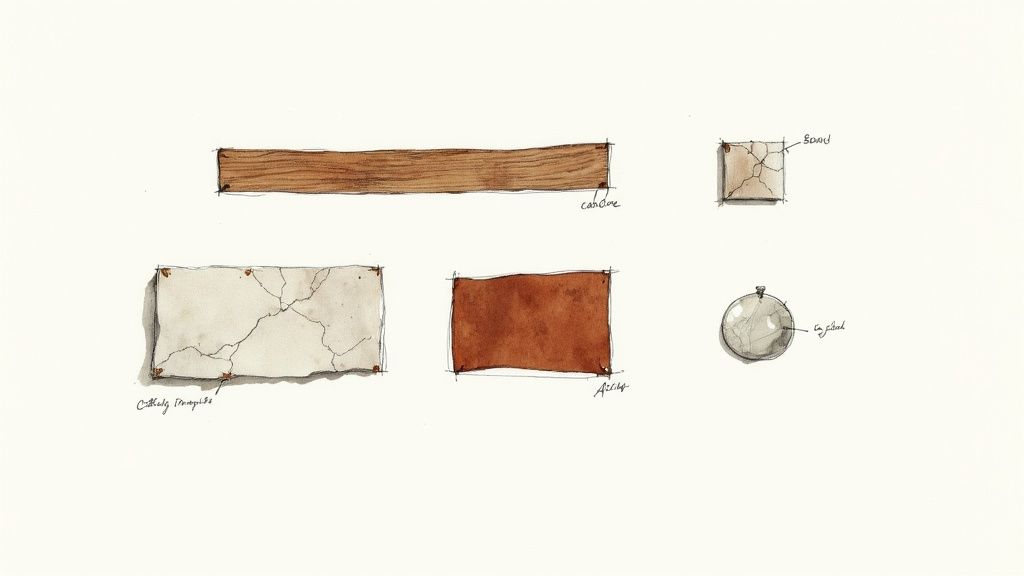
The Foundation of Wood and Finishes
Wood is the heart of Italian furniture. When shopping, look for natural woods like rich walnut, sturdy oak, and elegant cherry, as these form the structural and aesthetic backbone for everything from credenzas to side chairs.
This commitment to premium wood continues to drive the industry. In fact, wood products consistently account for over 60% of Italy’s furniture material share, which tells you just how central these heritage materials are to its luxury market. Learn more about upcoming furniture trends in Italy on Accio.com.
But the wood itself is only half the story. The finish gives it a personality. Use this guide to choose:
- High-Gloss Lacquer: Select this finish for a sleek, reflective surface that feels modern and glamorous. It’s a perfect choice for a contemporary media console that needs to make a statement.
- Soft Matte Stains: Opt for this to allow the natural grain and texture of the wood to stand out. The result is a warm, organic feel that’s ideal for classic or rustic-inspired pieces.
The Luxury of Leathers and Textiles
Italian leather is legendary for a reason. It’s supple, durable, and develops a rich patina over time. When choosing leather for a sofa or armchair, understanding the different grades is key to making a wise investment.
Full-grain leather is the highest quality, showcasing the natural markings of the hide. It’s built to last and breathes well. By contrast, top-grain leather is slightly more processed for a uniform, protected finish, making it a practical choice for busy households. Choose top-grain if durability and easy maintenance are your top priorities.
To get started, choose your primary material first. This is like choosing the lead instrument in an orchestra; it sets the tone. Decide if you want the warm resonance of walnut or the smooth, cool feel of top-grain leather, and build from there.
The Artistry of Stone and Glass
To elevate your Italian living room, you must incorporate iconic materials that add artistry and texture. These elements provide stunning contrast and a direct link to Italy’s magnificent natural landscapes.
For a breathtaking coffee table or console top, choose Carrara marble, with its soft white background and delicate grey veining. For a more earthy, textured alternative, select travertine; its warm tones bring a sense of ancient history into a modern space.
Finally, a well-styled Italian room often includes Murano glass. Incorporate it as a dramatic chandelier, a sculptural vase, or a small decorative accent. Its vibrant color and fluid form capture light and attention. To appreciate its legacy, you can explore our guide on the history of Carlo Moretti glass. These are the finishing touches that transform a room from simply well-furnished to truly inspired.
How to Arrange Furniture for Effortless Elegance
Creating an Italian-inspired living room isn’t just about buying beautiful furniture; it's about arranging it to achieve harmony, scale, and flow. A thoughtful layout is what transforms a room from a collection of items into a sophisticated sanctuary.
Your first step is to choose a focal point. This is the anchor around which the entire room will pivot. It could be a magnificent, sculptural sofa or a sleek, low-profile media console. Once you've selected this primary piece, its placement will guide every other decision.
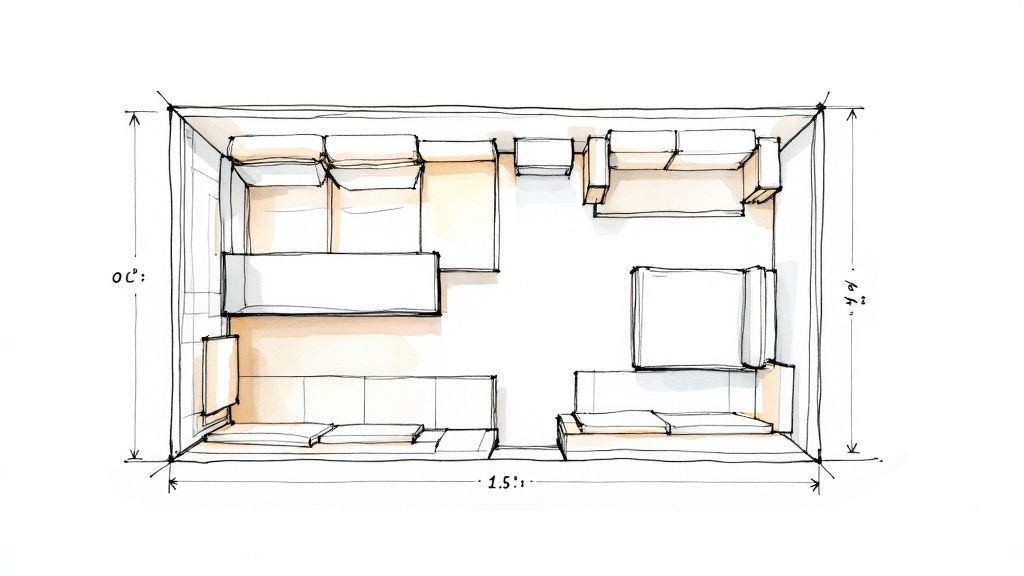
Embrace the Power of Negative Space
A key technique in Italian design is the masterful use of negative space—the intentional, empty areas around your furniture. This isn't just emptiness; it's visual breathing room. To achieve this, resist the urge to fill every corner. Instead, celebrate openness to create a sense of luxury and calm.
This approach gives each individual piece the spotlight it deserves. A beautifully crafted armchair loses its impact when shoved into a corner. By giving it room to breathe, you highlight its artistry and turn it into a piece of functional sculpture.
"In Italian design, space is not an absence. It is an active element that defines form, creates rhythm, and elevates the entire composition. It’s the quiet pause that makes the music beautiful."
Before you buy anything, get out the measuring tape. Measure your room, and then measure the furniture you're considering. This simple action helps you avoid the common mistake of an oversized sofa overwhelming a modest space. Your furniture should complement the room, not conquer it.
For a deeper dive into layout strategies, our guide on how to arrange furniture in a living room offers more practical tips.
Creating Balance and Flow
With your focal point placed, it's time to build a layout that feels welcoming and intuitive. A well-arranged room invites you in with clear pathways. As a rule, allow at least 30 to 36 inches for major walkways to ensure the space feels open and easy to navigate.
Here are a few trusted layout techniques you can use:
- Symmetrical Arrangements: For a formal, grounded look, place two matching sofas or armchairs directly facing each other. This setup is ideal for creating intimate conversation areas in classic or modern spaces.
- Asymmetrical Layouts: To generate a more dynamic, contemporary energy, balance a large sofa on one side with a pair of smaller armchairs on the other. This approach adds visual interest and feels more relaxed yet still cohesive.
- Floating Furniture: Pull your main seating group away from the walls and "float" it in the center of the room. This simple move instantly creates a cozier, more inviting atmosphere and dramatically improves the room's overall flow.
By mindfully balancing anchor pieces with lighter accents and always respecting the power of open space, you can craft a living room that feels both dynamic and serene—the essence of Italian elegance.
Styling Your Space with Minimalist Sophistication
The secret to styling an Italian living room is understatement. The philosophy is simple: it’s not about how much you add, but how powerfully you can speak with a few exceptional pieces. This is an act of deliberate curation.
Think of your living room as a private art gallery. That one sculpted armchair isn't just a seat—it’s functional art. A striking coffee table with a unique form doesn’t need to be massive to command attention; its shape and finish do all the talking.
Curating with Purpose
In an Italian-inspired space, every accessory must earn its place. The goal is to enhance the furniture, not overwhelm it. Instead of cluttering surfaces, create small, beautiful vignettes.
- Add Texture: Introduce warmth without adding clutter. A single, soft cashmere or wool throw draped over a sofa instantly elevates the feel of the room.
- Create a "Moment": Group a few meaningful objects on a console table. Combine a sculptural vase, a couple of art books, and a small decorative tray to create a focal point that draws you in.
- Use Accent Pieces: Place an elegant floor lamp beside an armchair. It provides targeted light for reading while acting as a vertical design element, guiding the eye upward.
The magic of minimalist sophistication lies in giving each piece room to breathe. To do this, ensure there is visible space around your key decorative items. When every object is intentional and can be seen clearly, the entire room feels curated and personal.
The Decisive Role of Lighting
Lighting is the final brushstroke that makes the masterpiece come alive. It reveals the subtle weave of upholstery, catches the sheen on a lacquered surface, and sets the mood. To do it effectively, you must think in layers.
A well-lit room needs three layers working together. You need ambient light for overall illumination (like a central pendant), task lighting for activities like reading, and accent lighting to spotlight artwork or architectural features. Blend these sources to create a warm, dynamic atmosphere that beautifully shows off the form and finish of your Italian furniture.
Investing in and Caring for Your Italian Furniture
When you choose authentic Italian furniture, you're making a lifelong investment in artistry, heritage, and unmatched quality. At this point, you're no longer just designing a room; you're becoming the custodian of timeless pieces, crafted to be passed down through generations.
This philosophy naturally leads to made-to-order furniture. This practical choice connects you directly to sustainable, artisanal production. This approach honors the craft, ensuring every piece is made with intention, specifically for you. It’s a powerful stand against mass production and a celebration of "Made in Italy" excellence.
This commitment to quality isn't just a principle—it’s an economic force. The luxury Italian furniture market is valued at approximately $1.5 billion and continues to grow, fueled by a global passion for superior design. This thriving industry supports the very artisans and regional communities that make it all possible, proving the tangible value of their incredible work.
Preserving Your Investment with Proper Care
Protecting the beauty of your furniture ensures its legacy. Each material requires specific care, and learning these methods is the secret to lasting elegance. A little proactive attention will maintain the integrity and value of your pieces for years to come.
Understanding the importance of upholstery cleaning is a great first step. Gentle, regular maintenance is key to preventing the buildup of dust and oils that can slowly degrade even the finest fabrics.
Here are a few actionable, material-specific guidelines to keep your furniture looking its best:
- Premium Leathers: Dust regularly with a soft, dry cloth. For minor spills, use a cloth lightly dampened with distilled water and blot immediately. Avoid all chemical cleaners, as they can strip the leather of its natural oils.
- Lacquered Wood: Use a soft microfiber cloth for regular dusting. Wipe surfaces gently to prevent fine scratches. For stubborn smudges, use a cloth slightly dampened with water and a mild soap, then dry completely.
- Marble and Stone: Always use coasters and placemats to protect surfaces from acidic liquids like wine or coffee. Clean spills instantly with a pH-neutral cleaner and a soft cloth to prevent etching.
Caring for your furniture is an ongoing conversation with the materials. By providing what they need, you honor the hands that crafted them and ensure their story continues in your home.
As you explore options, look for official "Made in Italy" certifications and learn about the heritage of different design houses. Our guide to top Italian furniture brands is a great place to start discovering the stories behind the creators.
Frequently Asked Questions
Stepping into the world of Italian design is exciting, but it's natural to have questions. Here are answers to common queries to help you bring this aesthetic into your home with confidence.
What Makes Italian Furniture Different?
The key differentiators are a deep-seated passion for craftsmanship, premium materials, and design that sets trends rather than follows them. Italian furniture is the legacy of generations of artisans, not mass production.
You can feel the difference in every seamless joint and perfect curve. There is a focus on balancing form and function, which is why even an understated sofa can radiate pure luxury.
How to Style a Small Living Room with Italian Furniture
Styling a smaller space is about making smart, impactful choices. The goal is curation, not saturation.
- Create Visual Space: Choose pieces with a lighter feel, such as a sofa on slender legs. This allows light to flow underneath, making the room feel more open.
- Focus on a Hero Piece: Instead of using many small items, let one or two stunning pieces anchor the room. A single, sculpted armchair or a minimalist media console can become the room's soul.
- Use Flexible Furniture: Modular sofas are a brilliant solution for small spaces, as they can be reconfigured. Nesting coffee tables are another practical tool, offering versatility without a large footprint.
The secret is quality over quantity. A few incredible pieces will always feel more spacious and sophisticated than a room full of forgettable ones.
Is Authentic Italian Furniture Always Expensive?
While famous luxury brands have price tags that reflect their heritage, the world of Italian furniture is broader and more accessible than you might think. Many workshops create stunning collections at more approachable prices while holding true to the core values of brilliant design and solid construction.
Think of it as an investment. A well-made Italian piece will stand the test of time, outlasting mass-produced alternatives by decades. It’s a sustainable choice that pays for itself in longevity and joy.
Of course, protecting your investment goes beyond the piece itself. It's smart to think about how your furniture lives in your space. For practical advice, check out these tips to protect your hardwood floors from furniture. This kind of thoughtful care keeps your entire home looking its best for years.
At Griseo Interior, our mission is to bring the soul of authentic Italian design into everyday life. We invite you to discover our collection of minimalist, made-to-order furniture and décor, all born from sustainable practices and a profound respect for artisanal skill. See how timeless elegance can transform your home at griseointerior.com.