

How to decorate small spaces for big impact
Decorating a small space isn't about sacrifice; it's about making smart, strategic choices. The key is to stop seeing your room's size as a limitation and start seeing it as a canvas for clever, space-savvy design. This guide provides actionable steps to transform any compact room into a stylish, functional, and surprisingly open sanctuary.
Your Small Space Is an Opportunity, Not a Limit
Forget the idea of "making do." A smaller footprint is your chance to be truly intentional with your design. Every piece of furniture, color choice, and decorative accent has a bigger impact, allowing you to create a home that's not just beautiful, but brilliantly efficient and a true reflection of you.
Shift Your Mindset to Action
Before moving a single piece of furniture, change how you view the square footage. It’s not a problem to solve; it’s an opportunity for thoughtful design. Here’s how to start:
- Curate with Purpose: Less room means you must be selective. Choose only items you love and that serve a real function. This is your chance to edit your belongings down to what truly matters.
- Embrace the Cozy Factor: Small rooms have a natural warmth. Aim for the intimate, well-designed feel of a boutique hotel room or a tiny cabin. Focus on textures and lighting to enhance this cozy atmosphere.
- Design for Efficiency: A compact layout forces you to be clever. Prioritize smart storage and multi-functional furniture to create a home that works smarter for you.
Your home's size doesn't define its potential. The most inspiring spaces are born from clever solutions and a clear vision.
This guide provides the tools to make that happen. We'll explore core principles, from drawing the eye upward to picking furniture that does double duty. For even more inspiration, check out these innovative vinyl wrap and wall sticker ideas to maximize your space and see how you can transform any room.
Create a Flawless Foundation with Smart Layouts
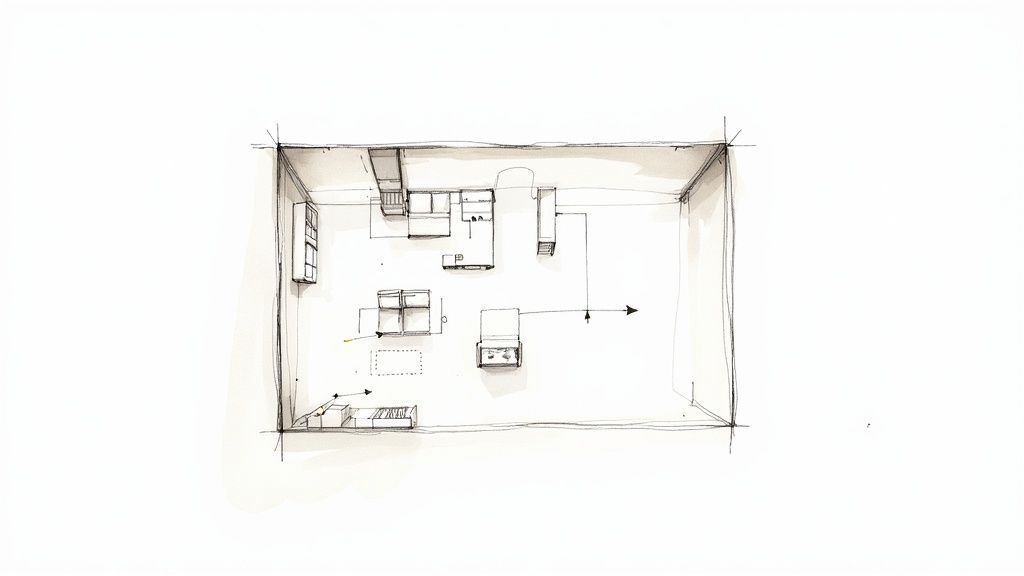
Your layout is the single most powerful tool for making a small space work. A well-planned floor plan creates effortless flow, carves out a purpose for every corner, and makes a room feel larger than its dimensions.
As urban living becomes more common, the global interior design market—valued at around USD 138 billion—is shifting toward minimalist, hyper-functional designs. Homeowners are demanding layouts that make every inch count. You can dive deeper into this trend with insights from Grand View Research.
Define Your Zones with Furniture
To make one room serve multiple functions, use zoning. Create distinct areas for living, working, and relaxing without building walls. Use furniture and rugs to create visual separation.
For example, place a slim console table behind your sofa to create a dedicated workspace. Or, tuck a comfy armchair and a floor lamp into a corner to establish an instant reading nook.
Let Your Furniture Breathe
Avoid pushing all your furniture against the walls. This common mistake makes a room feel rigid and boxed-in. Instead, "float" your key pieces to create a more dynamic feel.
Pull your sofa just a few inches away from the wall. This simple action creates breathing room and gives the illusion of more space. It improves traffic flow and makes the entire layout feel more intentional.
Don’t overcrowd your room. Negative space—the empty areas around your furniture—is essential for a balanced and airy feel.
Master the Art of Flow
Ensure you can move through your space easily. A good layout creates clear pathways so you don't have to sidestep furniture. To achieve this, map out your main traffic patterns and keep them clear.
Follow these practical steps:
- Anchor Zones with Area Rugs: Use a rug to visually define a seating area. Ensure the front legs of your sofa and chairs are on the rug to create a cohesive, grounded look.
- Establish a Focal Point: Arrange your furniture around a central element, like a window, a bold piece of art, or a media center. This gives the room a clear sense of direction.
- Think Vertically: Draw the eye upward to enhance the room's sense of height. Use tall, narrow bookcases or install floor-to-ceiling curtains.
Nailing the layout first provides a solid foundation that makes every other design choice more impactful.
Choose Furniture That Works as Hard as You Do
In a small home, every piece must be functional. Think of your furniture as a team of hardworking employees—each one should have a clear purpose, and ideally, multiple skills. This is about investing in smart, beautiful pieces that solve real-world problems.
This intentional approach is a significant market shift. The global demand for small-space furniture is projected to hit USD 12.15 billion by 2035, as consumers embrace compact and transformable designs. You can dig into the data on this growing market for specialized, design-forward furniture to see how big this movement is.
Prioritize Multi-Functional Powerhouses
The true heroes of small-space living are the pieces that do double or triple duty. A beautiful piece of furniture that also hides your clutter is the key to maintaining a clean, uncluttered look.
Put your furniture to work with these ideas:
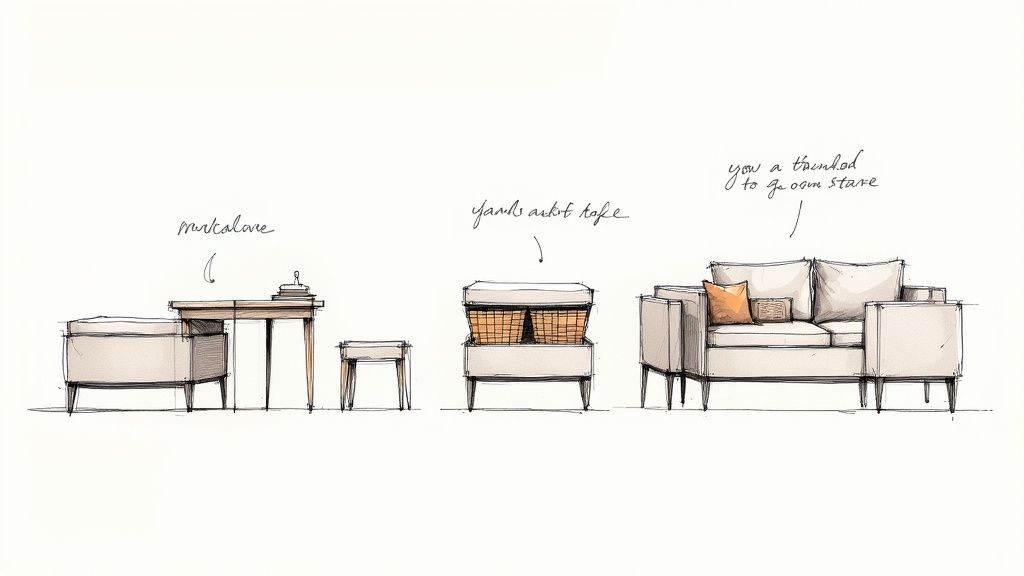
- Ottomans with Deep Storage: Swap your coffee table for a storage ottoman. It serves as a footrest, extra seating, and a hidden spot for blankets, remotes, or games.
- Expandable Dining Tables: If you lack a formal dining room, choose a table that folds into a slim console for daily use but expands to seat a crowd when needed.
- Modular Sofas: These versatile pieces can be reconfigured to fit any layout, separated for party seating, or pulled together to create a guest bed.
Smart Furniture Swaps for Small Spaces
Making the right furniture swaps can completely change a room's functionality. Here are some of the most impactful exchanges you can make.
| Instead of This... | Try This Smart Alternative... | Why It Works |
|---|---|---|
| Bulky Coffee Table | Storage Ottoman or Nesting Tables | Provides hidden storage or flexible surfaces that can be tucked away. |
| Standard Bed Frame | Platform Bed with Drawers | Utilizes the often-wasted space under the bed for clothes or linens. |
| Large, Fixed Dining Table | Drop-Leaf or Extendable Table | Adapts to your needs, saving floor space when you're not entertaining. |
| Traditional Bookshelf | Wall-Mounted or Floating Shelves | Draws the eye upward and frees up the floor, making the room feel larger. |
| Heavy Armchair | Armless Slipper Chair | Offers comfortable seating with a much smaller, sleeker physical and visual footprint. |
These simple trades maximize utility without adding bulk, which is the core of smart small-space design.
Understand Visual Weight
Even if two pieces of furniture have the same dimensions, one can feel heavier than the other. This is visual weight, and understanding it is your secret weapon for making a space feel airy. It's not about how much something weighs, but how heavy it looks.
A bulky, skirted sofa looks dense. A sofa of the same size with slender, raised legs allows you to see the floor underneath, instantly creating an illusion of space. Apply this principle to coffee tables, sideboards, and chairs.
Choose furniture with a lighter visual profile—think slim legs, clean lines, and reflective surfaces—to furnish a small room without making it feel crowded.
This shift can dramatically change your space. To see these ideas in action, take a look at our guide filled with small living room design ideas.
Get the Scale and Proportion Just Right
A common mistake is filling a tiny room with tiny furniture, which often makes a space feel cluttered. Instead, choose a few key items that are scaled appropriately for the room. A single, well-proportioned sofa will anchor the space better than a dinky loveseat and mismatched chairs.
Before you buy, grab a tape measure. Use painter's tape on the floor to map out where new furniture will go. This simple step ensures your pieces will fit perfectly and create a harmonious look.
Use Color and Light to Create Space
Color and light are your most powerful tools for reshaping a small space. The goal is to use them strategically to trick the eye and create a sense of depth and openness. You don't have to paint everything stark white—the right approach is about understanding how we perceive space.
Harness the Power of a Light Palette
While white isn't mandatory, light colors are effective because they reflect light, making a room feel more airy. Choose shades beyond basic beige.
Soft blues, pale grays, and gentle sage greens visually recede, making walls feel farther away. This is a simple but powerful illusion.
Go Bold with a Strategic Accent Wall
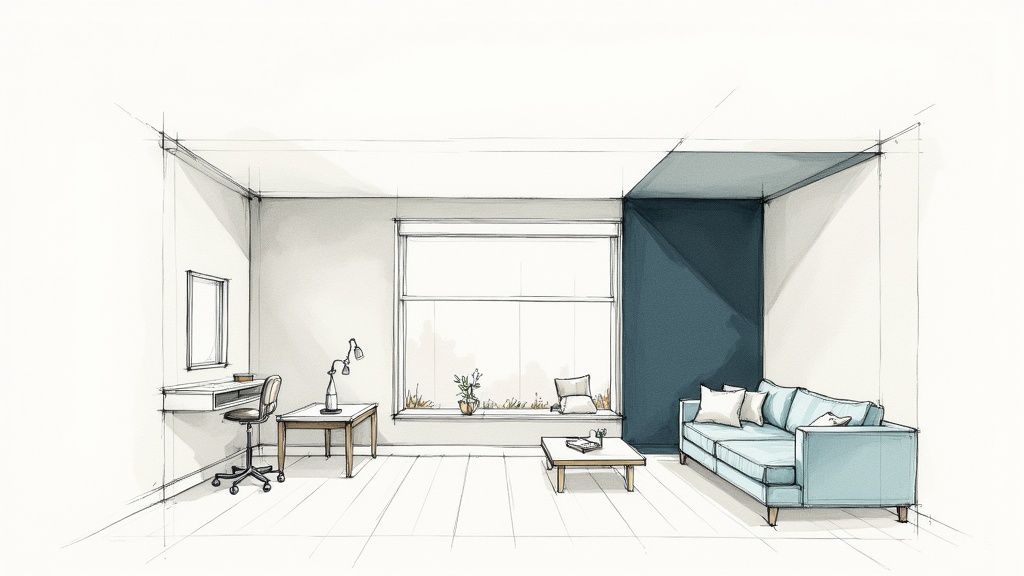
A dark color on a single wall can create an incredible illusion of depth. It sounds counterintuitive, but it works.
Paint the wall furthest from the door a rich navy blue, a sophisticated charcoal gray, or a cozy forest green. This technique draws your eye to the back of the room, making the surrounding lighter walls feel even more distant. It adds drama and proves that small spaces can handle bold design.
Layer Your Lighting for Warmth and Dimension
A single, harsh overhead fixture casts shadows and makes a room feel cramped. The solution is layered lighting. Combine multiple light sources to wash the room in a warm, even glow.
Every room needs these three layers:
- Ambient Lighting: This is your main light source for general illumination, like ceiling fixtures or recessed lighting.
- Task Lighting: This is functional light for specific activities, such as a reading lamp by a chair or under-cabinet lights in the kitchen.
- Accent Lighting: This adds personality. Use a small lamp on a bookshelf or a spotlight on a piece of art to draw the eye.
A well-lit room always feels more open. By layering light sources, you eliminate dark corners and create a cohesive glow that makes the space feel bigger.
Amplify Natural Light with Mirrors
Mirrors are a classic tool for bouncing light and creating a sense of depth. They work every time.
Place a large mirror directly across from a window to double the amount of sunlight and reflect the view, blurring the line between inside and out. Even a small decorative mirror can break up a solid wall. For more ideas, our guide on using floor-leaning mirrors is packed with inspiration.
Embrace Smart Storage and Decluttering Rituals
Clutter is the fastest way to shrink a small space. It's not just physical stuff; it's visual noise that makes a room feel chaotic. The solution is to blend organization seamlessly into your decor so that everything has a purpose and a place.
This kind of hyper-efficient organization is a cornerstone of modern design. In Europe, where renovation projects make up a large portion of the 27% global interior design revenue, optimizing compact apartments is a top priority. You can see how urban trends influence modern design to understand why these strategies are so important.
Go Vertical and Claim Hidden Spaces
When you run out of floor space, use your walls. Thinking vertically provides storage and draws the eye upward, creating an illusion of height.
Here’s how to use your vertical space:
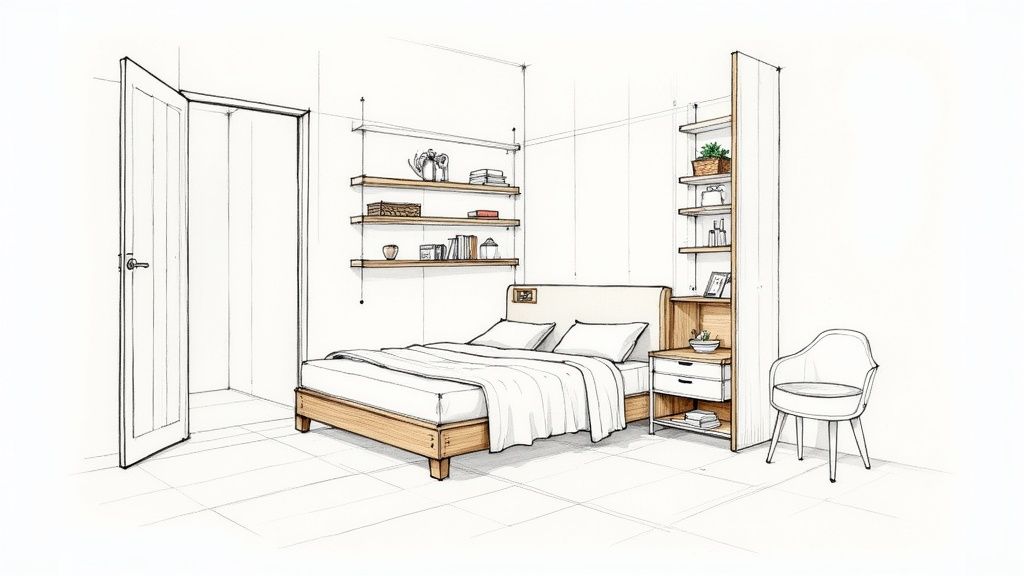
- Install Floor-to-Ceiling Shelving: A tall, narrow bookcase or a wall of floating shelves offers massive storage without taking up extra floor space.
- Use Over-the-Door Storage: Add a simple shelf above your doorways for books or decorative objects that won't create eye-level clutter.
- Utilize Under-the-Bed Space: Use sleek rolling drawers or low-profile bins to store out-of-season clothes, extra bedding, or shoes.
By claiming these forgotten zones, you free up the rest of your home. If you need inspiration, we have a guide on finding a contemporary shelf unit to match your style.
Conceal Clutter in Plain Sight
The best storage solutions are beautiful objects that also hide your everyday essentials. This is how you keep your space looking polished while having everything you need within reach.
Your storage should be as beautiful as your decor. Choose baskets, boxes, and furniture that are both decorative and useful.
Look for stylish ways to tuck things away. Use a set of woven baskets to hold throw blankets, place a decorative box on your entryway table for keys and mail, and invest in furniture with built-in storage. An ottoman with a hollow interior or a coffee table with a lift-top is your best friend in the fight against clutter.
For tough spots like closets, these essential space-saving tips for organizing small closets are a fantastic resource.
Adopt the 'One In, One Out' Philosophy
The most powerful organizing tool is a habit. To stop clutter for good, adopt the "one in, one out" rule.
Here’s how it works: every time you bring a new item into your home—a sweater, a book, a kitchen gadget—an old one must leave.
This simple ritual forces you to be more mindful about your possessions and prevents the slow creep of stuff. It’s a mental shift that will keep your home feeling curated, intentional, and clutter-free.
Got Questions About Decorating Your Small Space? We’ve Got Answers.
Even with a solid plan, decorating a small home can present challenges. Here are straightforward answers to the most common questions to help you get unstuck and create a home you love.
What Is the Best Color to Paint a Small Room?
White works, but it's not your only option. The best colors are those that reflect light well. Soft, cool tones like gentle blues, pale grays, or sage green are brilliant choices because they make walls seem to recede.
If you prefer a cozier vibe, a warm off-white or a subtle blush can be just as effective. When choosing paint, look for a high Light Reflectance Value (LRV) on the paint chip—this measures how much light the color reflects.
Designer Trick: Paint your ceiling and trim a shade or two lighter than your walls. This subtle change pulls the eye upward, creating an immediate illusion of height.
How Can I Decorate a Small Living Room Without It Looking Cluttered?
The key is intention. Instead of many small trinkets, choose one or two large pieces of art to serve as a powerful focal point. This makes the room feel more curated.
For furniture, select pieces with visible legs. A mid-century modern sofa or a slim armchair lets you see the floor underneath, creating a sense of airiness. Finally, use your walls for storage with tall bookcases and keep surfaces as clear as possible.
Are Dark Colors an Absolute No-Go for Small Spaces?
Not at all. When used thoughtfully, a dark color can make a small room feel cozy and surprisingly expansive. It's all about creating contrast and drama.
Here are two ways to do it:
- Create an Accent Wall: Paint the wall farthest from the door a deep navy or charcoal gray to create an illusion of depth, making the lighter walls around it feel like they're receding.
- Embrace the "Jewel Box" Vibe: In a tiny space like a powder room, go all in. Paint all the walls a deep, rich color to create a luxurious, intimate atmosphere. Balance it with great lighting and reflective surfaces like mirrors or metallic accents.
What Are the Biggest Decorating Mistakes I Should Avoid?
Knowing what not to do is as important as knowing what to do. Avoid these common mistakes to create a balanced home.
- Using Furniture That's Too Small: A room full of tiny furniture often feels more cluttered. A few well-scaled items, like one proper sofa instead of a tiny loveseat and chairs, will ground the space more effectively.
- Blocking Natural Light: Never block your windows with heavy drapes or bulky furniture. Natural light is essential for making a room feel open and alive.
- Forgetting to Look Up: Decorate all the way to the ceiling. Install tall shelving, hang art vertically, or find storage that stretches upward. This strategy alone can make any room feel taller and more organized.
At Griseo Interior, we believe that brilliant design should be accessible to every home, regardless of its square footage. Our collection of contemporary, minimalist decor is infused with Italian artisanal heritage to bring both elegance and smart function into your life. From our unique vases to our sculptural accents and design-forward furniture, you'll find the perfect pieces to make your small space feel thoughtfully curated and uniquely yours. Explore the collection and find what speaks to you.