

Modern Italian Home Decor: A Definitive Guide
Picture a room that whispers luxury without shouting it. A space where simplicity reigns, and every single object feels both purposeful and beautiful. This is the very soul of modern Italian home decor, a design philosophy born from 'la dolce vita'—the sweet life. It’s less about decorating and more about creating a sanctuary through minimalism, function, and absolutely impeccable craftsmanship.
Embracing The Soul of Italian Design
Modern Italian home decor isn't just a look; it's a way of living. It’s about stripping away clutter to let the pure form, rich materials, and elegant purpose of each piece truly shine. Forget filling a space—this is about curating a life where every element brings you joy and serves a clear function. It’s an idea deeply rooted in Italy's profound appreciation for art, history, and the simple beauty of a moment well spent.
Think of this design approach as a quiet rebellion against the chaos of "more." Instead of a room crowded with small, forgettable trinkets, it champions the sheer power of a few exceptional pieces. A single, sculptural vase on a console table or a perfectly engineered armchair can anchor an entire room, proving that real luxury is found in restraint and thoughtful curation.
The Core Principles in Action
At its heart, the style is a beautiful balancing act between three core ideas. Minimalism keeps the space feeling open, airy, and calm. Functionality insists that beauty must also serve a purpose. And craftsmanship infuses the home with a soulful quality that turns a house into a haven. This perfect harmony is what gives the aesthetic its timeless, magnetic appeal.
The visualization below shows just how these foundational concepts work together in modern Italian design.
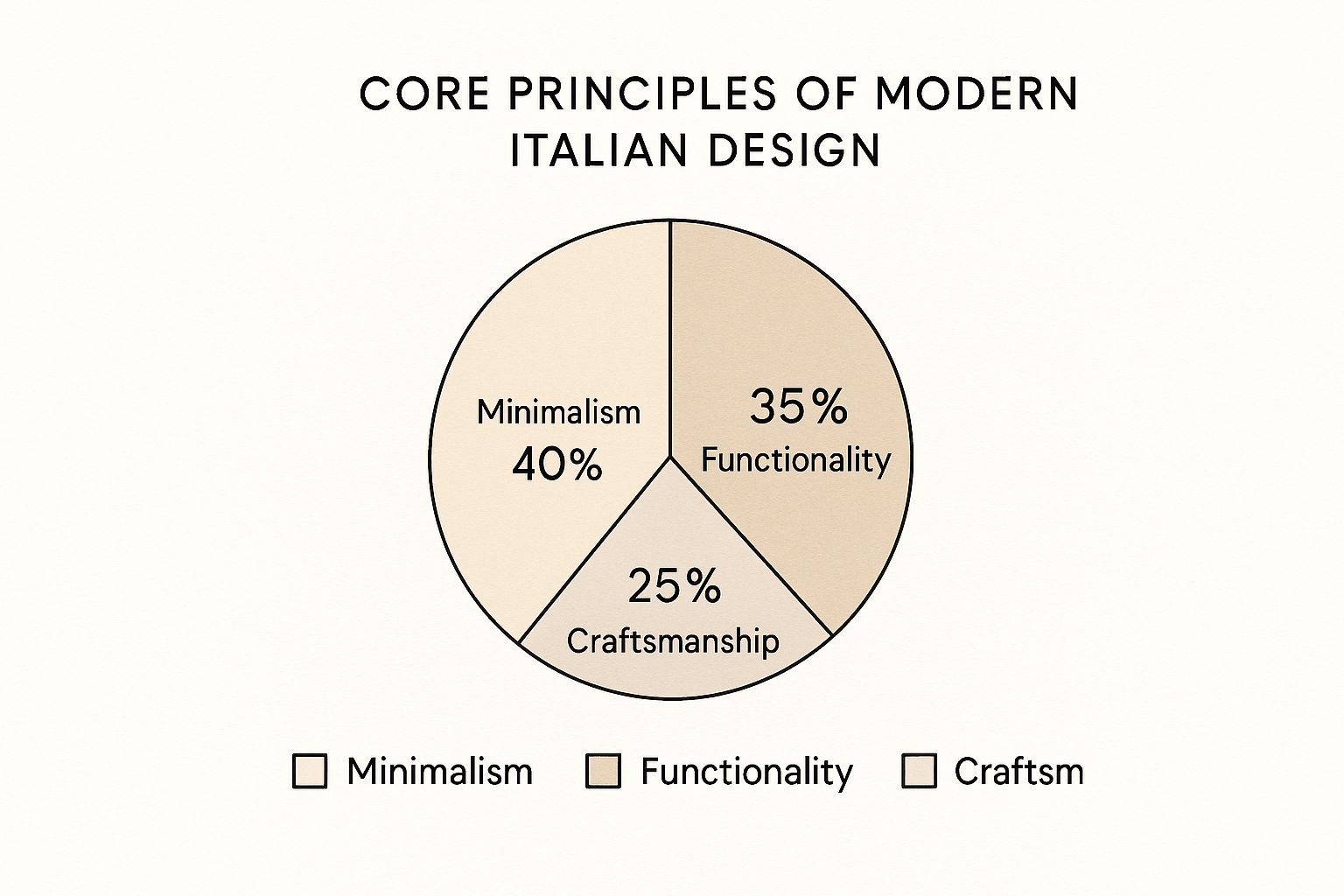
As you can see, while minimalism sets the visual tone, it's supported in nearly equal measure by practical function and superior craftsmanship. The result is a design that feels both stunning and effortlessly livable.
A Focus on Intentional Living
This entire philosophy is an invitation to live more intentionally. When we choose fewer, better things, we naturally create spaces that are not only gorgeous but also far easier to care for and live in. It's a mindful approach that resonates deeply with anyone craving a calmer, more organized life. For more inspiration on this, you can explore these essential minimalist home decor ideas and see just how powerful simplicity can be.
To put this into practice, start with these actionable steps:
- Declutter with Purpose: Take one room at a time. Remove anything that doesn’t serve a practical function or bring you genuine joy. The goal is to create visual breathing room.
- Invest in Longevity: When you need a new item, shift your mindset from "what's trendy?" to "what will last?" Prioritize well-made pieces over disposable, trend-driven items.
- Create Flow: Arrange your furniture to create clear, easy pathways through each room. This simple change encourages better movement and makes a space feel more open and welcoming.
By weaving these principles into your space, modern Italian home decor helps you transform your home from a simple place to live into a personal haven of quiet elegance and genuine comfort.
Crafting Your Italian-Inspired Color Palette

Step into any breathtaking Italian interior, and the first thing you’ll feel is the color—or rather, the feeling it creates. It’s never about one single shade; it’s about conducting an orchestra of tones that sing of serenity and effortless elegance. The real secret? Light is your most important color.
Modern Italian design is built on a bedrock of warm, sophisticated neutrals. Forget flat, boring shades. We're talking about colors with soul and history—think the soft, luminous glow of Roman travertine, the gentle hue of sun-drenched linen, or the subtle warmth of an afternoon espresso.
This move toward minimalism and clean palettes isn't just a trend; it's a reflection of a deeper desire for simplicity and function in Italian homes. It’s all about clean lines, natural materials, and colors that soothe. The Italian home decor market, projected to be worth around USD 1.86 billion by 2025, is a testament to this powerful shift toward mindful, beautifully curated living. You can explore more about Italian home decor market trends to see how this philosophy is shaping the industry.
Mastering The Neutral Foundation
Creating that signature Italian look means learning to layer neutrals with purpose. It’s an art form that adds incredible visual depth and stops a space from feeling one-dimensional. The aim is to build a soft, luminous backdrop that feels both expansive and wonderfully intimate.
Start by choosing a primary neutral to set the tone for the entire room, usually on the walls. This could be a warm off-white, a gentle greige, or a creamy beige. From there, you can start weaving in subtle variations of that core color.
A truly successful neutral palette isn't about the absence of color; it's about the celebration of light, shadow, and texture. Each shade should work in harmony to create a calm, cohesive, and deeply personal atmosphere.
Here are the key families of neutrals to build your palette from:
- Warm Whites and Creams: These are your go-to for creating a bright, airy feel. Use them on walls and ceilings to catch and reflect natural light, making any room feel instantly larger and more open.
- Earthy Beiges and Taupes: These grounding colors are incredibly versatile. Use them for larger furniture pieces, like a sofa, to create a warm anchor that pairs perfectly with wood, stone, and linen.
- Soft Greys: To add a contemporary edge without feeling cold, choose greys with warm undertones. A soft dove grey is perfect for cabinetry or a feature wall to add depth while remaining inviting.
To help you get started, here's a quick guide to the foundational principles of modern Italian design.
Core Elements of Modern Italian Decor
| Element | Key Characteristics | Actionable Tip |
|---|---|---|
| Neutral Palette | Warm whites, creams, beiges, and soft greys dominate. | Choose a primary warm neutral for your walls and layer with slightly different tones in textiles and furniture. |
| Natural Materials | Focus on wood, stone, leather, and linen. | Introduce a travertine coffee table or a walnut sideboard to serve as a natural focal point. |
| Quality over Quantity | Fewer, better pieces. Uncluttered and intentional. | Invest in one beautiful, well-crafted sofa instead of filling the room with lots of smaller, less impactful items. |
| Emphasis on Light | Maximizing natural light is key. | Keep window treatments minimal—think sheer linen curtains—and use mirrors to bounce light around the room. |
| Layered Textures | Creating depth through a mix of surfaces. | Combine a smooth leather chair with a chunky knit throw and a polished marble accent for tactile richness. |
This table is your starting point. Think of these elements as the essential ingredients; how you combine them is what will make your space uniquely yours.
Adding Depth With Materiality and Accents
Once your neutral foundation is in place, the real artistry begins. In a modern Italian home, richness comes not from a splash of loud color, but from the inherent beauty of natural materials. This is where the philosophy of 'quality over quantity' truly comes to life.
Forget a brightly painted accent wall. Instead, imagine a feature wall of textured Venetian plaster or a statement piece of furniture crafted from rich, dark walnut. The subtle veining in a slab of Carrara marble or the deep tones of supple leather provide all the contrast and interest you could ever need.
Your materials are your accent colors.
Actionable Tips for Adding Accents
- Incorporate Natural Wood: Introduce a statement piece like an oak dining table or walnut open shelving. This adds instant warmth and a soulful, organic element.
- Introduce Stone Elements: You don't need a whole countertop. Start small with a marble side table, a travertine tray, or stone coasters to bring in an organic, textural quality.
- Use Metallic Finishes: Swap out old hardware on cabinets and doors for matte black or brushed brass handles. Update a light fixture to add a crisp, modern layer.
- Embrace Greenery: Add a single, elegant olive tree in a terracotta pot or a lush fiddle-leaf fig in a corner. Plants add a living, breathing pop of color that energizes the entire space.
By focusing on this layered, textural approach, you create a palette that is both timeless and deeply personal. It’s a space that doesn’t shout for attention but rather invites you in, offering the sense of peace and understated luxury that is the true hallmark of modern Italian design.
Selecting Timeless Materials and Textures

If color sets the mood in a modern Italian home, materials are what give it a soul. They’re the source of that tactile richness and visual depth that transform a minimalist space into one that feels layered, warm, and deeply personal. This is where you go beyond just looking at a room and start truly feeling it.
The Italian approach to materials is a masterclass in balance. It’s all about celebrating the raw, organic beauty of nature and understanding how different elements play off one another. Just imagine the cool, smooth touch of marble against the deep, welcoming grain of dark wood, or the supple feel of aged leather beside the soft weave of a linen curtain. Each element has its own story.
This isn't just about looking good, either. It’s a commitment to longevity and thoughtful living. When you choose high-quality, natural materials, you're investing in pieces that don't just last—they get better with time, gaining a beautiful patina that tells the story of the life lived around them.
Anchoring Your Space with Natural Stone and Wood
At the very heart of Italian interiors, you'll find iconic materials pulled directly from the earth. These hard surfaces provide the essential structure and timeless elegance that anchor the entire design. They are the strong, quiet heroes of the room, creating a backdrop of enduring quality.
Natural stone is practically non-negotiable for an authentic Italian look. Carrara marble, with its soft white base and delicate grey veining, is a classic choice for everything from kitchen countertops to stunning coffee tables. For a warmer, more textural feel, travertine is a fantastic option; its porous nature adds a touch of rustic charm that beautifully offsets a sleek space.
These stones pair perfectly with rich, warm woods. Walnut, with its deep, chocolatey tones, adds a sense of gravity and sophistication that’s perfect for a statement dining table or a handsome credenza. On the other hand, lighter woods like oak can keep the space feeling bright and airy, especially when used for flooring or custom cabinetry.
Actionable Tips for Mixing Hard Surfaces
- Create Contrast: Pair a highly polished marble coffee table with a more matte, natural-finish wood floor. The difference in sheen creates instant visual interest without adding color.
- Stay in the Same Tonal Family: If you choose warm-toned travertine for a console table, pair it with furniture in woods that also have warm undertones, like oak or cherry. This creates a beautifully cohesive and harmonious feel.
- Make Stone a Focal Point: Let one magnificent piece be the star. Invest in a marble fireplace surround or a grand travertine dining table and keep the surrounding elements simpler to let it truly shine.
By thoughtfully combining these elemental materials, you build a space with inherent character and strength, setting the perfect stage for softer textures to come into play.
Layering Softness with Luxurious Textiles
Once you have that strong foundation of stone and wood, it’s time to weave in softness and comfort with textiles. This is how you create that inviting atmosphere that makes you want to curl up and stay awhile. Modern Italian décor uses textiles to add warmth, absorb sound, and introduce that crucial layer of touchable comfort.
Supple leather is a perennial favorite for seating, whether it's a sleek sofa or a classic armchair. It offers a smooth, buttery texture that only gets more beautiful as it ages. To balance its smoothness, introduce fabrics like linen for curtains and cushions. Its breathable, slightly rumpled texture brings a relaxed, casual elegance into the room.
And for a touch of pure indulgence, velvet is an incredible choice for accent pieces. A velvet armchair or a few throw pillows in a deep, muted jewel tone can add a pop of luxurious texture that feels both modern and utterly timeless.
The real art of texture is in the mix. You're aiming for a dynamic interplay between hard and soft, smooth and rough, polished and matte. This sensory variety is what makes a minimalist space feel so rich and complete.
How to Effectively Layer Your Textiles
- Start with the Largest Piece: First, choose the upholstery for your main sofa. This will be the primary soft texture in the room. A leather or simple linen-blend sofa is a perfect starting point.
- Add Contrasting Throws and Pillows: If your sofa is smooth leather, drape a chunky knit wool throw over the arm. If it's linen, add a single velvet or bouclé pillow for a delicious textural contrast.
- Soften the Windows: Hang sheer linen curtains high and wide around your window frames. This technique makes ceilings feel taller and diffuses natural light beautifully without feeling heavy.
- Anchor with a Rug: Place a low-pile wool or jute rug under the front legs of your sofa and chairs. This defines the seating area and adds warmth underfoot, completing the textural landscape.
By layering these materials with intention, you craft an environment that is a delight for all the senses, embodying the effortless comfort and understated elegance at the very core of modern Italian design.
Choosing Iconic Italian Furniture and Lighting
In a modern Italian home, furniture and lighting are never just things. They don't simply fill a room; they give it a soul, a story, a beating heart. Each piece is a piece of functional sculpture, selected with the same eye a curator would use for a gallery wall. The idea is to find heroes for your space—pieces that draw you in with their graceful forms and flawless quality.
This isn’t about filling every corner. It's about making deliberate, meaningful investments. Instead of a room crowded with small, forgettable items, the Italian way champions the sheer power of a single, extraordinary piece. A stunningly engineered sofa or a gravity-defying floor lamp can single-handedly define an entire room, proving that true luxury lies in quality, not quantity.
This devotion to design has cemented Italy's place as a global leader. The Italian home furniture market is a testament to this, projected to hit USD 17.64 billion in 2025 and climb to USD 20.68 billion by 2030. This isn't just a number; it's a reflection of the worldwide love for the artistry and innovation that brands like Kartell and Poltrona Frau have mastered. You can dig deeper into the data on the thriving Italian furniture market to see its global influence.
Identifying the Hallmarks of Great Italian Furniture
To choose the right pieces, you have to learn to see like a designer. True Italian furniture speaks a distinct visual language—one of clean lines, imaginative shapes, and an almost fanatical attention to detail.
Look for furniture that finds its beauty in simplicity but its character in innovation. Take the classic low-profile modular sofa. Its clean, horizontal lines bring a sense of calm and space, anchoring a room without ever dominating it. At the same time, its modular nature offers a brilliant flexibility that adapts to your life, not the other way around.
When you're considering a piece, ask yourself this: Does it solve a problem beautifully? An iconic Italian design doesn’t just sit there looking good; it makes your life in that space better, blending pure art with pure utility.
Actionable Strategies for Selecting Statement Furniture
Choosing a centerpiece for your room can feel like a huge decision, but a few simple strategies can guide you. It's all about balancing immediate visual impact with the piece's long-term value.
- Prioritize Form and Silhouette: Before anything else, assess its shape. Look for a piece with a strong, sculptural silhouette that is interesting from all angles, like the graceful curve of an armchair or the crisp lines of a console.
- Assess the Craftsmanship: Get close and examine the details. Are the joints seamless? Is the upholstery stitching perfectly straight? Flawless craftsmanship is your best indicator that a piece was built to last for generations.
- Consider Material Honesty: Great Italian design lets materials speak for themselves. Choose pieces that proudly display the natural grain of their wood, the rich texture of their leather, or the cool gleam of their metal frame.
When you focus on these elements, you’re no longer just following a trend. You're choosing a future heirloom—an anchor for your home that will feel just as right in twenty years as it does today.
Letting There Be Light: Sculptural Illumination
Lighting in an Italian home is never an afterthought; it’s woven into the very fabric of the design. Just like the furniture, Italian light fixtures are designed to be beautiful objects in their own right, whether they are switched on or off. They are the jewelry of a room, adding that final touch of drama and sophistication.
The sculptural arc lamp is the perfect embodiment of this philosophy. Its dramatic curve can light up an entire seating area without needing to be wired into the ceiling, creating a breathtaking focal point that is both grand and impossibly graceful. In the same way, a cluster of hand-blown glass pendants hung above a dining table can elevate a simple meal into a memorable event.
To properly light your room, think in layers:
- Task Lighting: Place functional light right where you need it for activities like reading. A sleek, adjustable floor lamp beside an armchair is a perfect example.
- Ambient Lighting: This is the general, overall glow for the space. Install a dimmer switch for your main ceiling fixture to easily control the mood from bright and airy to soft and intimate.
- Accent Lighting: Use this to create magic. Aim a small, discreet spotlight at a piece of art or use an uplighter behind a large plant to create dramatic shadows on the wall.
By layering these three types of light, you create a space that’s not just functional, but full of depth, warmth, and visual interest. Each light becomes a brushstroke, painting your home with mood and beauty.
A Room-by-Room Guide to Italian Styling
Alright, we’ve covered the principles, the gorgeous materials, and the iconic furniture. Now for the fun part: bringing it all home. Let's walk through your space and see how these ideas translate into rooms you can actually live in and love.
Think of this as your practical checklist for transforming your house, room by room, with that undeniable Italian sense of purpose, flow, and beauty.
The Living Room: An Oasis of Connection
The Italian living room, the soggiorno, is so much more than a place to binge-watch a series. It’s the true heart of the home, crafted for conversation, connection, and simply being together. It all starts with the layout, which should feel open and incredibly inviting, encouraging people to gather.
First, anchor the space with a low-profile modular sofa to maintain sightlines and offer flexibility. Then, arrange armchairs to create a conversation circle, facing each other rather than the TV. Ensure there are clear pathways around the furniture grouping to create an easy, graceful flow.
At its core, the modern Italian living room is designed to build community. Every single piece is placed with the intention of bringing people together, creating a beautiful and functional hub for social life.
Trying to get that open feeling in a smaller space can be tricky, but it's absolutely doable. If you're looking for some specific advice, our guide on small living room design ideas has some great tips for making the most of every square inch.
Finally, ensure every item serves a purpose. A slim console table behind the sofa can hold a sculptural lamp and a place for keys. A travertine coffee table provides a durable, beautiful surface. It always comes back to one simple rule: quality over quantity.
The Kitchen: Sleek Functionality and Hidden Beauty
A modern Italian kitchen is a masterclass in elegant efficiency. It's a space where form and function are so perfectly intertwined that it feels almost minimalist. The real magic is in creating a seamless look that hides all the hardworking parts of the kitchen behind a stunningly clean facade.
Start by choosing handleless cabinetry in a soft matte or subtle gloss finish. This creates an uninterrupted visual plane that feels incredibly calming. Opt for integrated appliances—a fridge, dishwasher, and oven that sit completely flush with your cabinets are key to achieving that streamlined, uncluttered look.
Bringing the Italian Kitchen to Life:
- Embrace a Monochromatic Palette: For your cabinets, stick to a simple color scheme of white, soft grey, or a rich charcoal. This creates an instant sense of clean sophistication.
- Choose a Statement Countertop: Use a single, continuous slab of quartz or marble for both the countertop and backsplash. This creates a breathtakingly cohesive look that's durable and easy to clean.
- Get Serious About Storage: The key to clear countertops is smart organization. Install pull-out pantries, deep drawers with dividers, and appliance garages to keep everyday clutter hidden away.
The end goal is a workspace that is as gorgeous as it is practical, turning the simple act of cooking into a more serene, enjoyable ritual.
The Bedroom: A Tranquil and Restful Retreat
In Italian design, the bedroom is a true sanctuary. It’s a space devoted entirely to rest, and anything that distracts from that sense of calm and rejuvenation is edited out. Minimalism here isn't just an aesthetic—it's a path to a more peaceful state of mind.
The bed is the undeniable star of the show. Choose a simple, beautifully crafted frame with a low headboard in warm wood or upholstered in a natural fabric. Invest in high-quality linens—crisp cottons or soft linen—and a simple cashmere or wool throw. The luxury here is all about how it feels to the touch.
Keep other furniture minimal. Install sleek, wall-mounted nightstands to free up floor space and enhance that airy, uncluttered feeling. Instead of a bulky dresser, consider a custom built-in wardrobe with flat-panel doors that blend into the walls.
- Soften the Light: Install dimmer switches for all lighting. Use soft, ambient sources like a pair of elegant wall sconces on either side of the bed or a single sculptural pendant light to cast a warm, gentle glow.
- Decorate with Intention: Resist the urge to fill surfaces. A single piece of art you love, a beautiful vase like the Serenitatem on a nightstand, or a small stack of books is more than enough.
- Play with Texture: Add warmth with a low-pile wool rug that extends from under the bed. Use soft, floor-to-ceiling linen curtains to diffuse morning light beautifully.
By stripping the room back to its essential elements and focusing on pure quality and comfort, you create a personal haven that perfectly captures the restful spirit of modern Italian home decor.
Why Italian Design Endures and Inspires
Have you ever wondered what gives Italian design its magnetic pull? It’s more than just a look; it's a philosophy, a way of life that weaves beauty into the very fabric of our daily routines. This isn't about chasing fleeting trends. It's about a deep, unwavering commitment to creating spaces that feel both breathtakingly beautiful and genuinely livable.
This dedication has built a global powerhouse. The "Made in Italy" label is more than a tag—it's a promise of unparalleled craftsmanship, a legacy that the world can't get enough of. The numbers tell the story: the Italian furniture industry experienced a staggering 22.2% sales jump in 2022. Looking ahead, the market is projected to swell to over USD 29.4 billion by 2033, proving its influence is only growing stronger. You can explore the growth drivers in the Italian home decor market to see just how bright its future is.
Investing in a Way of Life
Choosing Italian design is about so much more than just furnishing a room. It’s an investment in a more intentional, more beautiful way of living. It nudges us to strip away the clutter and focus on pieces that spark real joy and serve a genuine purpose. Think of it as a quiet rebellion against the disposable, where every single object earns its keep through impeccable form and perfect function.
It’s about curating a home that doesn't just look good, but feels good—a space that truly supports and inspires you every day. This means embracing materials that get better with age and designs that will feel just as right in twenty years as they do today. To understand what makes this standard so special, take a look at our article on the true meaning of Made in Italy.
By embracing modern Italian decor, you are not just styling a room; you are adopting a mindset. It is a choice to surround yourself with fewer, better things—pieces that elevate your environment and enrich your life with their quiet, confident beauty.
This is exactly why Italian design doesn’t just endure; it thrives. It's a powerful reminder that our homes can be our sanctuaries—havens of calm, elegance, and purpose. It inspires us to live more thoughtfully, discovering that true luxury isn't found in excess, but in the perfect, intentional detail.
Your Questions, Answered
Stepping into the world of modern Italian design is exciting, and it's natural to have a few questions as you get started. Think of this as a conversation with a friend who’s been there before—here are some simple answers to help guide you on your journey.
How Can I Achieve This Look On A Budget?
The good news? Capturing that Italian spirit is less about a big budget and more about a thoughtful mindset. It all comes down to a core belief: quality over quantity.
Instead of buying many temporary items, save up for one key piece that will define a room, like a well-crafted armchair or a sculptural floor lamp. Start with high-impact, low-cost changes: declutter thoroughly to create an open feeling. A fresh coat of high-quality neutral paint can instantly create a sophisticated canvas. Finally, hunt for vintage finds at local markets; a single piece with history can bring more character than a dozen new items.
Can I Mix Modern Italian Pieces With My Existing Decor?
Of course! In fact, you absolutely should. A home that feels truly alive and personal is one that's been collected and curated over time, not bought straight from a showroom floor.
The secret to mixing styles beautifully is to find a common thread. Look for a connecting element—it could be a color that appears in both old and new pieces, a shared material like wood or metal, or a similar clean-lined silhouette. For example, pair a sleek, new Italian sofa with your rustic wooden coffee table. The contrast creates energy. If you're hesitant, start small by introducing a sculptural vase or minimalist side tables to see how they interact with your existing furniture.
The most beautiful homes are those that tell a story. Blending new Italian designs with cherished pieces you already own creates a space that is uniquely yours—a true reflection of your personal journey and taste.
What Is The Most Important Element To Get Right?
If you only focus on one thing, make it this: a commitment to uncluttered, intentional living. More than any single piece of furniture, modern Italian design is about creating a feeling of space—both physical and mental.
Before you buy anything new, edit what you already own. A room with just a few beautiful things will always feel more calming and luxurious than a room crowded with things you don't love. Once you embrace this "less is more" philosophy, every new piece you bring in will have room to breathe, allowing its unique design and craftsmanship to truly take center stage.
Ready to bring that feeling of authentic Italian elegance home? Discover the minimalist vases, sculptural accents, and timeless furniture that will transform your space at Griseo Interior. Explore our collection of contemporary Made in Italy designs and find the perfect piece to begin your story.