

Your Definitive Guide to Modern Italian Interior Design
Imagine a room that is both sophisticated and deeply comfortable—a space that breathes elegance without trying too hard. This is the soul of modern Italian interior design. More than a "look," it's a philosophy that weaves a rich history of artisanal craft into a clean, contemporary vision. To achieve it, focus on choosing quality over quantity to create spaces that feel both luxurious and truly livable.
The Soul of Modern Italian Design
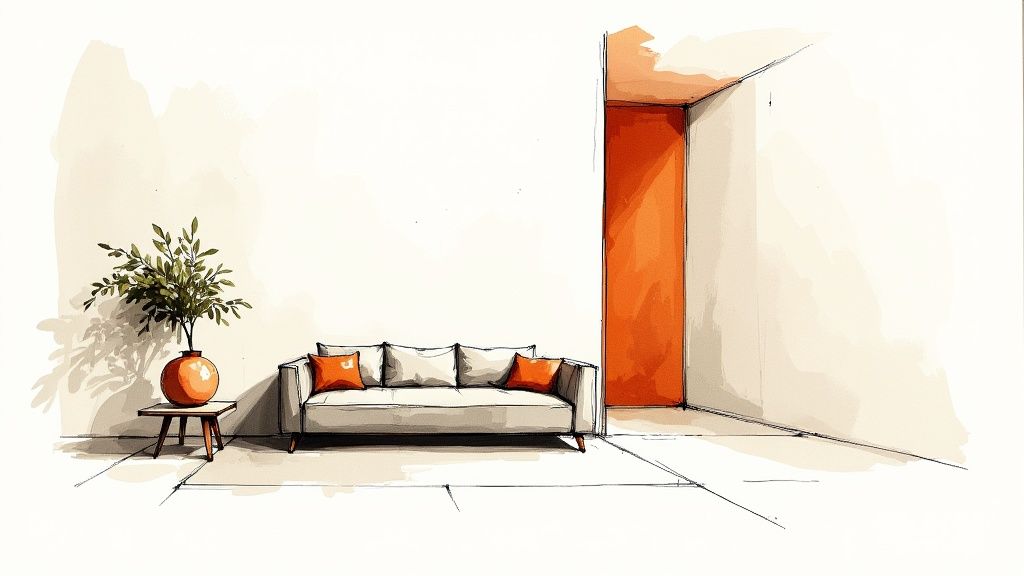
This style isn't about cramming a room with objects. It's about mindfully curating the life you want within its walls. You achieve this by consciously surrounding yourself with fewer, better things—investing in pieces that transcend trends, each chosen for its beauty, purpose, and ability to last.
The result is a home that feels open and refined, yet warm and connected to a long legacy of masterful craftsmanship. Your goal is to build a personal sanctuary of timeless style and intentional living, a true embodiment of la dolce vita—the sweet life.
Beyond Aesthetics: A Lifestyle Choice
When you adopt modern Italian design, you are making a quiet rebellion against today’s throwaway culture. Forget chasing fleeting fads. This approach champions pieces with a story, built to be passed down through generations. It’s this unwavering commitment to quality that gives Italian design its signature, understated confidence.
To bring this into your home, embrace these core ideas:
- Curate with Intent: Ensure every object has a reason for being there. This contributes to a calm, uncluttered whole.
- Value Artisanal Heritage: Place value on the human skill and history behind each piece, whether it’s a hand-finished table or a perfectly stitched sofa.
- Choose Sustainable Luxury: Invest in beautiful, durable materials. This naturally creates a home that’s kinder to the planet and less wasteful over time.
This focus on enduring quality has a real-world impact. The Italian furniture market, a pillar of this design ethos, is set to grow annually by 4.8% between 2025 and 2033. That growth is fueled by luxury and smart furniture, which together make up around 60% of the market's revenue, proving how tradition and innovation can beautifully coexist.
The Griseo Interior Ethos
Here at Griseo Interior, our own made-to-order model is a direct expression of this philosophy. By crafting pieces only when they are chosen, we sidestep the enormous waste that comes from mass production and stockpiled inventory. It’s our way of honoring a timeless Italian principle: make it beautiful, make it well, and make it mean something. To go deeper, you can explore our guide on the enduring appeal of Made in Italy design.
Modern Italian interior design teaches us that true luxury isn't about what you own, but how you live. It is the art of creating a personal narrative through carefully selected pieces that bring joy, comfort, and beauty into daily life.
This guide will give you real, actionable ways to bring this coveted aesthetic into your home. We'll move past the abstract and provide the practical tools to transform your space, one thoughtful choice at a time.
The Unspoken Rules of Modern Italian Design
To truly master modern Italian design, you have to think like a designer. It’s about a feeling, a philosophy that guides every decision. Think of it less as a set of rigid rules and more as a mindset that turns a simple room into a space with soul.
It’s like a perfectly tailored Italian suit. Its stunning effect comes not from a loud pattern, but from the impeccable cut, the feel of the fabric, and its effortless hang. Every line is intentional, creating an aura of quiet confidence. That's the feeling to aim for in your home.
The Art of Subtraction
One of the most powerful tools in your design vocabulary should be l'arte di sottrarre—the art of subtraction. This is the discipline of stripping away everything non-essential so that what remains can truly shine. Imagine a sculptor chipping away at marble. The masterpiece is revealed by taking away everything that isn't the sculpture.
In your home, apply this by creating open, airy spaces where your most treasured pieces have room to breathe. Instead of cluttering a room, choose just one incredible sculptural armchair or a single, captivating painting. This single element becomes the focal point, allowing its quality and form to speak volumes. Make a powerful statement through restraint, not noise.
The goal is a room that feels both intentionally curated and deeply calming. The empty space—the negative space—becomes just as important as the objects themselves, creating a serene backdrop where true craftsmanship can be appreciated.
Embracing Studied Carelessness
Next, adopt a quintessentially Italian concept: Sprezzatura. The word dates back to the 16th century and describes a studied carelessness—the art of making something difficult look completely effortless. In design, this is the human touch that prevents a modern space from feeling cold or sterile.
To implement this, artfully drape a linen throw over a clean-lined sofa. Create a slightly-askew stack of art books on a coffee table or place a single, handmade ceramic vase on a polished console. Sprezzatura intentionally introduces a relaxed, lived-in quality, reminding you that homes are for living, not just for show.
To find your own Sprezzatura, look for ways to soften the clean edges of modernism. Pair a sleek, minimalist dining table with rustic, hand-thrown plates. Or, place a worn vintage rug under a sharp, contemporary light fixture. It’s this beautiful dance between precision and ease that will breathe personality and warmth into your room.
Celebrating Material Honesty
Finally, build your design on a foundation of material honesty. This is the practice of letting materials be celebrated for what they are. Wood should look and feel like wood, stone should feel like stone, and leather should be unapologetically leather. Avoid trickery or imitation. The inherent, natural beauty of the material should always be the hero.
This is where our ethos at Griseo Interior connects so deeply with this philosophy. Choosing high-quality, natural materials is an investment in pieces that last. A solid oak table or a marble countertop doesn’t just endure; it evolves, gathering a rich patina and telling the story of the life lived around it. This focus on authentic, long-lasting materials is the perfect antidote to today’s throwaway culture. Make the conscious choice to build a home that ages gracefully right alongside you.
To put these concepts into practice, use this simple framework.
Core Principles of Modern Italian Design
| Principle | Core Idea | Actionable Tip |
|---|---|---|
| The Art of Subtraction | Less is more. Create focus by removing the non-essential. | Choose one statement piece for a room and let it be the hero. Keep surrounding decor minimal. |
| Sprezzatura | Make it look effortless. Introduce a touch of lived-in imperfection. | Casually drape a high-quality throw over your sofa or mix a vintage item with modern furniture. |
| Material Honesty | Let materials be themselves. Celebrate the natural beauty of wood, stone, metal, and leather. | Opt for a solid wood coffee table instead of a veneer, and let its grain be the main feature. |
These principles aren't just about aesthetics; they're about a way of life—one that values quality, intentionality, and the simple beauty of things made well.
Building Your Italian Color and Material Palette
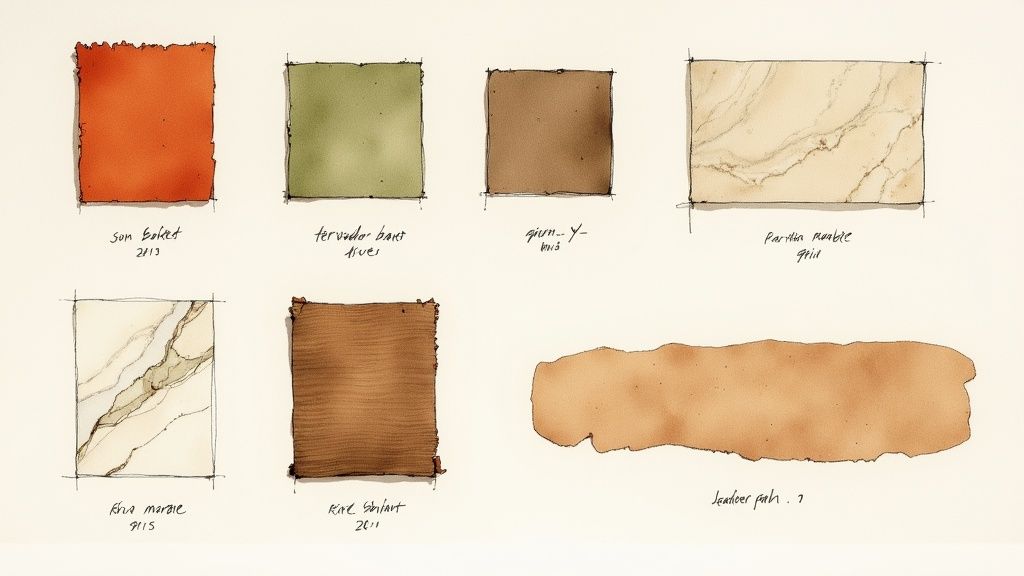
The soul of any unforgettable space is its palette—the specific colors and materials that come together to tell a story. For modern Italian design, that story is one of earth, elegance, and respect for authenticity. The key is to choose elements that feel both sophisticated and fundamentally natural.
Think of it like crafting a classic Italian meal. You don’t need a chaotic mix of a dozen flavors. You just need a few exceptional, high-quality ingredients. Let’s walk through how to choose those perfect ingredients for your home.
Crafting Your Color Story
The colors of Italian design are pulled straight from the landscape, from the sun-drenched hills of the countryside to the quiet neutrals of a Milanese apartment. To capture that authentic feeling, start by choosing a primary palette that speaks to you.
Here are two classic directions you can take:
- The Tuscan Villa Palette: To create warmth, start with a base of creamy whites and soft beiges. Then, layer in sun-baked terracotta, muted olive greens, and the rich ochre of a Tuscan sunset. This will create a look that feels rustic yet utterly refined.
- The Milanese Apartment Palette: For a chic, urban look, build on a foundation of elegant neutrals like cool greys, warm greige (that perfect blend of grey and beige), and soft creams. Keep accent colors understated, such as a deep navy, a rich charcoal, or a subtle gleam of burnished brass.
No matter which path you take, the secret is to build a layered, cohesive look. Aim for harmony, not shock value.
Choosing Materials That Last a Lifetime
Honesty in materials is everything in modern Italian design. To achieve this, choose materials that are not just beautiful but are unapologetically themselves—durable, real, and authentic. These aren’t trendy finishes destined to feel dated; they are timeless elements that only get better with age.
Investing in high-quality, natural materials is a cornerstone of sustainability. They reduce waste by eliminating the need for replacement and develop a beautiful patina over time, allowing your home to age with grace.
Here are the essential materials to incorporate into your design:
- Natural Stone: From the creamy veins of travertine to the bold swirls of Carrara marble, natural stone is a non-negotiable. Use it for flooring, countertops, or a stunning coffee table to ground your space with permanence and quiet luxury.
- Rich Woods: Wood brings necessary warmth and texture, preventing a modern space from feeling cold. Always opt for solid woods like walnut, oak, or cherry, preferably with a natural, matte finish that lets the grain speak for itself. This love for wood is so central that it commands a 61.85% market share in Italy's furniture industry.
- Supple Leathers: A beautifully made leather sofa or armchair is an icon of Italian design. Look for high-quality, full-grain leathers in natural tones like cognac, chocolate brown, or classic black. Over the years, the leather will soften and develop a character that is uniquely yours.
- Tactile Textiles: To soften the hard surfaces of stone and wood, bring in rich textiles. Use the beautiful drape of heavy linen curtains, the cozy feeling of a wool rug underfoot, or the luxe touch of velvet accent pillows. These elements add crucial layers of comfort and sensory richness.
The immense value placed on these materials is clear when you look at the market. As of 2025, the Italian furniture market is valued at USD 21.34 billion and is on track to hit USD 23.33 billion by 2030. This growth isn't just about style; it’s fueled by a deep-rooted tradition of woodworking and a powerful modern demand for sustainability, with 83% of firms now embedding decarbonization goals into their core strategies. You can dive deeper into the Italian furniture market trends and statistics to see how this commitment to quality is shaping the entire industry.
When you carefully select your colors and materials, you are doing more than just decorating a room. You are building a space with integrity, substance, and a story that will continue to unfold for years to come.
Choosing Iconic Furniture with Confidence
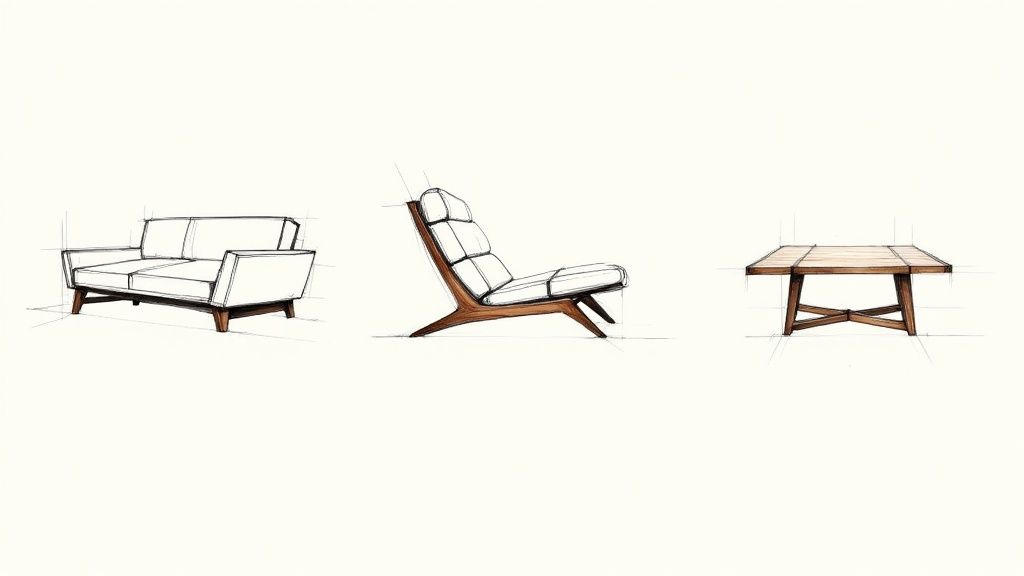
Bringing modern Italian design into your home isn’t about just filling a room—it’s about curating a collection of future heirlooms. Each piece you select should act as an anchor, a piece of functional sculpture that defines the space and tells a story. This is where you invest in forms and craftsmanship that will bring you joy for a lifetime.
Think of an Italian sofa as the heart of your living room, a central piece designed to spark conversation. The best examples are more than just furniture; they become landmarks in your home, breathing life into the core principles of beauty, comfort, and enduring quality.
Decoding Timeless Forms
The magic of iconic Italian furniture is its ability to feel both revolutionary and completely eternal. These pieces transcend trends because their design is rooted in a profound understanding of form, function, and the human experience. They are born from the perfect blend of a visionary idea and masterful execution.
Take the gravity-defying cantilever chair, for instance. It's a marvel of engineering that feels as fresh today as it did decades ago. Or consider the low-profile, modular sofas from pioneers like B&B Italia, which transformed living rooms from static spaces into flexible, social landscapes. These designs became classics because they solved a real human need with unparalleled elegance.
The most enduring designs are the ones that feel like sculptures. They command attention not with flashy details, but through the purity of their lines, the intelligence of their structure, and the honesty of their materials.
To spot a piece with this staying power, research its story. Who was the designer? What problem were they trying to solve? A truly timeless piece always has a point of view, a reason for being that goes far beyond its basic function.
Identifying Superior Craftsmanship
When you invest in a piece of Italian furniture, you're not just buying an object; you're investing in centuries of artisanal heritage. Learning to distinguish true craftsmanship from mass-produced imitations is key. It's all in the small, often unseen details that signal superior quality.
Here’s what to look for when you're shopping:
- The Feel of the Materials: Run your hand across the wood. It should feel solid and silky smooth, never flimsy. A high-quality leather from a maker like Poltrona Frau will feel buttery and supple, developing a beautiful patina over time.
- The Precision of the Joinery: Examine how the piece is constructed. Joints should be tight and seamless. True craftsmanship leaves no room for gaps, messy glue, or visible screws where they don’t belong.
- The Quality of the Stitching: On any upholstered item, inspect the seams. The stitching should be perfectly straight, even, and tight—a clear giveaway of the skill that went into its creation.
This unwavering commitment to excellence is a huge reason the Italy Interior Design Market was valued at roughly USD 3.74 billion in 2023, with projections showing it could hit nearly USD 4.92 billion by 2032. Much of that energy is coming from the design hubs in Northern Italy, where this incredible legacy of manufacturing meets modern innovation.
Mastering Scale and Proportion
Choosing the perfect piece is also about understanding its relationship to your space. A magnificent sofa that overwhelms a small room is just as much a design mistake as a tiny chair lost in a vast one. Modern Italian design is about open, uncluttered layouts, so getting the scale right is crucial.
Before you commit, map it out. Use painter's tape on the floor to outline the footprint of the furniture you're considering. This helps you visualize not just the object itself, but also the negative space around it, ensuring your room feels balanced and can breathe. For a closer look at brands that get this right every time, you might enjoy our guide to the most iconic Italian furniture brands.
In the end, choosing iconic furniture with confidence means trusting your gut. It’s about finding pieces that connect with your personal story—objects of such profound beauty and quality that they become a cherished part of your family’s legacy.
Mastering Light and Space the Italian Way
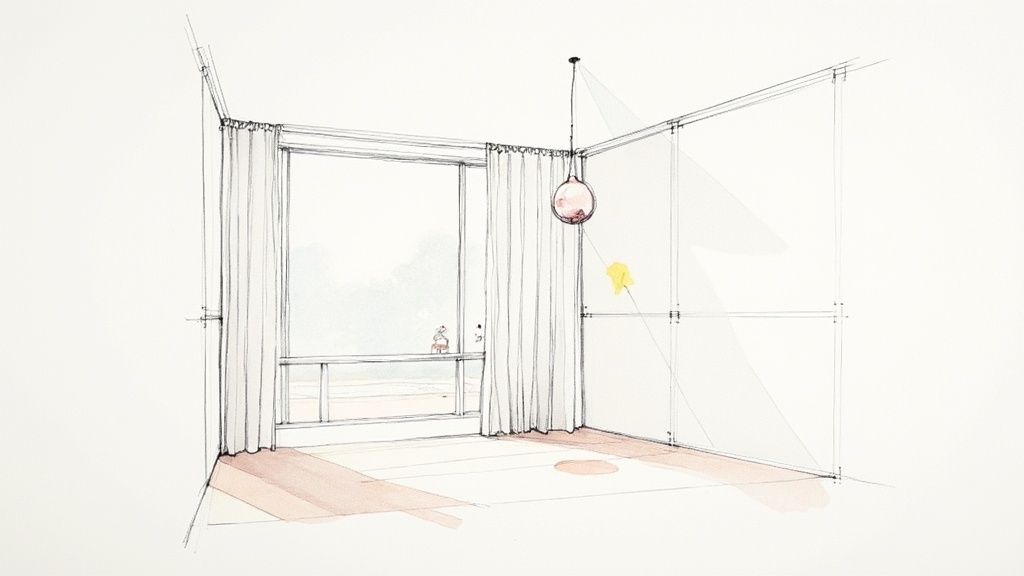
If materials give modern Italian design its body, then light gives it a soul. In Italy, light is never just a utility. It's a living element—a design tool you can use to sculpt, define, and breathe life into a room. The secret to that signature Italian feeling of effortless airiness and quiet drama is mastering the interplay between light and space.
This isn’t about just swapping in brighter bulbs. It’s a thoughtful dance between natural daylight and artificial fixtures. Treat each as a distinct layer, working in harmony to shape how you experience a room. A well-lit Italian interior feels expansive and serene because every source of light is intentional. How you illuminate your home is just as crucial as what you put inside it.
Harnessing Natural Daylight
Italian designers treat natural light as the most dynamic element in any space. Your goal should be to invite as much of it as possible, letting it shift and change with the hours. It's what transforms a room's mood from bright and energizing in the morning to soft and tranquil by dusk.
Start with an "open window" mindset, both literally and figuratively. Design your space to feel like it's in a constant conversation with the outdoors, gently blurring the lines between inside and out.
Here are a few ways to welcome the daylight in:
- Embrace Sheer Fabrics: Swap out heavy, opaque drapery for light materials like linen or sheer cotton. They beautifully soften incoming light without blocking it, adding a touch of Sprezzatura (effortless style) while creating a gentle, diffused glow.
- Use Mirrors Strategically: A large, thoughtfully placed mirror is a timeless trick. Position one opposite a window to capture sunlight and bounce it back into the room. This will make the space feel instantly larger and more luminous.
- Keep Window Areas Uncluttered: Resist the urge to place bulky furniture right in front of your windows. By keeping these pathways clear, you allow light to penetrate deep into the room, chasing away shadows in the farthest corners.
Think of your windows not just as openings, but as frames for daylight itself. When you celebrate the light and the view it brings—rather than obstructing it—you completely change the feeling of a room.
Layering Artificial Light Like a Pro
Once the sun sets, turn your artistry to artificial lighting. In modern Italian interior design, light fixtures are functional sculptures. Forget a ceiling full of boring recessed lights; here, every lamp is an opportunity to make a statement and set a mood. The key is to layer different types of light to create a rich, versatile ambiance.
A successful lighting plan always involves three distinct layers:
- Ambient Lighting: This is your room’s general illumination, often from a central fixture. Opt for a sculptural pendant or a modern chandelier that doubles as a stunning focal point.
- Task Lighting: This is direct, focused light for activities like reading or prepping food. Use an elegant floor lamp arching over an armchair or sleek under-cabinet lighting in the kitchen.
- Accent Lighting: This is where you create drama. Use this layer to highlight architectural details, artwork, or cherished objects. A carefully aimed spotlight or an artful table lamp can add incredible depth and character.
To see just how transformative a single fixture can be, take a look at our guide on choosing the perfect sculptural table lamp. By thoughtfully combining these layers, you can craft a space that’s not just functional but also warm, inviting, and full of personality—the very essence of Italian living.
How to Curate Your Own Italian-Inspired Home
Bringing modern Italian design into your home isn't about ticking off items on a checklist. It's about a shift in mindset—a commitment to quality, intention, and the quiet joy that comes from living with beautiful, meaningful objects.
As you tie these ideas together, remember this: your home should be the most authentic expression of who you are. It’s a space for building a story, where every piece, from the sculptural vase on the console to the sofa anchoring the living room, is a conscious choice. It's a piece you connect with, admire, and plan to cherish for years to come.
Your Actionable Starting Points
Getting started can feel like the hardest part. The key is to avoid the temptation to overhaul everything at once. Instead, focus on a few key moves that will make the biggest impact, allowing you to build your vision piece by piece.
Here’s a simple roadmap to get you started:
- Start by Subtracting: Before adding anything new, edit what you already own. Clear out anything that feels like clutter or no longer sparks joy. This act of creating "negative space" is what allows quality to breathe and shine.
- Identify Your Anchor Piece: Pick one room and invest in a single, impeccably crafted piece of furniture. It could be a solid wood dining table, a beautifully designed armchair, or a striking light fixture. Let this one item set the tone and become the heart of the space.
- Introduce Natural Materials: Bring in an element of raw, material honesty. Add a travertine coffee table, a set of airy linen curtains, or a handmade ceramic bowl. You’ll immediately feel the difference that authentic, tactile materials make in a room.
The Mindset of Sustainable Luxury
At its core, the Italian design philosophy is inherently sustainable. When you choose well-made items crafted from durable, honest materials, you're naturally stepping away from our modern culture of disposability. You're investing in future heirlooms, not fleeting trends.
True luxury isn’t about how much you own; it's about the intention behind what you own. It is the freedom that comes from being surrounded only by things that hold value, beauty, and personal meaning. This is the very heart of modern Italian interior design.
This is the exact philosophy that guides our made-to-order ethos at Griseo Interior. It ensures that each piece is created with purpose and care, just for you. It’s a way of honoring the incredible legacy of Italian craftsmanship while looking toward a more mindful, sustainable future.
Think of your home as a living canvas, and you are its curator. Start your journey today by taking one small, intentional step. Choose pieces that echo your values, celebrate true artistry, and are built to inspire you not just for a season, but for a lifetime.
Create a space that doesn’t just look beautiful, but feels deeply and authentically you.
Your Modern Italian Design Questions, Answered
Bringing the soul of Italian design into your own home can feel like a big leap, but it doesn't have to be. It's less about following a strict set of rules and more about embracing a feeling—a philosophy of quality, intention, and quiet confidence.
Let's walk through some of the common questions that come up. Think of this as a conversation, a starting point to help you curate a space that feels authentically yours.
How Can I Make My Small Space Feel Italian?
This is where the Italian principle of sprezzatura—a certain artful nonchalance—really comes into play. In a smaller room, the goal is elegance through simplicity, not clutter. It's all about the art of subtraction.
Instead of trying to cram everything in, focus on a few pieces that truly sing.
- Smart, Beautiful Furniture: Look for pieces that work harder, like a streamlined console that can also serve as a writing desk or a handsome ottoman with hidden storage.
- Let There Be Light: Swap heavy drapes for sheer linen curtains to let the natural light pour in. A large, well-placed mirror can also work wonders, making a room feel twice its size.
- One Perfect Piece: Don't underestimate the power of a single, show-stopping item. A sculptural armchair or a beautifully crafted floor lamp can anchor the entire room, making a statement with its form and material alone.
What Is the Easiest Way to Start?
The simplest entry point is through touch and texture. You can begin to layer in that Italian sensibility by focusing on materials without having to redo the entire room.
Start by swapping out synthetic fabrics for natural, honest ones. A soft wool throw, a few linen cushions, or even a simple hand-thrown ceramic vase can completely shift the energy of a space.
Introducing a single element of authentic material can instantly elevate a room. A simple linen throw, a hand-thrown ceramic vase, or a small marble tray on a coffee table brings a touch of material honesty that is central to modern Italian interior design.
Another fantastic first step? Declutter. Creating negative space is a hallmark of this style. When you clear away the non-essentials, you give your most beloved objects the room they need to breathe and be truly seen.
Is Modern Italian Design Expensive?
It’s true that this style celebrates high-quality, artisanal pieces, but it’s a world away from flashy extravagance. The core idea is to invest in fewer, better things.
Instead of filling your home with a dozen mass-produced items that will wear out in a few years, consider saving for one timeless piece that will last for generations. It’s a shift in perspective—from short-term decorating to long-term living.
This approach is not only more sustainable but also more soulful. You're building a home filled with objects that carry meaning, history, and a story. Over time, it's an investment that pays you back in beauty, function, and a profound sense of peace.
At Griseo Interior, our made-to-order philosophy is born from these very principles of intention and quality. We create pieces designed to last a lifetime, crafted with care, just for you.
We invite you to explore our collection and find the perfect piece to begin your story.