

The Ultimate Guide to Hand Painted Pottery
Hand-painted pottery is more than just a decorative object; it's functional art infused with the unique touch of its creator. Each brushstroke tells a story, transforming a simple mug or plate into a one-of-a-kind treasure. This guide will provide you with actionable advice on how to choose, style, and care for these unique pieces, connecting you directly to the artist’s vision.
The Enduring Allure of Hand Painted Pottery
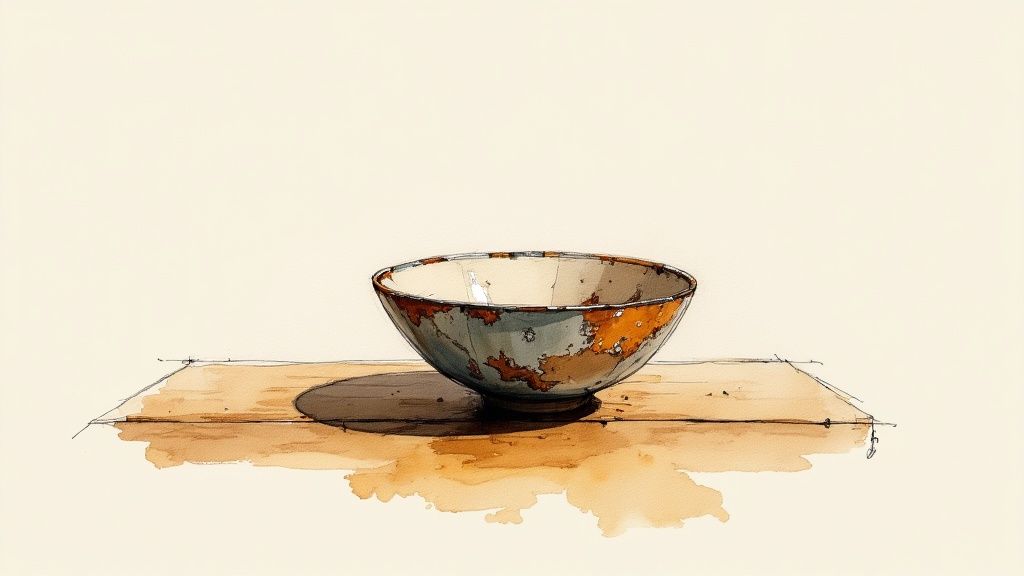
In a world dominated by mass-produced items, hand-painted pottery offers a tangible link to human creativity and tradition. To appreciate its value, think of the difference between a print and an original painting. Both show an image, but the painting holds the energy of the artist's hand—the texture, the layers, the intention. Hand-painted pottery captures that same fleeting moment of creation, complete with the subtle imperfections that prove its authenticity.
A Story in Every Piece
Bringing handmade pottery into your home is an intentional act. To make it meaningful, integrate these pieces into your daily rituals. Use a handcrafted mug for your morning coffee to start the day with a tactile connection to art. Serve meals on a painted platter to elevate a simple dinner into a special occasion. These actions are a gentle reminder to slow down and appreciate the beauty in craftsmanship.
This appreciation for artisanal goods is part of a larger movement. The global pottery ceramics market was recently valued at $11.42 billion and is projected to grow to $14.24 billion, highlighting a significant consumer shift toward unique, artist-made products. For more context, you can explore more about the pottery market's growth and trends.
Owning hand-painted pottery is an investment in art you can actually use every single day. It's a celebration of individuality and a quiet rebellion against the sameness of modern production.
When you choose to buy hand-painted pottery, you become a custodian of a story. To fully embrace this role, learn about the artist or the region the piece came from. This connection transforms the object from a simple decoration into a meaningful part of your home’s narrative, adding warmth and character.
From Clay to Creation: The Artisanal Journey
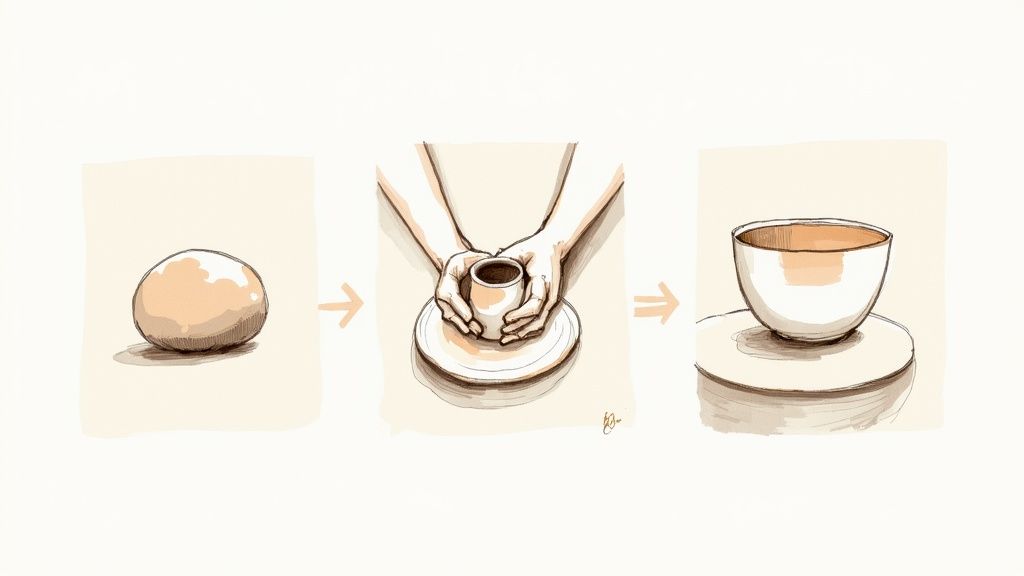
Understanding the creation process helps you appreciate the value and care required for each piece of hand-painted pottery. The journey from raw earth to a finished work of art is a meticulous dance of skill, patience, and fire.
The process begins with wedging, where the potter kneads the clay to remove air bubbles and ensure a smooth, even consistency. This foundational step is critical for preventing flaws and ensuring the final piece is strong.
Shaping the Soul of the Piece
Next, the artist gives the clay its form, either by hand-building or by "throwing" it on a potter's wheel. Watching an artist guide the clay upward and outward on a spinning wheel is a captivating display of skill, and it is at this stage that the object’s unique personality is born.
After shaping, the pottery must dry completely, a slow, deliberate process that can take days. Rushing this stage risks cracks and breakage, making patience an essential part of the craft.
From Canvas to Kiln
The first firing, known as the bisque firing, transforms the piece. In a kiln heated to around 1,000°C (1832°F), the clay hardens into a porous ceramic canvas, ready for the artist's touch.
This is where the "hand-painted" story begins. The artist uses special underglazes to meticulously paint their vision directly onto the bisque-fired surface. Every line, dot, and swirl is a permanent mark of their skill. Consider a handcrafted blue and white striped ceramic vase—each stripe is a deliberate, artistic choice applied with a steady hand.
The final firing is where science and art converge. The glaze melts into a liquid glass coating, fusing permanently with the ceramic body and bringing the painted colors to life with breathtaking vibrancy and depth.
The final step is the glaze firing. A clear coat of glaze is applied over the painted design, and the piece returns to the kiln for an even hotter firing. This makes the clay non-porous and seals the artwork beneath a protective, glossy layer. The result is a timeless piece of functional art, ready for your home.
How to Identify Authentic Hand Painted Pottery
Learning to spot genuine hand-painted pottery connects you to the heart of the craft. Use these actionable steps to train your eye and confidently choose pieces that hold true artistic value.
First, trust your hands. Pick up the piece and feel its weight. Authentic pottery often feels substantial. Run your fingers over the surface to detect subtle variations in texture where the glaze pooled or where the artist's brush left its mark.
Look for the Human Touch
The clearest indicator of authenticity is its perfect imperfection. Unlike the sterile uniformity of a machine, a human hand leaves behind subtle variations. Here’s what to look for:
- Brushstrokes: Examine the painted designs up close. Look for the faint, directional lines of a brush. These tiny textures are a clear sign of an artist's hand.
- Slight Asymmetries: Turn the pot over in your hands. Minor irregularities in the shape, the thickness of the rim, or the placement of a design are not flaws—they are the fingerprints of the creative process.
- Color Variations: Notice how hand-mixed glazes create subtle shifts in color and depth. This richness is something that flat, factory-applied colors cannot replicate.
These are not defects; they are hallmarks of authenticity.
A machine can create a perfect object, but only an artist can create a unique one. The subtle inconsistencies in hand-painted pottery are not mistakes; they are the signature of humanity.
The Artist's Signature
Another key action is to check the bottom of the piece. Many potters sign or stamp their work with a signature, initials, or a unique symbol. Learning to identify these marks can help you trace a piece back to its creator. Researching marks is a practical skill for any collector; for example, guides on Camark Pottery marks show you how to connect a mark to a studio's history.
Use this checklist to practice distinguishing authentic pieces from mass-produced ones.
Authentic vs Mass-Produced Pottery: A Comparison
| Characteristic | Authentic Hand Painted Pottery | Mass-Produced Pottery |
|---|---|---|
| Feel & Weight | Often has a substantial, unique weight and balance. Surface may have subtle textures. | Typically lightweight and uniform. Surface is perfectly smooth and sterile. |
| Brushstrokes | Visible brushstrokes with varying thickness and direction can be seen under close inspection. | Designs are printed or transferred, resulting in a flat, uniform appearance with no texture. |
| Symmetry & Shape | Exhibits slight, charming asymmetries in shape, rim, or handles. No two are identical. | Perfectly symmetrical and identical to every other piece in the line. |
| Color & Glaze | Colors have depth and subtle variations. Glaze may be slightly uneven, adding character. | Colors are flat and uniform. Glaze is applied perfectly and evenly by machine. |
| Artist's Mark | Usually has a signature, stamp, or initials on the bottom, identifying the creator. | May have a printed brand logo, but lacks a personal artist's mark. |
Finally, observe the context. If you see ten identical mugs lined up on a shelf, they are almost certainly mass-produced. Even pieces in a handmade set will have small, charming differences. By using these observation skills, you can confidently select pieces that are genuinely handcrafted.
Styling Your Home with Hand Painted Ceramics

Hand-painted pottery can transform any room from ordinary to extraordinary. To do this effectively, think beyond an item's intended purpose and unlock its artistic potential.
Repurpose larger pieces for maximum impact. A vibrant, oversized platter, for example, can be hung on the wall in your entryway or above a console table. This simple action turns a serving dish into a captivating focal point.
This approach aligns with a growing movement toward unique, artisanal home decor. The decorative pottery sector is expanding as consumers seek distinctive items that tell a story. You can learn more about this trend by exploring insights on the decorative ceramics market at metastatinsight.com.
Create Dynamic Groupings and Vignettes
Create a powerful visual statement by grouping smaller pieces of hand-painted pottery. A collection of mismatched bowls can become a dynamic centerpiece, while a cluster of unique mugs on open shelving adds charm to a kitchen.
When arranging your pottery, follow these actionable tips for balance and variety:
- Vary Heights: Pair tall vases with shorter, wider pots to create a more interesting visual skyline.
- Mix Textures: Place a smooth, glossy piece next to a rustic, unglazed one. This contrast creates tactile appeal.
- Unify with Color: Group items that share a similar color palette to tie the arrangement together, even if the patterns and shapes are different.
A well-composed vignette will draw the eye and turn any corner into a curated display.
Blend with Your Existing Decor
Hand-painted ceramics are versatile and can be integrated into any design style. Here’s how to do it:
For a minimalist space, use a single, bold ceramic piece as a sculptural accent. A simple white textured vase can elevate a minimalist interior by providing a burst of texture against a neutral backdrop.
In a bohemian or eclectic home, mix and match patterns and colors freely. The key is to embrace the joyful individuality of each piece. For a rustic farmhouse kitchen, choose earthy, hand-thrown mugs and pitchers to create a warm and inviting atmosphere.
Remember, the goal is not perfection, but personality. Let your hand painted pottery break the rules and reflect your unique story, turning your home into a true sanctuary of self-expression.
Ultimately, styling with hand-painted pottery is about experimentation. Move pieces around, try different locations, and trust your intuition. Let each item find its perfect spot to fill your home with irreplaceable warmth and character.
Preserving the Beauty: A Practical Care Guide
To ensure your hand-painted pottery lasts for years, you must care for it properly. With a few simple practices, you can use and enjoy these pieces daily without fear of damage.
The golden rule is to be gentle. While modern glazes are durable, the artwork beneath requires a soft touch. Hand-washing is always the best method to protect the intricate details that make each piece of hand painted pottery unique.
Use a soft sponge or cloth with warm, soapy water. Avoid abrasive scrubbers or harsh chemical cleaners, which can scratch the glaze or fade the colors over time. A gentle, circular motion is all you need to keep your ceramics clean.
Understanding Your Pottery's Limits
Knowing your pottery's limitations is the secret to its longevity. The biggest threat is thermal shock—a sudden, extreme temperature change that can cause cracks.
To prevent this, never move a piece directly from the refrigerator to a hot oven or microwave. Similarly, avoid pouring boiling water into a cold mug. Always let your pottery adjust to room temperature first to prevent stressful temperature swings.
Think of your pottery like a cherished friend. You wouldn't expose it to extreme stress, and the same gentle consideration will ensure it remains a beautiful part of your home for generations.
Before using a piece for food, check for guidance from the artist. Many potters indicate if their work is food-safe, microwave-safe, or dishwasher-safe on the bottom of the piece. If you're unsure, err on the side of caution and use it for decorative purposes. This same level of care applies to larger decorative items like a ceramic abstract sculpture in our related guide.
Follow this simple checklist to preserve your pottery:
- Hand-Wash: Use mild soap and a soft cloth to protect the painted surface.
- Avoid Thermal Shock: Prevent drastic temperature changes to avoid cracks.
- Check for Safety: Confirm if a piece is food, microwave, or dishwasher-safe before use.
- Handle with Care: Lift pottery from its base, not by delicate handles or rims.
By adopting these straightforward habits, you can confidently integrate your hand painted pottery into your daily life and ensure its artistry remains a source of joy.
The Global Tapestry of Ceramic Traditions
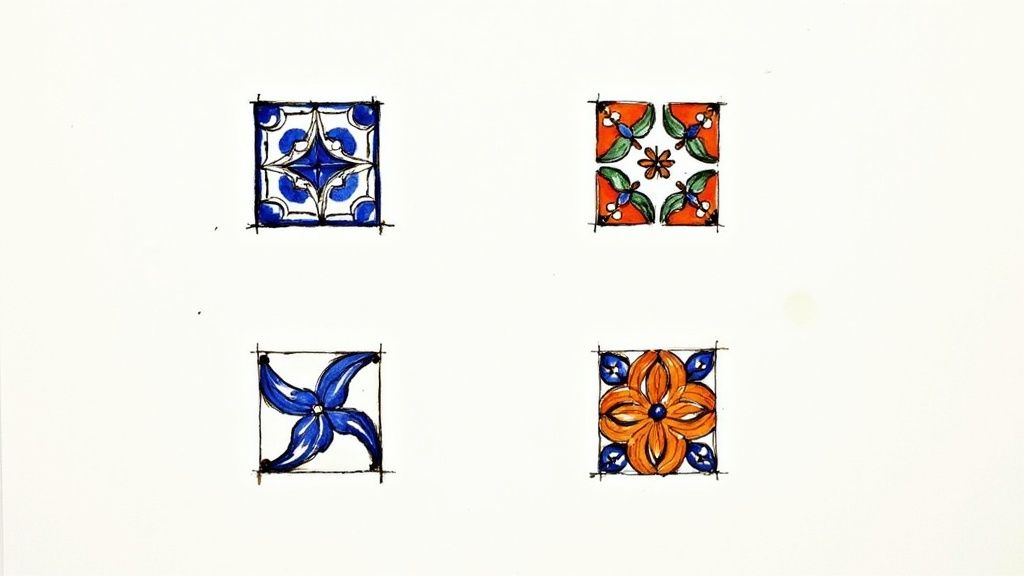
Hand-painted pottery is a universal language, with each tradition offering a unique window into a culture’s history and artistic soul. To build a diverse collection, it's helpful to learn about the distinct styles from around the world.
Bringing these pieces into your home allows you to weave a rich, global tapestry of human creativity into your living space. The global art ceramics market reflects this, with the Asia Pacific region leading due to its deep-rooted traditions. The market's steady growth shows a collective appreciation for this art form. You can discover more insights about the art ceramics market here.
A Tour of Iconic Styles
To start your exploration, familiarize yourself with a few of the most celebrated traditions. Recognizing these styles will help you curate a collection that reflects your taste.
Here are some key styles to identify:
- Chinese Porcelain: Look for delicate, intricate blue and white patterns featuring landscapes, dragons, and floral motifs.
- Mexican Talavera: Identify these pieces by their vibrant, geometric designs and natural imagery, which create a festive feel.
- Japanese Ceramics: Recognize styles like Raku and Bizen by their embrace of wabi-sabi (the beauty of imperfection), with natural, earthy tones and textures.
- Italian Majolica: Spot this style by its brilliant, opaque white glaze, which serves as a canvas for bright, narrative paintings. The spirit of Italian craftsmanship is all about storytelling, a principle you can learn more about in guides to Made in Italy design.
Each piece of hand-painted pottery is a small ambassador of its culture. It carries the echoes of its origins, from the local clay it was formed from to the traditional motifs painted on its surface.
By actively seeking out and learning to identify these different styles, you can curate a personal gallery of global artistry, connect with a long lineage of artisans, and celebrate the diverse beauty of this timeless craft.
Your Hand-Painted Pottery Questions, Answered
Here are practical answers to some of the most common questions about hand-painted pottery. Use this information to confidently select, use, and care for your collection.
Is Hand-Painted Pottery Safe to Eat From?
The answer is "it depends." Most contemporary, professionally-made pottery is fired at high temperatures with a food-safe glaze, making it safe for dining. However, some vintage or decorative pieces may use glazes not intended for food.
Actionable Advice: Always check for a "food-safe" label from the artist or seller. If you are unsure, use the piece for decorative purposes only.
Can I Put It in the Dishwasher or Microwave?
We advise against using the dishwasher or microwave. The intense heat and harsh detergents in a dishwasher can damage the hand-painted details over time. The microwave poses a risk of thermal shock, which can cause cracking.
Here's our best advice: Think of your hand-painted pottery as you would any other work of art. A gentle wash by hand is the surest way to protect its charm and integrity for years and years to come.
Why Does Hand-Painted Pottery Cost More?
The price of hand-painted pottery reflects the time, skill, and materials invested by the artisan. You are not just buying an object; you are investing in a piece of art that has been meticulously shaped, fired, painted, and glazed by hand.
Each piece represents an artist's unique vision and dedication. The cost accounts for this human element, which gives the pottery its soul and makes it a more meaningful addition to your home than any factory-made item.
Discover where timeless artistry meets modern living. At Griseo Interior, every piece is created with intention, designed to bring authentic Italian elegance into your home. Explore our collection of contemporary ceramic decor.