

A Practical Guide to Living Room Furniture Italian
Choosing living room furniture italian is about making a deliberate investment in artistry and tradition. More than just a label, "Made in Italy" signifies a commitment to masterful craftsmanship and timeless beauty. This guide provides actionable advice to help you select and style pieces that will transform your home into a gallery of functional art.
The Enduring Spirit of Italian Design
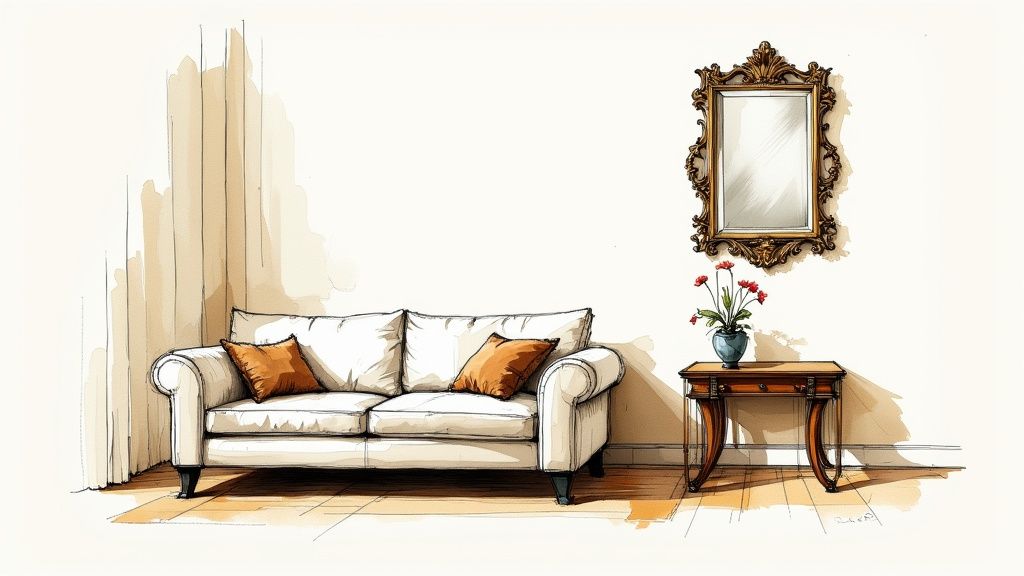
When you choose Italian furniture, you are stepping away from disposable decor and investing in a legacy. These are future heirlooms. To appreciate this, you need to know what to look for. The gentle curve of a sofa or the perfect tension in a hand-stitched seam are details born from skills passed down through families, resulting in furniture built to last.
This commitment to excellence is tangible. You can feel it when you sink into a supple Poltrona Frau leather chair or trace the flawless joinery on a solid wood coffee table. By learning to recognize these markers of quality, you connect with a culture that has celebrated masterful creation for centuries.
Why Italian Design Captivates the World
So, what gives Italian design its magnetic pull? It’s a combination of world-class materials, innovative design, and an intuitive grasp of balance. This combination has earned global recognition, reflected in market trends.
The luxury Italian furniture market is on track to hit around $8.2 billion by 2025. This isn't just a trend; it's proof of a worldwide appreciation for quality that lasts.
This global admiration is built on a reputation for unparalleled quality. To bring this signature elegance into your own space, start by exploring our guide to Italian luxury interiors for foundational concepts and inspiration.
Embrace a Legacy of Elegance
Ultimately, bringing living room furniture italian into your home is about elevating your daily life. It’s about creating a space that not just comforts but inspires. The goal is to curate a life surrounded by authentic, timeless design.
Choosing Your Italian Furniture Style
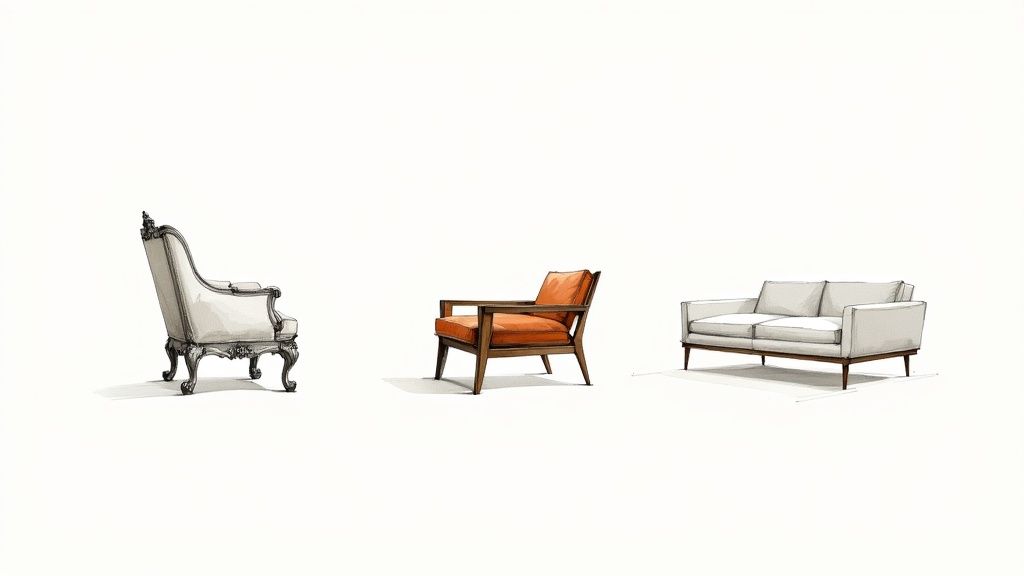
Selecting the right Italian furniture isn't about following a strict rulebook; it's about finding a design language that speaks to you. To do this effectively, you must first understand the distinct styles.
Start by identifying whether you lean towards opulent, classic styles like Baroque and Rococo or the "functional poetry" of modern Italian design. Classic styles feature lavish carvings, sweeping curves, and sumptuous fabrics. Modern styles, from mid-century to contemporary, celebrate simplicity, clean lines, and an honest use of materials. A minimalist sofa is an elegant study in form and restraint, creating an atmosphere of calm sophistication.
From Grandeur to Minimalism
Learning to spot the differences between these aesthetics will empower you to bring your vision to life. Train your eye to catch the subtle cues—the silhouette of a coffee table, the specific grain in the wood, or the elegant taper of a sofa leg.
- Classic Styles (Baroque, Rococo): Look for dramatic curves and ornate, hand-carved details. Woods are typically dark and richly finished, while fabrics like velvet, silk, and damask amplify the sense of grandeur.
- Transitional Styles (Neoclassical): Identify this middle ground by its blend of classic forms with more subdued ornamentation. Notice the cleaner lines and softer color palette that create a timeless elegance.
- Modern Styles (Mid-Century, Contemporary): Simplicity is the key identifier. These styles are defined by geometric shapes, a lack of decoration, and a focus on natural materials like leather, metal, and light-toned woods.
The most inspiring interiors are those that reflect the people who live in them. Your choice of furniture style is the foundation of this reflection, setting the tone for every moment you spend in your living room.
A Quick Guide to Italian Styles
Use this quick-reference table to compare core features and identify what resonates with your personal taste.
Identifying Italian Furniture Styles at a Glance
| Style | Defining Characteristics | Common Materials | Best For |
|---|---|---|---|
| Classic (Baroque, Rococo) | Ornate carvings, dramatic curves, lavish details | Dark woods (walnut, mahogany), velvet, silk, gilt | Creating a grand, opulent, and formal atmosphere |
| Transitional (Neoclassical) | Symmetrical, elegant lines, refined ornamentation | Cherry, oak, marble, linen, polished metals | Blending timeless elegance with modern comfort |
| Modern (Contemporary) | Clean lines, geometric forms, minimalist aesthetic | Light woods, leather, steel, glass, chrome | A sophisticated, uncluttered, and functional space |
This table helps illustrate how each style uses form and material to create a completely different mood.
Actionable Tips for Making Your Selection
Before you buy, ask yourself: what feeling do I want to create in this room? Is it a warm, inviting hub for family gatherings, or a chic, serene retreat for quiet evenings? Let this desired atmosphere guide your choices. For a deeper dive into available designs, explore the top Italian furniture brands.
Finally, don't be afraid to mix styles. A sleek, modern living room can be elevated by a single ornate, antique mirror. The secret is intentional contrast. Thoughtfully select pieces that complement each other—whether through shape, material, or color—to create a dynamic and deeply personal interior that is one-of-a-kind.
What Goes Into a True Italian Masterpiece?
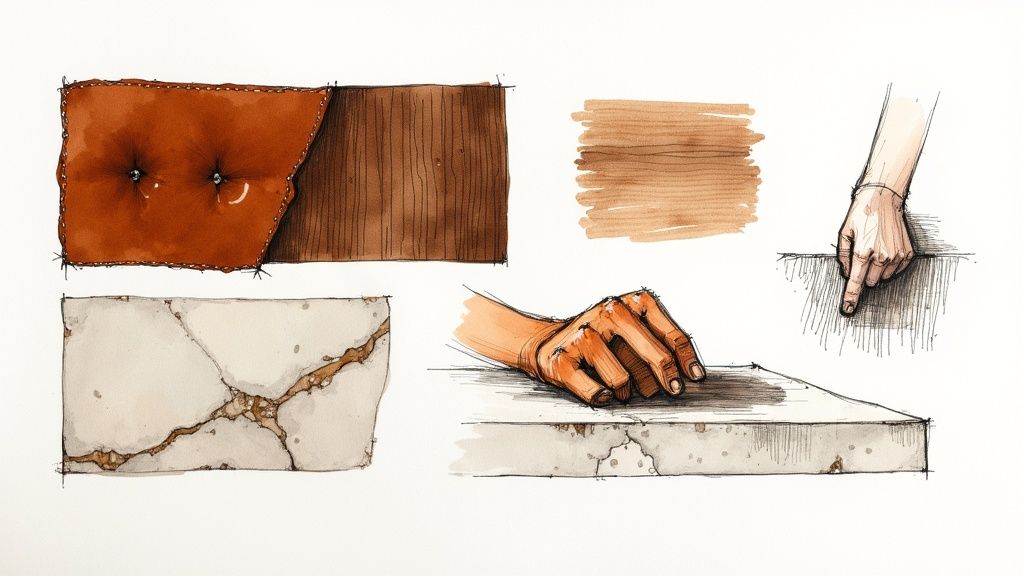
What gives Italian living room furniture its soul? The magic lies in the materials and the skill poured into every piece. When evaluating furniture, engage your senses. Run your hand over the surfaces to connect with the story told through the rich grain of wood, the buttery softness of leather, and the perfection of a flawless finish.
An Italian artisan selects each material with purpose. Every slab of marble, plank of walnut, and hide of leather is chosen for its unique character, strength, and beauty. Your first step as a discerning buyer is to learn how to recognize this quality.
The Feel of Unforgettable Leather
Italian leather's legendary status comes from its time-honored vegetable tanning process, which uses natural tannins from tree bark and plants. This method produces leather that is supple, breathable, and develops a gorgeous patina as it ages.
When inspecting a leather piece, use your hands. Genuine Italian leather feels warm and inviting, never cold or plastic-like. Action Step: Always ask if the material is full-grain leather, the highest quality available. It proudly displays the natural markings of the hide, ensuring your piece has a unique character. To understand the philosophy behind these creations, explore the principles of authentic "Made in Italy" design.
The Beauty of Wood and Natural Stone
Wood remains the heart of Italian furniture making. You'll find solid hardwoods like rich walnut and sturdy oak, celebrated for their strength and stunning grain patterns.
Action Step: When inspecting a wooden piece, look closely at the joinery. Check for masterful work like dovetail or mortise-and-tenon joints. These are the marks of furniture built to last for generations, not just a season.
This passion for quality extends to other materials as well. Here's what to look for:
- Marble and Travertine: A true Italian stone tabletop should feel cool and substantial. Run your hand across the surface; it should be polished to a silky-smooth sheen with no pits. The veining should be a natural work of art, not a printed pattern.
- Metal Accents: Whether polished chrome, brushed brass, or blackened steel, all metalwork should be seamless. You shouldn’t see the welds. The finish should be perfectly even, adding elegance without overpowering the piece.
Learning to spot these details separates a simple purchase from a true investment. By training your eye, you become a connoisseur, choosing furniture that tells a story of enduring quality.
How to Style Italian Furniture in Your Home
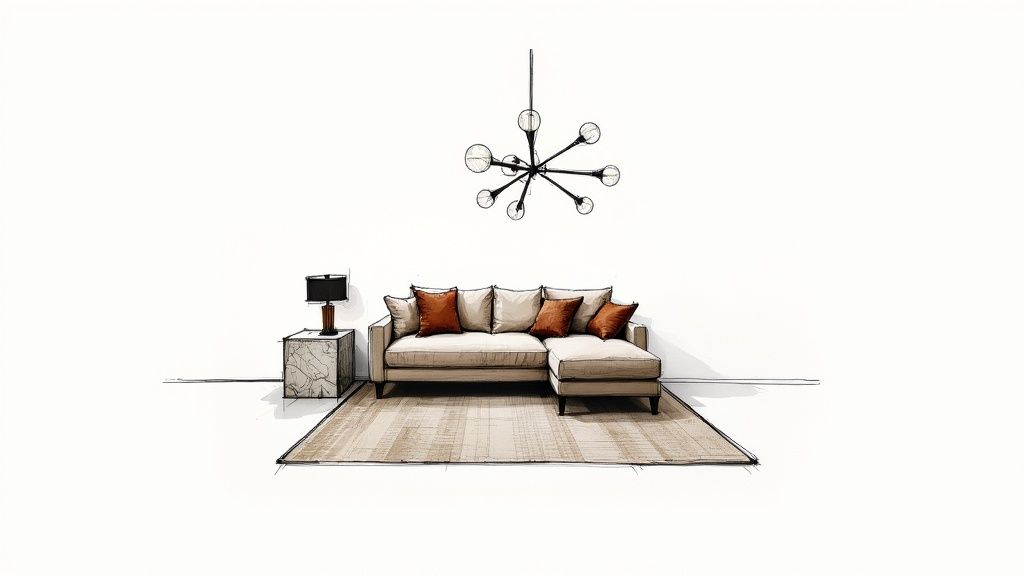
Bringing Italian furniture into your living room is about creative expression, not rigid rules. The key is to let one piece be the star. Choose a magnificent Italian sofa or a striking pair of armchairs to be the heart of your space. This anchor piece will guide all other design decisions.
Create Harmony Through Contrast
One of the most effective interior design techniques is the use of contrast. Your pieces should coordinate, not match perfectly. Avoid buying a pre-packaged "living room set," which often lacks personality. Instead, curate a mix of pieces to add character and make your home feel organically evolved.
Here are actionable ways to create beautiful tension:
- Material: Pair a plush velvet sofa with the cool, hard surface of a marble coffee table to create tactile drama and sophistication.
- Shape: If your sofa has strong, clean lines, introduce softness with a round accent chair or a floor lamp with a sweeping arc to keep the eye moving.
- Scale: Ensure your furniture has room to breathe. Balance a substantial sofa with a lighter armchair on delicate legs to showcase each piece's unique form.
The Power of the Rule of Three
Implement this simple designer trick: the rule of three. Our brains find objects arranged in odd numbers more engaging and balanced.
Instead of flanking your sofa with two identical end tables, create a more interesting trio. Place a sleek marble table on one side and a stunning floor lamp paired with a small accent stool on the other. This subtle asymmetry feels more dynamic and natural.
"The essence of great style is not about perfect matching, but about creating a beautiful conversation between different pieces. Let your Italian furniture be the bold opening line, and use texture, color, and light as the compelling dialogue that follows."
Finishing with Dramatic Flair
Now, add the final, personal layer. Lighting is not just functional; it creates a mood. A classic Murano glass chandelier can be a showstopper, casting a warm glow that beautifully contrasts with a modern space.
Use textiles to add warmth and unify the room. A hand-knotted wool rug can ground your seating area, making it feel intimate. A cashmere or linen throw casually draped over the arm of your sofa invites relaxation. These details elevate a room from a collection of beautiful objects to a sanctuary that feels like home.
The Future of Italian Furniture Innovation
While Italian design is rooted in tradition, its magic lies in its forward gaze. Innovation today means a blend of timeless artistry, thoughtful functionality, and a commitment to sustainability. This is not about chasing fads but pioneering a more intentional way of living through conscious craftsmanship and intelligent design.
A Greener Approach to Luxury
As mindful consumers, we seek pieces that are both stunning and sustainable. Italy’s leading brands are proving that luxury and eco-consciousness are natural partners.
- Responsible Sourcing: Ask if brands use FSC-certified wood, which guarantees timber is from responsibly managed forests.
- Recycled Materials: Look for innovative designs using recycled metals, plastics, and fabrics, which reduce landfill waste.
- Low-Impact Finishes: Inquire about the use of water-based lacquers and natural oils, which reduce VOCs and improve indoor air quality.
When you choose furniture from these makers, you’re doing more than just buying a beautiful object. You're casting a vote for a healthier world. It’s an investment that feels good on every level.
Smart Furniture for a Smarter Life
Italian designers are masterfully weaving technology into their creations to enhance daily life in subtle ways. The goal is to create furniture that anticipates your needs, marrying seamless function with a minimalist aesthetic.
This drive for smarter living is growing. Projections show the smart furniture sector in Italy is poised to grow by 14.6% CAGR by 2025. This reflects a collective desire for pieces that do more, a shift you can explore in recent insights into Italian furniture trends.
Consider a modular sofa with discreetly built-in charging ports or a coffee table with an integrated sound system. This is where heritage craftsmanship meets lifestyle innovation—a vision for a home that is as intelligent as it is elegant.
Your Questions About Italian Living Room Furniture, Answered
Stepping into the world of living room furniture italian is exciting, but it's natural to have questions. Here are practical answers to help you choose, care for, and live with these exceptional pieces.
How Can I Tell If It’s Genuinely Italian?
Authenticity is everything. A "Made in Italy" stamp is a start, but the real proof is in the details you can see and feel.
Action Step: Look for tell-tale signs of masterful craftsmanship. Are the drawers joined with elegant dovetails? Is the leather flawless, with the supple feel of full-grain quality? A true Italian piece wears its quality openly. Research the maker's reputation; top Italian brands are transparent about their materials and processes. If a deal seems too good to be true, it almost certainly is. Authentic Italian furniture is an investment, and its price reflects its quality.
What’s the Secret to Caring for Italian Furniture?
Keeping your furniture beautiful is about gentle, regular care.
- Wood Pieces: Dust weekly with a soft, dry microfiber cloth. For deeper cleaning, use a barely damp cloth and immediately follow with a dry one. Avoid harsh chemical sprays that can dull the finish.
- Leather: Dust regularly and use a soft brush vacuum attachment for crevices. Blot spills immediately. Once or twice a year, apply a high-quality leather conditioner to keep it supple.
- Fabric Upholstery: Vacuum weekly with an upholstery tool. Blot spills, don't rub. Action Step: Always check the care tag for specific cleaning codes (e.g., "W" for water-based cleaners, "S" for solvents) before attempting stain removal.
The best care is prevention. Use coasters, avoid prolonged direct sunlight, and address spills immediately to protect your furniture more effectively than any special product.
Can I Really Mix Italian Furniture with My Other Pieces?
Absolutely! A home that feels collected over time is always more interesting. The trick is to create harmony.
Action Step: Find a common thread to connect your new Italian piece with existing furniture. This could be a color, material, or similar silhouette. For example, pair a minimalist Italian sofa with a vintage wooden armchair, using a rug to tie them together. Don't be afraid to create tension; a single, ornate Venetian mirror can be a stunning focal point in an otherwise modern room. This creates a conversation between your pieces, making your living room furniture italian an integral part of your home's story.
At Griseo Interior, we see Italian design as a beautiful dance between heritage and modern living. We're committed to crafting contemporary furniture and decor that honor sustainable practices and timeless elegance. Find the pieces that will elevate your space and tell your story. Explore the Griseo Interior collection today.