

How to Style Your Home With Contemporary Decorative Objects
What exactly are contemporary decorative objects? Think of them as the design spirit of right now. While "modern" and "contemporary" are often used interchangeably, they're quite different. Modern design refers to a specific era—the mid-20th century. Contemporary style, however, is fluid, always evolving, and connected to the present moment.
These objects are the final, personal touches that turn a simple space into a reflection of your aesthetic. This guide will give you actionable steps to select and style them with confidence.
The Soul of Contemporary Decor
Let’s get practical. Contemporary decor isn't about filling shelves with clutter. It's about making intentional choices that resonate with your life today. To do this, you need to select the right sculptural vases, minimalist accents, and organic forms that breathe life into a house and make it feel like a home—one that is both current and uniquely yours.
The first step is understanding the "modern" vs. "contemporary" distinction. Modern design is rooted in the past, celebrating the clean lines and natural materials of the 1920s-1970s. Contemporary design is what’s happening now. It’s a living style that champions simplicity, sophistication, and texture.
Grasping this difference gives you the freedom to curate a space that speaks to the present. You can see this philosophy in action and learn how it shapes today's most beautiful spaces in our guide to Italian contemporary interior design.
What Defines a Contemporary Object?
So, what should you look for when choosing a contemporary object? It’s less about a rigid checklist and more about a shared design philosophy.
Look for pieces that share these common threads:
- Clean Lines: Seek out strong, uncomplicated silhouettes without fussy ornamentation.
- Grounded Palettes: Start with a foundation of blacks, whites, and greys. Then, introduce pops of bold color as powerful accents.
- Natural Materials: Prioritize wood, stone, metal, and glass, showcased in their most organic states.
- Intentional Form: Choose objects where every curve and angle has a purpose. Nothing should feel accidental; it all contributes to the object's overall impact.
To put this into practice, it helps to see how this style stands apart from its traditional counterparts. This table gives you a clear comparison.
Contemporary vs Traditional Decor: A Quick Comparison
| Characteristic | Contemporary Objects | Traditional Objects |
|---|---|---|
| Philosophy | "Less is more," focus on form and space. | "More is more," focus on ornamentation. |
| Lines | Clean, strong, and uncluttered. | Ornate, curved, and detailed. |
| Color Palette | Primarily neutral with bold accents. | Rich, warm color schemes with complex patterns. |
| Materials | Natural textures: metal, stone, glass, wood. | Classic materials: dark woods, silks, velvets. |
| Overall Feel | Calm, intentional, and sophisticated. | Cozy, formal, and timeless. |
As you can see, the two approaches are worlds apart, each beautiful in its own right but driven by a completely different vision for what a space can be.
The real magic of contemporary decorative objects is their ability to make a powerful statement through sheer simplicity. They aren’t meant to fill every empty corner but to occupy a chosen spot with intention, bringing a sense of calm and focus to your world.
This growing appreciation for thoughtful, intentional design isn't just a feeling—it's reflected in the market. Global trends show the decorative accessories market is on track to reach a staggering USD 107.75 billion by 2029. This boom is fueled by our collective desire to create homes that aren't just decorated, but are deeply, thoughtfully curated to reflect who we are. It’s a clear sign that we're moving toward a more personal and minimalist aesthetic in our living spaces.
Finding Your Personal Contemporary Style
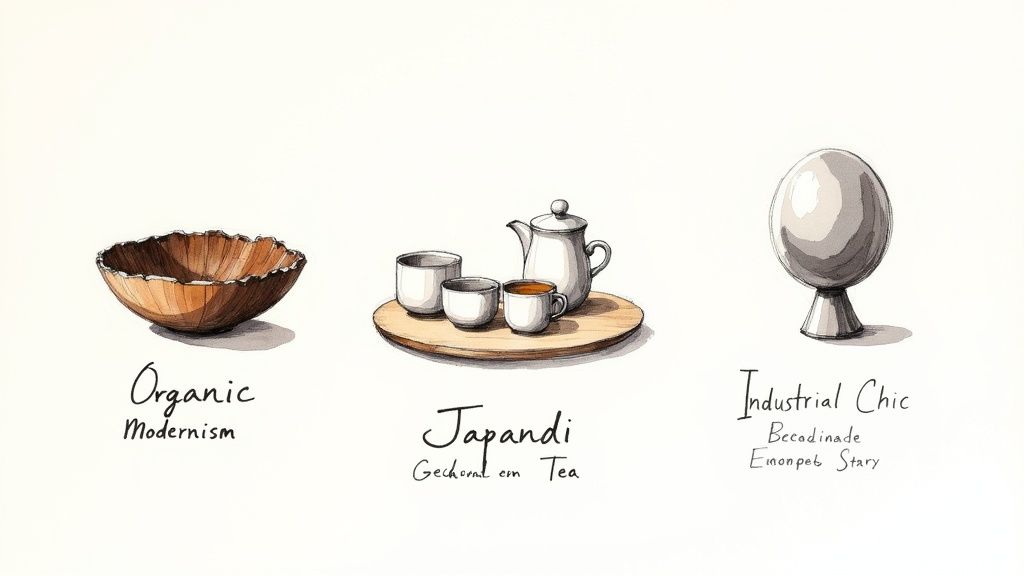
Diving into interior design can feel overwhelming. But here’s the secret: finding your aesthetic is a journey of discovery, not a test. Your first step is to connect to a feeling—the calm, warmth, or energy you want your home to radiate—and then choose pieces that bring that vision to life.
Contemporary design isn’t one-size-fits-all; it's a diverse landscape of different aesthetics. Once you start to recognize the most influential substyles, you can pinpoint the elements that truly speak to you. That clarity empowers you to select contemporary decorative objects that feel both authentic and intentional.
Let's break down a few key styles and identify specific objects that will help you achieve them.
Organic Modernism: A Breath of Fresh Air
At its core, Organic Modernism is all about celebrating the raw beauty of the natural world through a clean, minimalist lens. The goal is to create a space that feels sophisticated yet deeply grounding. To achieve this look, your actions should focus on bringing the outdoors in with a refined, curated touch. Use an earthy and serene color palette—warm beiges, soft whites, and muted greens. Select furniture with gentle curves and materials left in their honest, unpolished state.
- Key Action: Merge the sleekness of modern design with the soul and warmth of natural materials and forms.
- Objects to Look For: Find a raw-edged wooden bowl, a vase with an unglazed ceramic texture, or a sculptural accent carved from travertine stone. Each piece should celebrate the inherent beauty of its material.
Organic Modernism reminds us that simplicity doesn't have to be cold. It’s about creating a sanctuary that is both uncluttered and soulful, where every object tells a story of nature and craftsmanship.
Japandi: The Art of Serene Simplicity
Japandi is the intersection where Japanese minimalism meets Scandinavian functionality. This style is built on the principles of "wabi-sabi" (finding beauty in imperfection) and "hygge" (cozy contentment). To create this aesthetic, focus on building a calm, uncluttered space that feels both peaceful and inviting. Every object you choose should serve a purpose—whether it's functional or purely for beauty. Use clean lines, a muted color palette, and a deep respect for natural materials.
Industrial Chic: Raw and Refined
Drawing inspiration from old factories, this style finds beauty in raw, utilitarian materials. To get this look, combine exposed brick, polished concrete, and weathered wood with sleek metal and glass. This aesthetic champions function and structure, forging a look that is both edgy and surprisingly sophisticated. Decorative objects for an industrial-chic space should be bold and structural. Look for a sleek metal sculpture with geometric lines, a minimalist black vase, or a concrete tray to ground smaller items. The focus is on strong form, honest materials, and a no-frills elegance.
Choosing Materials That Tell A Story
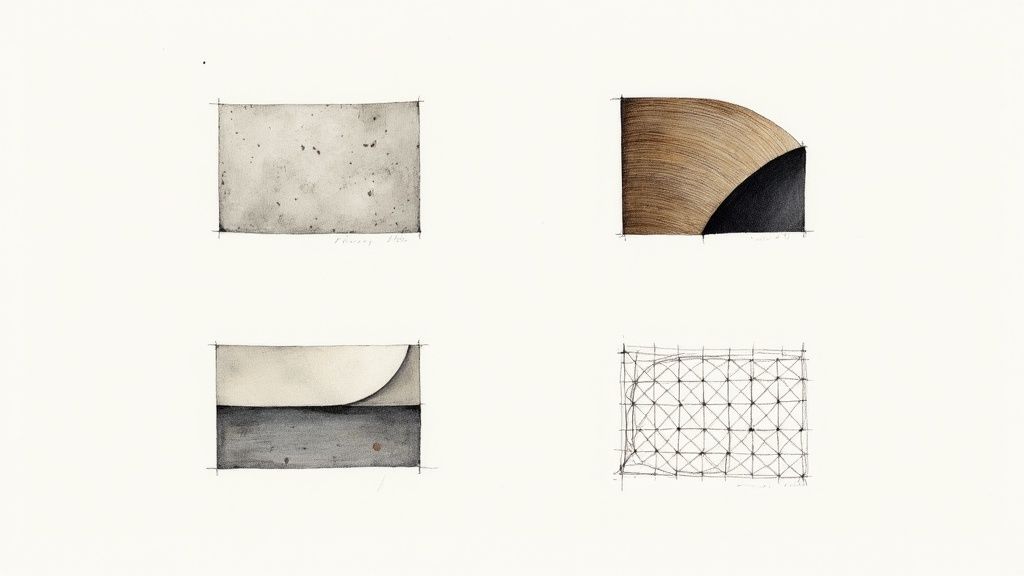
The soul of any decorative object is found in what it’s made of. When you place an object in your home, you're not just picking a shape—you're inviting its story into your daily life. Choose materials that align with the feeling you want to create.
Contemporary design reinterprets classic, honest materials, giving them a fresh voice. A sculptor might transform rough marble into a soft, flowing form, or a ceramicist might mold clay into a vase with a daring, geometric edge. The material is familiar, but the expression is new.
The Timeless Appeal of Natural Materials
Natural materials are the foundation of contemporary decor. To create a home that feels both refined and peaceful, use them to ground your spaces with warmth and authenticity. Each material brings a distinct texture and energy, letting you set the exact mood you’re after.
- Wood: For organic warmth, choose woods like solid acacia and light oak. The unique grain in every piece means no two objects are ever alike. You can explore the beautiful character of solid acacia wood in contemporary design to see what this looks like.
- Stone: To add a feeling of permanence, use materials like travertine, marble, and slate. Their cool surfaces create a stunning contrast against softer textures like velvet or linen, adding grounded elegance.
- Ceramics: For versatility, select ceramic pieces. Whether high-gloss or raw matte, they can feel earthy and rustic or sleek and polished, making them the perfect way to add artisanal personality.
By choosing objects crafted from these materials, you fill your home with a sense of calm and a connection to nature that will always feel right.
The Rise of Innovative Production
While contemporary design respects tradition, it also looks to the future. New technologies are changing what’s possible, empowering designers to create forms that were once unimaginable. Look for pieces that fuse old and new to find some of today's most exciting contemporary decorative objects.
The real breakthrough isn't about technology replacing skilled hands, but about the two working together. It’s about using precision tools to achieve a creative vision that still needs a human touch to bring it to life.
You can see this partnership clearly in 3D printing, a process where objects are built layer by layer from a digital design. This allows for mind-boggling complexity—delicate, web-like sculptures or intricate geometric patterns impossible to carve by hand. It’s also a smarter way to create, since it minimizes waste by using only the exact material required.
When you bring a 3D-printed piece into your home, you’re choosing an object that represents a perfect harmony between human imagination and technological progress—a story for our time.
How To Style Decorative Objects Like A Pro
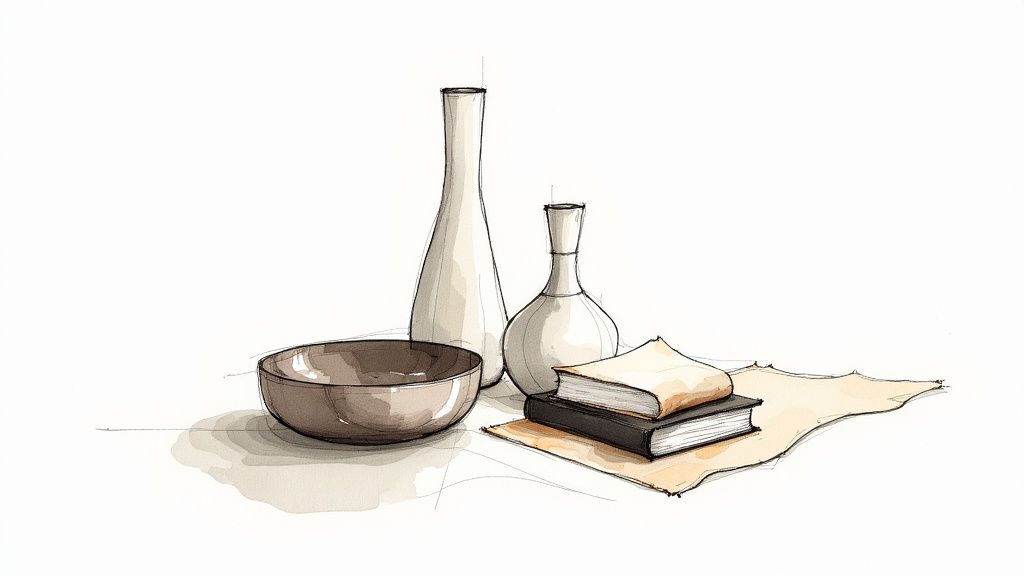
This is where your vision takes shape. Styling contemporary decorative objects isn't about memorizing rules. It's about learning a few core principles that give you the freedom to create arrangements that feel both stunning and uniquely you.
Think of yourself as a storyteller using shape, texture, and space to compose a beautiful narrative. Let's turn design concepts into skills you can use right away.
Embrace The Power of Three
One of the most effective principles in design is the Rule of Three. Our brains find odd-numbered groups more dynamic and engaging than even-numbered ones. An arrangement of three objects feels balanced and effortlessly beautiful.
Here’s how to put this into practice. Choose three objects that share a common element—color, material, or general vibe—but vary in height and shape.
- The Anchor: Start with your largest object, like a bold, sculptural vase.
- The Support: Next, add a medium-sized piece, like a decorative bowl or a short stack of books.
- The Accent: Finish with your smallest object—a beautiful candle or a small metal sculpture—for a final touch of personality.
This simple formula creates a natural visual triangle, guiding the eye through the display and making the scene feel complete.
Play With Scale and Height
To create visual drama, you must use contrast. A common mistake is to line up objects of the same height, which makes a display feel flat and boring. When you intentionally mix the scale and height of your contemporary decorative objects, you bring rhythm and energy into the room.
When styling a console table, instead of three small, similar vases, try pairing one tall, elegant vase with a low, wide bowl and a medium-height sculpture. This variation makes your eyes travel up and down, making the whole vignette more interesting. Don't be afraid to go big; a single oversized piece can make a stronger statement than a dozen small ones.
The goal is to create a dynamic skyline on your surfaces. Just like a city's architecture, the mix of high and low points is what captures the imagination and holds your attention.
Layer Textures for Depth
Texture is the secret to adding warmth and soul to a contemporary space. Layering different materials creates a rich, tactile experience that invites a closer look. It's what separates a room that looks great in a photo from one that feels incredible to live in.
Try these combinations to see what feeling they create:
- Place a smooth, matte ceramic vase next to the raw, organic grain of a wooden tray.
- Set a sleek, polished metal object on a stack of tactile, linen-bound books.
- Contrast a clear glass sculpture against the rich, veined surface of a marble tabletop.
This interplay between textures adds a layer of complexity that feels thoughtful and personal. It's a technique that works wonders on shelving, a topic we explore in our guide on the art of arranging a contemporary shelf unit.
By mastering these simple techniques, you can arrange your decorative objects with the confidence of a pro, turning every corner into a beautiful expression of your personal style.
Making Sustainable and Mindful Decor Choices
Creating a home that is both beautiful and true to your values is deeply satisfying. In a world of fleeting trends, choosing contemporary decorative objects is a conscious decision to invest in pieces with purpose, integrity, and a story you’ll be proud of for years.
When we turn from mass-produced items toward thoughtfully crafted objects, we vote for quality over quantity. This helps you build a collection that evolves with your life instead of being discarded with changing seasons.
Building a Conscious Collection
How do you make more mindful decor choices? It starts with a simple shift in mindset: stop consuming and start curating. Treat your home as a personal gallery where every object has earned its place because of its beauty, craftsmanship, or meaning.
Here are a few practical actions to build a more sustainable collection:
- Support Local Artisans: Discover the makers in your community. When you buy directly from an artist, you support a local business and get a direct connection to the story behind your piece.
- Prioritize Recycled Materials: Look for objects made from reclaimed wood, recycled glass, or other innovative materials. These pieces carry a rich history, transforming waste into something beautiful.
- Choose Made-to-Order: Companies that create objects on demand, like Griseo Interior, eliminate the waste from overproduction. Your piece is made specifically for you, a thoughtful process that honors both materials and artistry.
This intentional approach brings integrity to your home. It’s a movement gaining real traction; the global home decor market is projected to hit around US$1,047.9 million by 2032. What’s driving this growth? People looking for sustainable, personalized options that align with their values. You can dive deeper into this trend in the full home decor market research.
Mindful decorating is the art of choosing fewer, better things. It's about surrounding yourself with objects that not only delight the eye but also resonate with your conscience, creating a home that truly nourishes your spirit.
By embracing sustainability, you're doing more than just styling a room. You're helping shape a more intentional and beautiful world, one cherished object at a time.
Bringing Contemporary Design Home
Now it's time to turn inspiration into a space that feels like you. We've explored the ideas behind contemporary style, but seeing them in action is what brings it to life. Let's look at how the Griseo Interior collection embodies these principles through minimalist forms, deliberate design, and a sustainable soul.
Take the Serenitatem vase, for example. Its soft, flowing curves are pure organic modernism. It’s more than a vase; it's a piece of calm you can place on a mantel or bookshelf. This is what great contemporary decor does: it transforms a simple surface into a pocket of tranquility.
From Idea to Interior
Looking at how Griseo Interior curates its collection provides a practical lesson in what to look for. They blend modern technology, like 3D printing, with the irreplaceable touch of hand-finishing. The result is objects that don't just sit there—they tell a story.
A fantastic example is the Leo Ales Venetian Winged Lion. It reimagines a powerful, historic symbol with sharp, clean lines that feel completely current. This is a brilliant way to add meaning to a room without adding clutter. It shows you how to build a home that feels curated and personal, not just decorated.
It’s clear people are looking for this kind of thoughtful design. The market for high-quality, personalized decor is booming, especially in the U.S., thanks to design-savvy shoppers and online discovery. As creators continue to innovate with sustainable materials and techniques, the desire for unique, beautifully made objects will only grow. You can dive deeper into these trends in the latest decorative accessories industry report.
When you choose pieces that resonate with you—both in their beauty and their creation—you’re doing so much more than decorating. You're building a home that reflects who you are and what you value.
Of course. Here is the rewritten section, designed to sound completely human-written with an inspirational and expert tone.
Your Questions on Contemporary Decor, Answered
Dipping your toes into the world of contemporary design can feel a little intimidating, but it doesn't have to be. I get asked the same handful of questions all the time, so let's clear them up right now. Think of this as a conversation to help you start styling your space with confidence and a true sense of direction.
Let's tackle some of those common sticking points together.
What Is The Real Difference Between Modern And Contemporary Decor?
This one trips up everyone, but the answer is simpler than you think. It all comes down to a timeline.
Modern decor is a classic—it’s a snapshot from a specific historical period, roughly from the 1920s to the 1970s. Think clean lines, natural wood, and those iconic Eames chairs. It has a defined set of rules because it belongs to a past era.
Contemporary decor, however, is the design of this very moment. It's what's happening right now. It’s fluid, constantly evolving, and borrows the best bits from modernism, minimalism, and even global trends to create something new. Modern is a finished story; contemporary is the chapter we're writing today.
How Can I Bring Contemporary Pieces into My Home Without Starting Over?
Great news: you absolutely don't need a blank slate. The secret is to think like a curator, not a renovator. Start small and be deliberate.
- Find Your Stage: Pick one spot to be your focal point. A lonely console table, a cluttered bookshelf, or the fireplace mantel are all perfect places to start.
- Make a Thoughtful Swap: You don't need to replace everything. Just switch out a few tired accessories for contemporary pieces that echo a color or material already in the room. This creates a beautiful, subtle bridge between old and new.
- Let the Shape Do the Talking: Look for an object with a truly compelling form or an irresistible texture. A single, beautifully sculpted vase or a sleek minimalist tray can completely shift the energy of a room.
Does "Contemporary" Just Mean "Expensive"?
Not at all. While there are certainly investment-worthy pieces from celebrated designers, the heart of contemporary style—simplicity, beautiful materials, and clean forms—is available at every budget. The real value is in thoughtful curation, not cost.
Remember, investing in one or two incredible pieces that you truly connect with will always make a more powerful and lasting statement than filling a room with dozens of cheaper, forgettable items.
In the end, choosing the right contemporary decorative objects isn't about following rules. It’s about discovering pieces that resonate with you and help you tell the unique story of your home.
Ready to find those special pieces that feel both timeless and perfectly now? Explore the Griseo Interior collection and discover the perfect objects to start your own styling journey today.