

Your Guide to Solid Acacia Wood Furniture
When you choose furniture crafted from solid acacia wood, you're not just picking out a piece of furniture—you're bringing a story into your home. It’s a declaration of enduring style and raw, natural strength. The swirling, dramatic grains and deep, warm colors are more than just a surface; they’re a narrative of nature, turning any piece into a captivating centerpiece that grounds your space with untamed beauty.
The Timeless Allure of Solid Acacia Wood
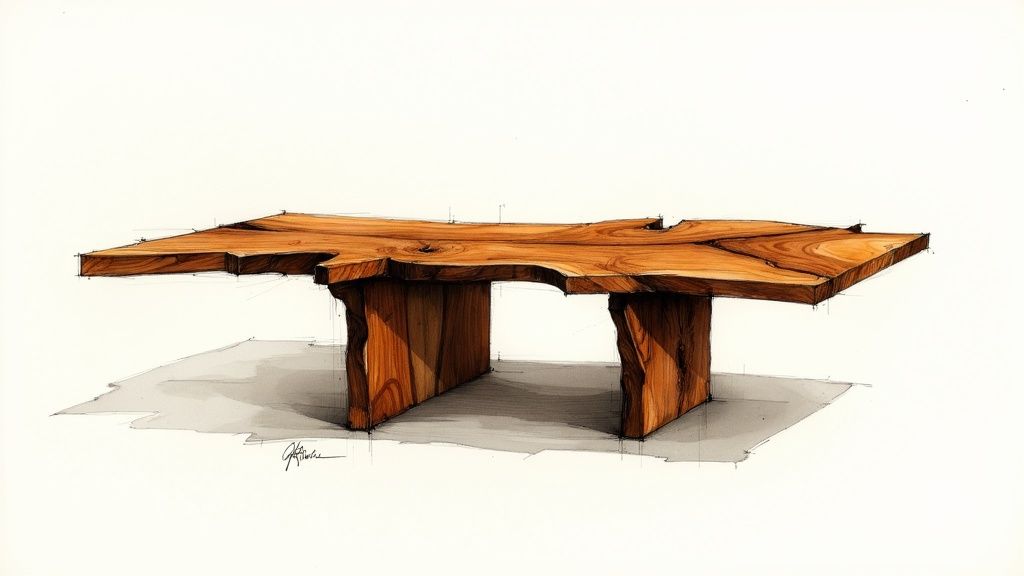
Imagine stepping into a space where nature's own artistry is shaped by masterful craftsmanship. Opting for solid acacia wood is an investment in pieces designed to be cherished for generations, not just a passing trend. Think of it as a natural fingerprint for your home—no two boards are ever the same, which guarantees your furniture is truly one-of-a-kind. This guide will give you the confidence to make an investment you’ll love for years to come.
But acacia's appeal goes far beyond its good looks. It's a powerhouse in the global hardwood market, celebrated for its incredible durability and impressive resistance to moisture. With global hardwood consumption projected to climb by over 4% each year, acacia remains a top contender for everything from furniture and kitchenware to striking decor.
Why Acacia Stands Out
What really makes acacia so special? It’s the wood’s unique ability to merge raw, organic character with sleek, sophisticated design. This chameleon-like quality makes it a perfect fit for a huge range of interior styles. It’s no surprise that the principles behind the celebrated Made in Italy design—a philosophy rooted in superior materials and timeless forms—pair so beautifully with acacia in thoughtful, high-end interiors.
Its natural strength and visual depth can anchor an entire room, creating a focal point that is both beautifully functional and artistically inspiring. It’s the perfect canvas for a style that feels at once rustic and modern.
To truly grasp what makes acacia exceptional, it’s helpful to see how it stacks up against other best types of wood for cabinets. While classics like oak and walnut certainly have their own charms, acacia brings a distinct combination of qualities to the table:
- Dramatic Visuals: Its grain swirls with life, and its colors shift from golden honey to deep espresso, creating a look that is anything but boring.
- Impressive Hardness: As a dense hardwood, acacia is built to withstand the rigors of daily life, resisting scratches and dents with ease.
- Sustainable Sourcing: Because it's a fast-growing tree, acacia is often considered a more environmentally conscious choice for your home.
This guide will help you spot these standout qualities, empowering you to choose pieces that will fill your home with lasting character and undeniable beauty.
Understanding Acacia's Unique Grain and Color
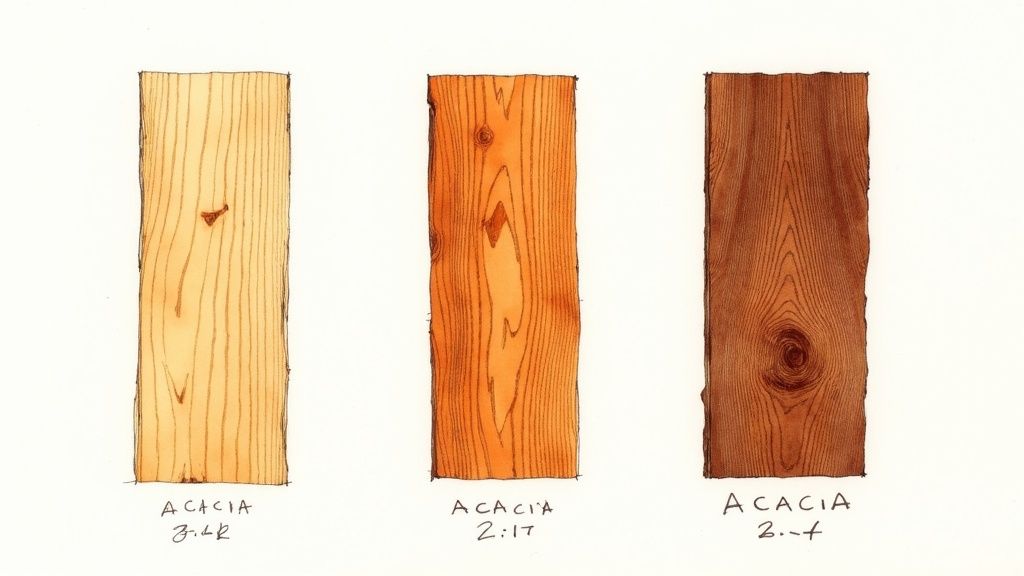
Every single piece of solid acacia wood tells a story. Look closely. It’s a narrative written right into its grain and color, a unique fingerprint that sets it apart from any other piece in the world. This isn't some uniform, factory-made material; it's a canvas painted by nature itself. When you learn to read that story, you can find a piece that truly speaks to you, turning a simple piece of furniture into a personal work of art.
Think of the grain as the wood’s own signature. In one piece, you might see long, flowing lines that bring a sense of calm and order to a room. In another, you’ll discover wild, interlocking waves and dramatic swirls that feel alive, full of energy and movement. This incredible variety is the magic of acacia—it guarantees that no two tables or sideboards will ever be exactly alike.
The Spectrum of Color and Grain
Acacia’s color palette is just as dynamic as its grain. You can find a breathtaking range of tones within a single board, transitioning from light, almost golden honey hues to deep, rich espresso browns. This natural color variation, sometimes called chatoyancy, gives the wood a shimmering, almost three-dimensional depth that seems to shift and dance as you move around it.
It's this beautiful, unpredictable blend of grain patterns and multi-tonal color that makes acacia so captivating. Unlike woods with a more uniform appearance, acacia puts its "imperfections" on full display, turning every knot and streak into a celebrated feature. Each piece is a testament to its organic roots.
How to Select a Truly Special Piece
When choosing acacia furniture, you're doing more than just buying a functional item—you're curating a natural masterpiece for your home. To find a piece with character that connects with your personal style, follow these actionable tips.
Here are a few things to look for when shopping:
- Look for High Contrast: For a dramatic effect, choose pieces that show a strong contrast between the lighter sapwood and the darker heartwood. This creates beautiful, flowing lines that draw the eye.
- Match the Grain to Your Style: Define your aesthetic. A subtle, straight grain lends itself to a clean, modern look, while a bold, figured grain is perfect for a rustic or bohemian vibe. There’s no right or wrong, only what you love.
- Inspect the Finish: A quality finish should enhance the wood's natural beauty, not hide it. Run your hand over the surface; it should feel smooth while still allowing you to see the incredible depth of the grain underneath.
Choosing a piece of solid acacia wood is like selecting a painting. Let your eye be drawn to the patterns and colors that give you a feeling of connection and beauty. This is how you find furniture that you will not just use, but truly love for years to come.
In the end, the finish can either turn up the volume on these natural features or create a more understated look. A clear, natural oil will celebrate every knot and color shift, while a darker stain can unify the tones for a more subdued, elegant appearance. It gives you the power to tailor the wood’s wild spirit to perfectly match the vision you have for your space.
When you choose new furniture, you’re doing more than just filling a space. You’re selecting a future heirloom, a silent witness to your life's best moments. It has to endure the beautiful chaos of daily life—from boisterous family dinners to late-night work sessions. This is where solid acacia wood truly comes into its own, proving that durability isn't just a feature, but a promise.
https://www.youtube.com/embed/gMyWsMQOyfY
Think about a dining table that shrugs off a spilled glass of wine or a coffee table that doesn't panic when a hot mug is set down without a coaster. Acacia's incredibly dense grain and rich natural oils make it naturally resistant to water. This isn't like MDF or particleboard that swells and disintegrates at the first sign of moisture. Solid acacia stands its ground, giving you one less thing to worry about.
That inherent toughness also makes it a champion against the inevitable scratches and dents of a well-loved home. As a true hardwood, acacia is built to last. It’s the perfect material for those hard-working pieces—the dining tables, coffee tables, and benches that see action every single day. This isn't furniture that looks good for a season; it’s designed to look beautiful for a lifetime.
How to Spot Genuine Solid Wood
To make sure you're investing in a piece that will last, you need to know you're getting the real thing. It's easy to be fooled by veneers, which are just paper-thin slices of real wood glued onto a cheaper core. Use these simple checks to identify authentic quality.
First, check the edges. With a solid acacia wood piece, the grain pattern you see on the surface will wrap around the edge in a continuous, natural flow. It’s like following the lines in a single piece of stone. A veneered piece, on the other hand, will often have a distinctly straight, uniform edge banding that looks artificial, or you might even spot the seam where the veneer ends.
Next, give it a little knock. Rap your knuckles on the surface and listen closely. Solid wood has a deep, satisfying thud—a sound that speaks to its density and substance. Veneered furniture made with a particleboard core will produce a much hollower, lighter sound. It just doesn't feel the same.
The two most telling signs of solid wood are its continuous grain over the edges and its substantial weight. If a big dining table feels surprisingly easy to lift, that’s a major red flag that it’s likely made from a lighter, less durable core material hidden beneath a veneer.
Finally, trust your muscles. Solid hardwood is heavy. Period. If you can, try lifting a corner of the table or picking up a chair. Genuine solid acacia furniture has a reassuring heft that instantly signals quality and strength. It feels like it’s built to stay put and stand the test of time.
Armed with these simple tricks, you can shop with confidence, knowing you can distinguish a true investment piece from a clever imitation. You’ll be bringing home not just a piece of furniture, but a story waiting to unfold.
Solid Acacia Wood vs Other Popular Hardwoods
Choosing the right wood can feel overwhelming, with so many great options available. To give you a clearer picture, let's see how solid acacia stacks up against a couple of other well-loved hardwoods you’ll often find in high-quality furniture.
| Feature | Solid Acacia Wood | Oak | Walnut |
|---|---|---|---|
| Hardness (Janka) | 1,700 - 2,220 (Very Hard) | 1,290 - 1,360 (Hard) | 1,010 (Moderately Hard) |
| Grain Pattern | Dramatic, often wavy or curly | Prominent, straight grain | Fine, straight grain |
| Color Variation | High; from light gold to deep reddish-brown, often in one piece | Consistent; light brown to reddish tones | Rich, dark chocolate brown |
| Water Resistance | Excellent due to natural oils | Good, but can be prone to staining | Moderate; requires careful sealing |
| Cost | Mid-range | Mid-to-high range | High-end |
| Best For | High-traffic tables, benches, and statement pieces | Traditional furniture, flooring, cabinetry | Luxury items, veneers, and accent pieces |
As you can see, while woods like oak and walnut are fantastic in their own right, acacia brings a unique combination of exceptional hardness, stunning visual character, and natural resilience to the table. It truly holds its own as a premium choice for furniture that is both beautiful and built for real life.
How to Style Your Home with Acacia Wood
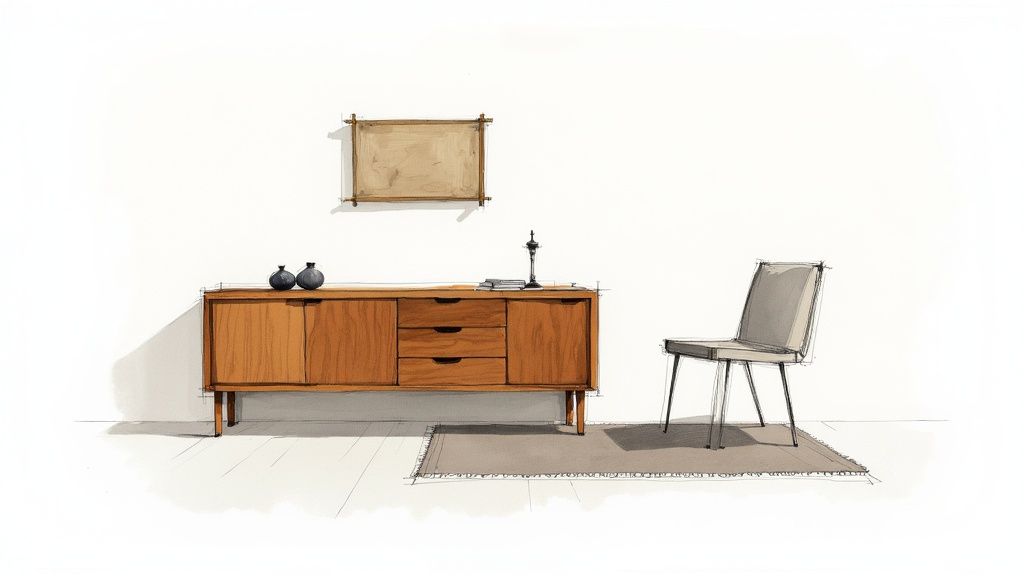
Bringing solid acacia wood into your home is like inviting a piece of nature’s own artwork indoors. Its greatest secret? Incredible versatility. This isn’t a wood that boxes you into one style; it's a design chameleon, ready to adapt and elevate whatever vision you have for your space.
For a rustic farmhouse kitchen, make a long, live-edge acacia table the heart of the home. Surround it with mismatched chairs for a room that feels lived-in, warm, and full of stories.
For a sleek, modern apartment, use a smooth acacia sideboard with minimalist lines. This adds the perfect touch of organic warmth, preventing the space from feeling too stark or cold.
Creating Balance with Texture and Color
When you work with a statement material like acacia, the key is balance. Its rich colors and dramatic grain patterns naturally draw the eye, so surround it with textures and colors that complement its beauty, not compete with it.
Here are actionable ideas to create contrast and softness:
- For an Industrial Edge: Pair a hearty acacia dining table with sleek, black metal chairs. The cool, sharp lines of the metal against the warm, flowing grain of the wood create a dynamic look that feels both modern and grounded.
- For Bohemian Comfort: Place an acacia coffee table atop a plush, high-pile rug. Add soft linen sofas, a couple of leather poufs, and plenty of lush greenery to craft a layered, relaxed sanctuary.
- For Modern Serenity: Make an acacia bed frame the star of your bedroom. Stick to a neutral color palette—think soft whites, gentle grays, and muted earth tones—to let the wood’s natural character truly sing.
Your home’s style is a personal narrative, and solid acacia wood can be its powerful, grounding anchor. Use its strength to tell your story, whether it’s one of bold contrasts or gentle, natural harmony.
This thoughtful approach makes the wood feel like an intentional, integrated part of your design. You see this same appreciation for its beauty and practicality in the retail world, where everything from cutting boards to furniture showcases acacia’s appeal. It’s no wonder it has become a top choice for so many.
Even if you’re working with limited square footage, a single, well-chosen piece of acacia can make a huge impact without overwhelming the room. For more inspiration on maximizing your layout, take a look at our guide on how to decorate small spaces. By carefully balancing acacia’s strong presence, you can turn it into the soul of your home, creating a space that feels both curated and effortlessly you.
Simple Care for Lasting Acacia Furniture
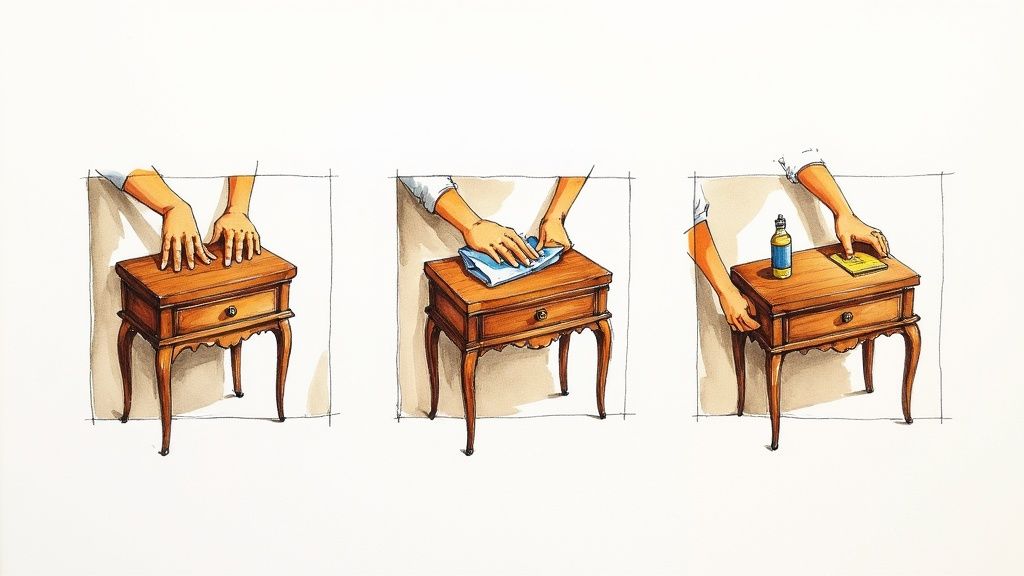
When you bring a piece of solid acacia wood furniture into your home, you're not just buying an object; you're inviting in a slice of nature meant to last a lifetime. Its legendary durability means it doesn't ask for much. Follow these simple, consistent care steps to ensure its rich beauty deepens with every passing year.
For routine cleaning, wipe the furniture a few times a week with a soft, dry microfiber cloth to keep dust from scratching the finish. For a more thorough clean, use a slightly damp cloth and dry immediately.
The most important rule is to avoid harsh chemicals. Ammonia-based cleaners, silicone-heavy polishes, and generic all-purpose sprays can strip the wood’s protective finish, leaving it dull and lifeless. The golden rule is simple: if it's not specifically made for wood, keep it away.
Everyday Protection and Simple Fixes
The secret to keeping your acacia furniture looking pristine is damage prevention. A few small habits can make an enormous difference and are much easier than performing repairs later.
Even though acacia is naturally water-resistant, don't let moisture linger.
- Always Use Coasters and Placemats: This is your first line of defense against water rings and heat marks from a hot cup of coffee or a warm plate. Make this a non-negotiable habit.
- Wipe Up Spills Instantly: When accidents happen, grab a clean, dry cloth and blot the spill immediately. Wiping can spread the liquid and push it deeper into the wood grain.
- Avoid Direct Sunlight: Constant UV exposure can fade the wood’s vibrant colors over time. Position your furniture away from direct, all-day sunbeams to preserve its original tone.
Caring for solid acacia wood is about consistency, not complexity. Simple preventative measures and gentle cleaning are far more effective than trying to repair significant damage later on.
For minor mishaps, here's what to do. For a small scratch, find a wax repair stick or a touch-up marker that matches your furniture's finish. To fix a faint water ring, place a dry cotton cloth over the spot and gently iron it on a low, steam-free setting for a few seconds. This can often draw the trapped moisture right out of the finish. These quick fixes will help you keep your furniture looking its best through all of life's moments.
Making a Sustainable and Eco-Conscious Choice
Choosing solid acacia wood isn't just about picking out a beautiful piece of furniture. It’s about making a conscious decision to bring materials into your home that reflect a respect for our planet. In an era of fast furniture, opting for a renewable resource is a powerful choice that tells an inspiring environmental story.
The key to acacia’s sustainability is its rapid growth rate. Many acacia species are ready for harvest in just 15-30 years, unlike oak or walnut which can take a lifetime to mature. This quick cycle means forests can be replenished responsibly without straining our natural ecosystems.
A Deeper Look at Responsible Sourcing
Much of the acacia wood on the market today comes from carefully managed plantations. These aren't just timber farms; they often play a critical role in reforesting land that was previously cleared. This helps fight back against desertification and creates a healthier, more diverse habitat for local wildlife.
So, when you bring an acacia piece home, you’re doing more than just decorating. You're supporting a system that contributes to global ecological health.
By choosing solid acacia wood from responsible sources, you are casting a vote for a healthier planet. Your furniture becomes a symbol of how thoughtful consumption can support both beautiful interiors and sustainable forestry practices.
This commitment is part of a bigger picture. As we all become more mindful consumers, our choices send ripples through global markets. The demand for responsibly sourced materials is reshaping the timber industry, especially as urban populations grow and seek out durable, stylish furniture. You can discover more insights about global timber markets to see just how big this movement has become.
Before you buy, take a moment to research the brand’s sourcing policies. Resources on understanding the sustainability of timber can give you confidence in your purchase. Ultimately, this choice embodies a core principle of eco-friendly interior design: every element is selected with intention. Your beautiful home and a thriving planet really can go hand-in-hand.
Answering Your Top Questions About Solid Acacia Wood
So, you're considering bringing the rich, warm character of solid acacia wood into your home. It’s a fantastic choice, but it's natural to have a few questions before you commit. Here are practical answers to the most common questions we hear from homeowners.
Is Solid Acacia Wood a Good Choice for Outdoor Furniture?
Yes, acacia is one of the best hardwoods you can choose for your patio or garden. Its dense composition and natural oils act as a built-in defense against water, rot, and insects, making it a true outdoor warrior.
To maximize its lifespan and keep it looking stunning, follow these two tips:
- Seal it from the sun: Apply a quality, UV-protective sealant designed for exterior wood. This acts like sunscreen for your furniture, preventing the sun from fading its gorgeous color.
- Cover it up: When you know a big storm is coming or you're heading into the off-season, toss a cover over your furniture. This simple step can dramatically extend its life and preserve the finish.
Does Acacia Wood Darken Over Time?
Yes, and it's a natural aging process that adds depth and character. As it's exposed to light, the wood will gradually develop a slightly darker, richer patina. This is a sign of authentic, living material.
If you’d rather keep the original tone for as long as possible, you can. Simply place the furniture where it won't sit in harsh, direct sunlight all day. Using a finish with a UV inhibitor will also slow down the process, giving you more control over its aesthetic evolution.
Expert Tip: Wondering if a piece is truly solid wood? Check the edges. If the grain pattern from the top surface seems to "wrap" or flow continuously over the side, you're looking at the real deal. A veneer will often have a clean, abrupt line or a different material at the edge.
Another quick way to spot solid wood is by its heft—it's noticeably heavier than pieces made with veneers. A veneer might also have a grain pattern that looks a bit too perfect or repetitive, which is another telltale sign.
At Griseo Interior, we believe in the power of natural materials to create spaces that feel both elegant and grounded. Our collections are built on a foundation of timeless design and artisan craftsmanship. Find your next statement piece at Griseo Interior and bring home a story that will last a lifetime.