

Your Practical Guide to Flawless Italian Home Decoration
To achieve authentic Italian home decoration, you must capture a feeling—a sense of sprezzatura. This Italian concept means a studied carelessness, an effortless elegance that feels completely natural. This guide isn't about rustic clichés. It's a practical plan for blending timeless craftsmanship with clean, modern minimalism to create rooms filled with sophistication and soul.
The Soul of Modern Italian Design
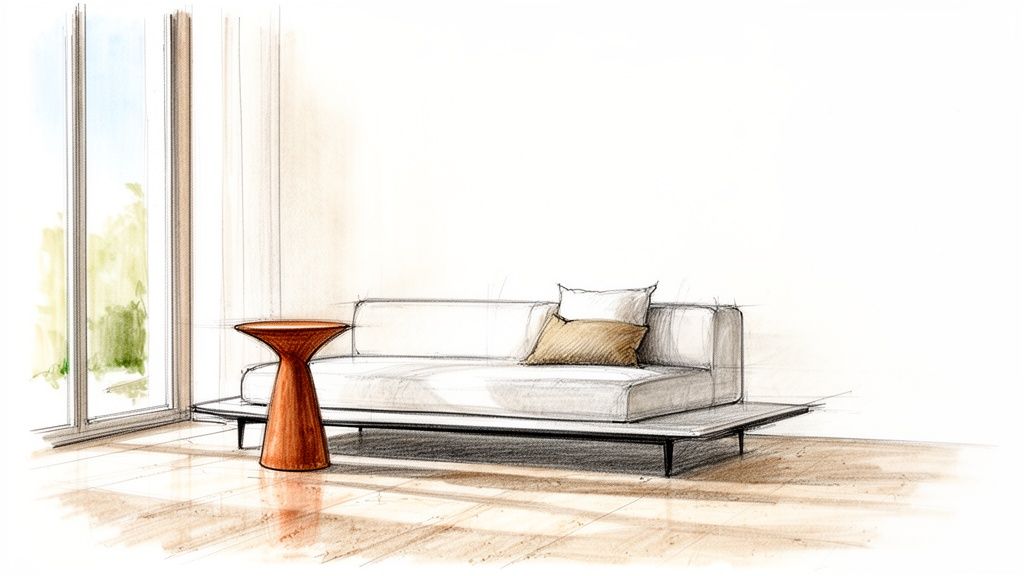
Imagine a space where elegance lives in simplicity. That's the heart of contemporary Italian design. It pulls from a deep, rich heritage but filters it through a modern, minimalist lens, creating interiors that are both inspiring and incredibly livable. Your goal is not to replicate a Tuscan villa, but to implement a specific, sophisticated mood.
This aesthetic is built on a profound respect for artisanal skill and high-quality, natural materials. To achieve it, create rooms that feel open and full of light, where every single object has a purpose and a story. Your mission is to curate a home that feels like a personal collection gathered over time, not something decorated in a weekend.
Core Principles of the Aesthetic
To get this style right, you need to apply its core pillars to every decision you make, from the paint on the walls to the soft curve of a sofa. Follow these principles for an authentic, Italian-inspired space.
Here’s what to do:
- Practice Studied Simplicity: Make deliberate, thoughtful choices to create a space that feels uncluttered and naturally stylish. The final look should be intentional, but never forced.
- Prioritize Craftsmanship: Choose every piece for its quality and the artistry behind it. This means turning away from mass-produced items and toward objects that have a soul.
- Maximize Natural Light: Use large, unadorned windows as a signature element. Design your rooms to work with the light, not against it, making every space feel airy, bright, and connected to the outdoors.
At its heart, modern Italian design is a dialogue between the past and the present. It respects the long lineage of Italian artisans while pushing boundaries with clean forms and innovative materials.
The Modern Interpretation
Today, the world of Italian home decoration is also looking toward the future, with a growing emphasis on sustainability. To implement this modern approach, seek out contemporary brands that blend artisan tradition with eco-conscious methods, like made-to-order production, to minimize waste. This thoughtful approach means the beauty of a piece is matched by the integrity of its creation. You can dive deeper into this blend of tradition and modernity by exploring Italian luxury interiors.
And if you truly want to immerse yourself in the culture that inspires it all, you might even consider investing in an Italian second home. Use this guide as your first step toward creating a home that radiates quiet confidence and timeless appeal.
Building Your Italian-Inspired Color and Material Palette
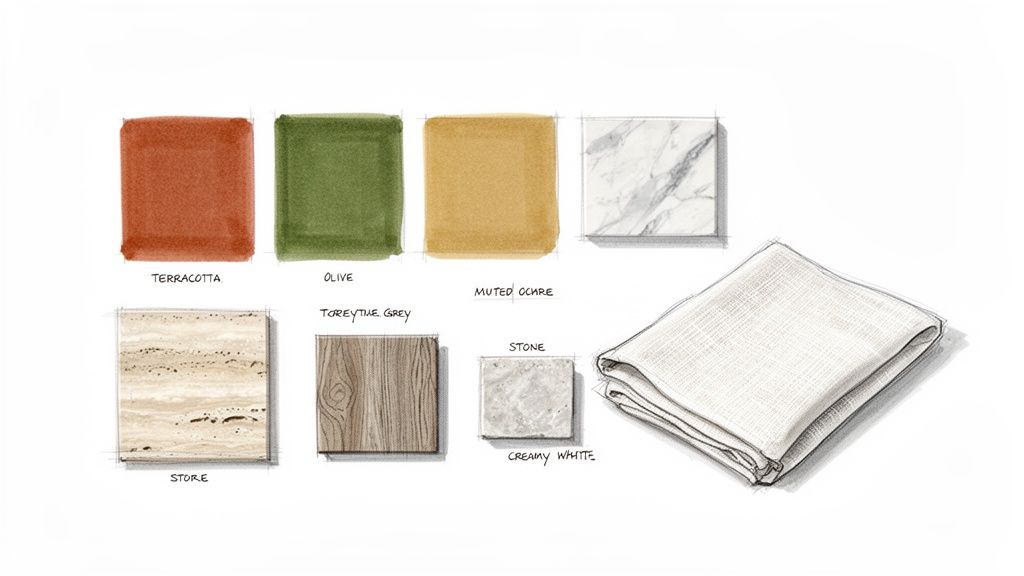
The soul of any beautiful Italian interior begins with its palette. To build yours, focus on curating a serene backdrop that feels both modern and deeply connected to the natural world. This is where you begin to tell your space's story.
Start by anchoring your room with a sophisticated neutral. Move beyond stark white and choose warmer, more complex shades like creamy off-whites, soft beiges, or a gentle stone grey. These hues create a calm, airy base that plays beautifully with natural light, making any room feel more expansive and tranquil.
Layering Earthy Hues for Depth
Once your neutral foundation is in place, start layering in the rich, earthy tones that are the signature of Italian style. These are colors pulled directly from the Italian landscape, and they bring warmth and history into a home.
Introduce these accents with purpose.
- Terracotta: To incorporate this quintessential sun-baked clay tone, apply it to a single feature wall, introduce it through textiles like throw pillows, or group a collection of rustic ceramic vases.
- Olive Green: Add this muted, sophisticated green for a touch of organic softness. It is particularly effective on cabinetry, an accent chair, or within botanical prints.
- Muted Ochre: Use this golden, earthy yellow to bring a gentle glow without being loud. It works wonders for linen curtains or as a highlight in a piece of abstract art.
Expert Tip: The secret is always balance. Do not paint an entire room terracotta. Instead, let a few well-placed terracotta elements stand out against your neutral backdrop. That’s what makes a space feel curated and soulful.
Embracing Tactile Natural Materials
In Italian design, texture is as important as color. To create a sensory experience, you need to incorporate a variety of natural materials. The interplay of different textures adds a tactile dimension that feels both luxurious and grounded.
For example, pair the cool, smooth surface of a marble coffee table with the soft, nubby texture of a linen sofa. Place a rough, unglazed ceramic vase on a sleek, polished wood console. This contrast is what brings a design to life. To fully commit to this aesthetic, you can even learn how to cover kitchen cabinets with a wood-grain or stone-effect finish.
This focus on authentic, high-quality materials is central to modern Italian design. Sustainability and minimalism lead the way, emphasizing clean lines and durable, eco-friendly materials. Revenue in Italy's home decor market is projected to hit US$1.86 billion by 2025, a clear sign of the shift away from mass production toward thoughtful, lasting design.
To capture this spirit, it helps to know the makers who embody it. Exploring a curated list of modern Italian furniture brands is a fantastic starting point for finding pieces that will stand the test of time.
Core Elements Of A Modern Italian Palette
Use this quick guide to pair colors and materials for that authentic contemporary Italian feel.
| Element | Primary Choices | Accent Pairings | Best For Creating |
|---|---|---|---|
| Colors | Creamy White, Stone Grey, Soft Beige | Terracotta, Olive Green, Muted Ochre | A warm, inviting, and light-filled atmosphere. |
| Woods | Light Oak, Walnut, Bleached Pine | Dark-stained accents, sculptural pieces | A natural, organic foundation with clean lines. |
| Stones | Travertine, Carrara Marble, Slate | Polished chrome, brass details | A sense of timeless luxury and earthy texture. |
| Metals | Matte Black, Brushed Brass, Polished Chrome | Unfinished steel, aged bronze | Sleek, modern contrast and subtle sophistication. |
| Textiles | Linen, Bouclé, Raw Cotton, Soft Wool | Leather, Suede, Velvet | Layers of comfort, softness, and tactile interest. |
Use this table as your cheat sheet. Mixing and matching these elements will ensure your space feels cohesive, thoughtful, and unmistakably Italian.
Selecting Signature Furniture and Sculptural Accents
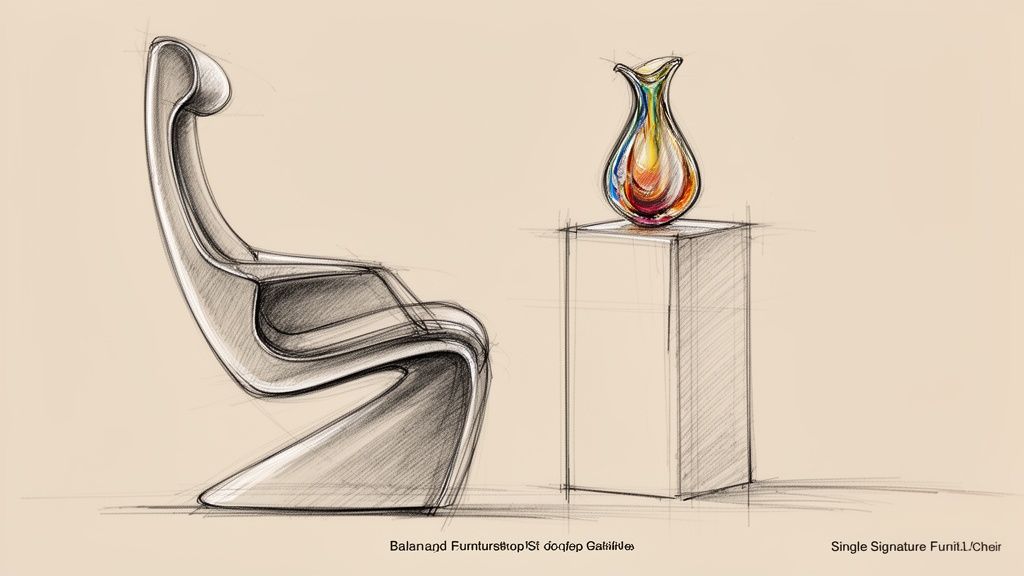
In Italian design, furniture is living art. To achieve this look, you must curate a collection of sculptural forms that breathe character into a room. The guiding philosophy is simple: invest in fewer, better things. This isn't about deprivation; it's about choosing pieces that don't just fill a space, but define it with purpose and timeless elegance.
Treat every piece as a statement. A sofa is the room's anchor, celebrated for its sleek lines. A coffee table is a low-profile sculpture, perhaps carved from marble or rich wood. Adopting this mindset shifts your focus from fleeting trends to enduring quality.
Choosing Foundational Furniture with Timeless Appeal
When selecting your core pieces—the sofa, armchairs, dining table, and consoles—let clean silhouettes and superior craftsmanship be your guide. Look for Italian furniture that blends supreme comfort with architectural grace. Your goal is to find pieces that feel substantial and permanent, yet visually light.
For example, choose a low-slung sofa with slim legs to ground a living room without overwhelming it. Select a dining table with a thin stone top on a sculptural base to bring drama and sophistication to mealtimes. These are the workhorses of your home, so ensure they are a testament to durability and quiet luxury.
This devotion to furniture is woven into Italian culture. Furniture dominates Italy's home decor market, commanding a massive 55.36% revenue share. This reflects a national passion for functional beauty. To understand these cultural and economic forces, you can explore the full research on the Italian home decor market.
The true goal is to find furniture that possesses sprezzatura—a certain effortless grace. The lines should feel fluid, the materials honest, and its presence in the room should be calm yet confident. It should look just as right in ten years as it does the day you bring it home.
Introducing Sculptural Accents as Focal Points
Once your foundational pieces are in place, introduce accents that embody the minimalist philosophy. Avoid cluttering surfaces with small items. Instead, select one or two powerful sculptural objects that command attention.
A single, beautifully crafted vase, an abstract metal sculpture, or an artfully designed floor lamp can serve as a potent focal point. The secret is to give these items space to breathe—don't crowd them. Allow them to be seen and appreciated.
Here are a few actionable ideas:
- Vases and Ceramics: Hunt for unique shapes and compelling textures. An unglazed terracotta vessel brings an earthy warmth, while a vibrant Murano glass piece scatters jewel-toned light.
- Lighting as Art: Treat lighting as a sculpture. A modern pendant or an iconic floor lamp can define a space just as effectively as a major piece of furniture.
- Abstract Forms: Add a simple, geometric sculpture in metal, wood, or stone. This creates a stunning, dynamic contrast to the softer lines of your upholstery and gives the room an edge.
By carefully curating these signature pieces, you create harmony between your home's function and its feel. It becomes less of a decorated space and more of a personal gallery of objects you love—a home that is sophisticated, intentional, and deeply rooted in the art of Italian living.
Mastering the Art of Arrangement and Flow
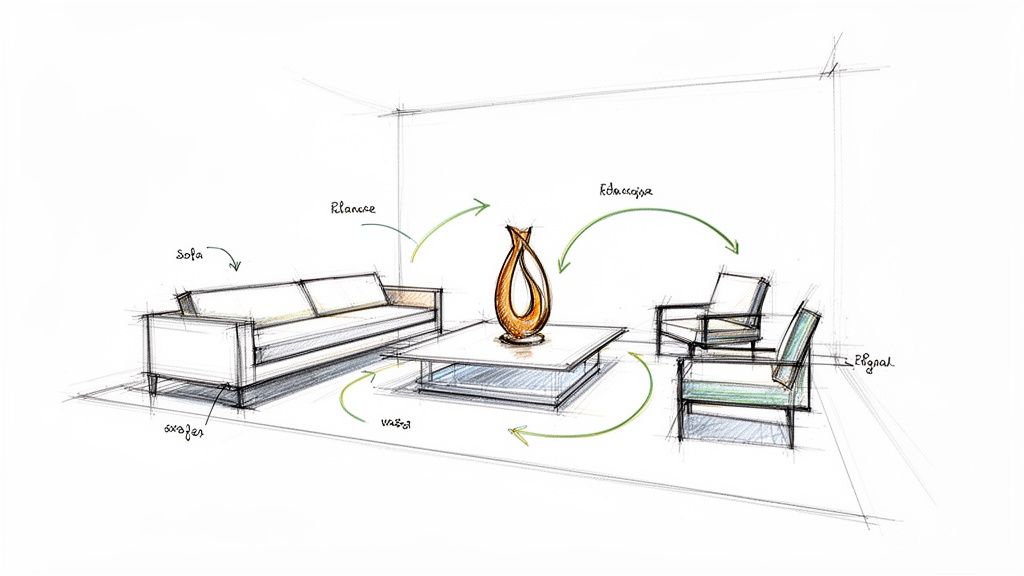
You’ve found your perfect pieces. Now it's time to arrange them. This is how your vision for italian home decoration moves beyond a collection of objects and breathes life into your space. The real artistry lies in the placement, creating a home that not only looks incredible but feels intuitive and calm.
In Italian design, arrangement is a conversation between presence and absence. Your task is to orchestrate a flow that guides the eye and invites movement, making the layout feel both deliberate and effortless.
Creating Flow in the Living Room
Your living room should be a sanctuary for both reflection and connection. To achieve this, arrange furniture to encourage conversation. Pull your sofa and armchairs away from the perimeter, even just a few inches, to create a more intimate, central grouping.
Angle two elegant armchairs toward your sofa, all oriented around a sculptural coffee table, to create an inviting zone. Ensure pathways are generous and clear—allow 30 to 36 inches for main walkways to keep the room feeling open.
Anchor these conversational areas with a single, powerful focal point. This could be a tall, slender vase on a pedestal in a corner, or a dramatic piece of art on the main wall. This gives the eye a destination, making the room feel more grounded.
The essence of a beautifully arranged Italian living space is balance. Not rigid symmetry, but a fluid, asymmetrical harmony. To achieve this, try pairing a substantial sofa with two visually lighter armchairs to create equilibrium without being predictable.
Styling a Serene Bedroom Retreat
In the bedroom, your philosophy must shift entirely toward creating pure tranquility. Here, minimalism and negative space are your best tools. The goal is an uncluttered arrangement that calms you the moment you step inside.
Start with the bed, the room’s focal point. Frame it elegantly, but don’t suffocate it. Place simple nightstands on either side, but resist cluttering them. A small tray for essentials and a single, crafted lamp on each is all you need.
Beyond the bed, every item should contribute to a sense of calm.
- Use Luxurious Textiles: Drape a high-quality linen duvet or a soft wool throw across the foot of the bed. This adds more comfort and style than a dozen decorative pillows.
- Select Minimalist Accents: Instead of scattering small trinkets, choose one significant piece. A single abstract sculpture on a dresser or a framed line drawing on an empty wall makes a more profound statement.
- Embrace Emptiness: This is crucial. Leave some surfaces completely bare. An empty bench at the foot of the bed or an unadorned corner allows the room to breathe, reinforcing a feeling of spaciousness and peace.
This thoughtful, curated approach ensures your bedroom becomes a true retreat. By mastering the art of arrangement, you elevate your home from simply decorated to artfully composed—a timeless sanctuary reflecting effortless Italian elegance.
How to Source Authentic Italian Decor
Finding the right pieces for your Italian home decoration is a rewarding journey, not a race. It requires being deliberate and choosing items made with integrity that speak to your style. Here’s a practical guide to sourcing authentic Italian design in a smart, sustainable way.
Seek out modern Italian studios that have moved away from mass production to embrace a made-to-order model. When you buy from a brand that operates this way, your piece is crafted just for you. This simple shift drastically cuts down on overproduction and waste.
This thoughtful approach is at the heart of the modern "Made in Italy" promise. It's a commitment to quality that goes beyond a country of origin label; it’s a mark of a mindful production process from sketch to final polish.
Understanding the Modern 'Made in Italy'
The 'Made in Italy' label is a guarantee of quality passed down through generations. It’s a promise of meticulous detail and the finest materials. Italy's home decor market has always been a global style leader and is now valued at an incredible USD 18,102.2 million. As more people seek personal, sustainable design, that number is set to grow. For a closer look, you can discover more insights about Italy’s home decor market.
To spot genuine quality, look for these tell-tale signs:
- Material Honesty: Authentic pieces celebrate their materials. Look for the unique veining in Carrara marble or the rich grain of solid wood.
- Artisanal Finish: Look closely for the subtle marks of hand-finishing. These tiny variations are the beautiful signatures of a true craftsperson, not flaws.
- Brand Transparency: The best brands are proud of their process. They will be open about where their materials come from, how their pieces are made, and the artisans they work with.
The Logistics of Sourcing Mindfully
Embracing the made-to-order philosophy requires a shift in perspective, especially regarding timing. Patience is a key part of the experience.
When an object is crafted just for you, the wait becomes part of its story. It transforms the piece from a simple purchase into a personal commission, an investment in artistry that will last a lifetime.
Get comfortable with lead times. A custom-made marble vase or handcrafted furniture can take several weeks to create and ship. This is the time required for real craftsmanship. The result is an object made for your home, not one sitting in a warehouse.
Finally, focus on longevity. When you invest in a beautiful piece, you want it to last. Always follow the specific care instructions, especially for natural materials like wood and stone. A simple routine—dusting wood with a soft, dry cloth or cleaning marble with a pH-neutral cleaner—will preserve its beauty for years. This is how your authentic Italian decor becomes a cherished part of your home’s story.
Answering Your Italian Home Decoration Questions
As you start bringing this aesthetic into your home, questions are a good sign. It means you’re thinking deeply about the details. Here are answers to common questions to help you move forward with confidence.
How Can I Bring Italian Design into a Small Apartment?
Italian minimalism is perfect for apartment living because it's about making the most of the space you have. The key is to think smarter, not bigger.
Look for multi-functional furniture with sleek lines that don't add visual clutter. A crafted storage ottoman or a streamlined console that doubles as a desk can be a great solution. To create a sense of airiness, keep your walls light and use a large mirror to bounce light around the room. Instead of many small trinkets, choose one or two stunning sculptural pieces to draw the eye. Remember, it’s always about quality, not quantity.
What's the Biggest Mistake to Avoid?
The most common pitfall is trying too hard and filling every corner with something. True Italian design is about restraint. It requires letting a few incredible pieces breathe and own the space.
I always tell my clients to embrace what we call "negative space." Those empty areas around your furniture and decor aren't wasted; they're essential. That breathing room is what gives your beautiful objects power and allows their craftsmanship to shine, creating a home that feels intentionally calm, not just full.
Can I Mix Vintage Pieces with Modern Italian Decor?
Yes, you absolutely should! Mixing old and new is how a room develops a soul and a story.
Consider the beautiful tension created by pairing a weathered, antique farm table with sleek, modern chairs. Or place a vintage Murano glass bowl from a market near a contemporary abstract sculpture. The key is to create a quiet conversation between the pieces. To do this, find a common thread—a shared color, a similar texture, or a complementary shape—to tie them together. This ensures the mix feels thoughtful and curated, not random.
At Griseo Interior, our philosophy is built on making authentic Italian design personal and sustainable. Our made-to-order vases and decor accents are crafted just for you, blending timeless artisanal heritage with modern precision. We invite you to find the piece that will start telling your story at griseointerior.com.