

A Practical Guide to Italian Modern Interior Design
Italian modern interior design is more than a style; it's a philosophy for living beautifully. It masterfully blends sculptural forms and high-quality craftsmanship with a genuine sense of warmth, creating spaces that feel both sophisticated and personal. This guide provides actionable steps to bring that effortless elegance into your own home.
The Soul of Italian Modern Interior Design
At its heart, this design approach celebrates la dolce vita—the sweet life. It’s not about sterile minimalism but about how a space makes you feel. The goal is to craft an environment that’s uncluttered, bathed in light, and filled only with objects that serve a purpose and bring you joy.
To achieve this, every single piece, from a sleek, low-profile sofa to a simple ceramic vase, must be chosen with intention.
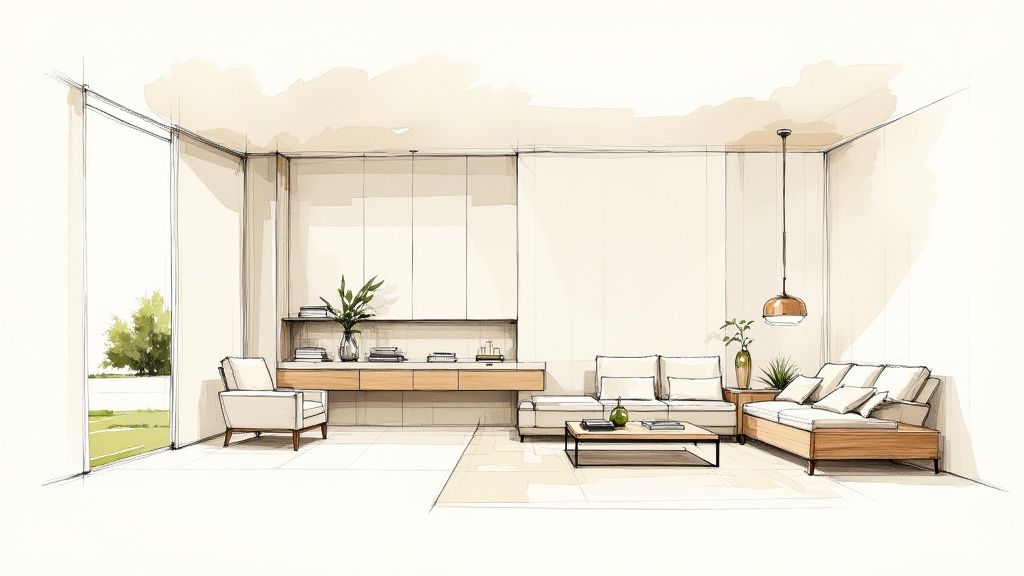
This reverence for quality has turned Italian design into a global powerhouse. The broader Italian luxury interiors market was recently valued at around USD 27 billion, driven by a worldwide passion for its craftsmanship. This reflects a culture that sees furniture not as a temporary item, but as a lifetime investment.
Defining the Core Principles
To bring this philosophy into your home, focus on a few key principles. Mastering these concepts is the first step toward building your own serene sanctuary.
- Choose Clean, Sculptural Lines: Treat furniture as functional art. Look for pieces with strong, simple silhouettes that command attention without overwhelming the room.
- Create Open and Airy Layouts: Maximize natural light and ensure a logical flow between spaces. To do this, eliminate clutter and give every element room to breathe.
- Prioritize Craftsmanship: Celebrate the maker's hand. This is the essence of the "Made in Italy" promise—an unwavering commitment to quality and artistry.
- Embrace Warm Minimalism: Build a minimalist foundation, then warm it up with rich, inviting textures from natural materials like wood, stone, marble, and supple leather.
The goal isn't perfection but personality. An Italian modern home feels curated yet lived-in, blending timeless elegance with individual character.
To keep your space feeling current, see how this style is evolving. Keeping an eye on the latest interior design trends can provide fresh ideas for blending these classic principles with contemporary twists.
Laying The Foundation: Colors and Materials
Every great design starts from the ground up. For Italian modern style, that means choosing a color and texture palette with care. The aesthetic is built on a warm, inviting neutral base inspired by the Italian countryside.
Start by painting your walls in soft, organic hues. Instead of stark white, choose the creamy warmth of aged plaster, the gentle grey of ancient stone, or the inviting beige of sun-baked travertine. These colors create a serene, expansive backdrop that allows your furniture and art to become the focal points.
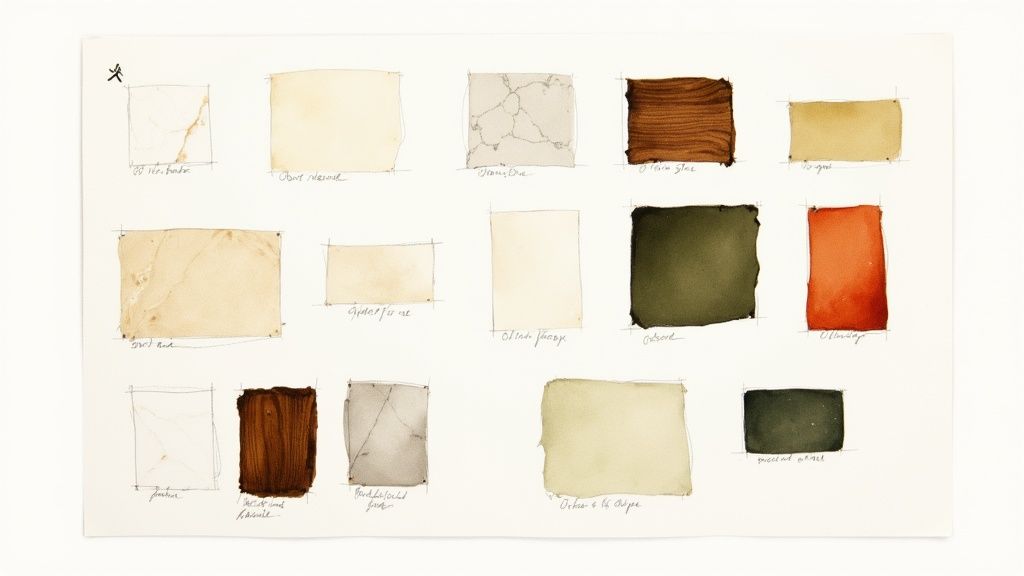
Once you have your neutral base, weave in subtle, sophisticated accents. Opt for earthy tones that add depth without being overpowering. A deep olive green cushion, a rich terracotta vase, or a muted sienna art piece can bring a touch of the Mediterranean into your room, creating pockets of warmth.
Bringing The Space To Life With Texture
With your color story in place, the next step is layering materials. This is where you create visual and tactile interest. The heart of Italian modern design lies in the contrast between sleek, polished surfaces and raw, natural textures.
To achieve Italian elegance, focus on the mix. Place a cool, smooth marble table next to the organic warmth of a walnut credenza to create a rich sensory experience.
Choose materials that are as delightful to touch as they are to look at. Imagine the cool, veined surface of a Calacatta marble countertop, then the supple give of a well-worn leather armchair. This tactile journey is central to the style.
Italian designers have a deep respect for natural materials. Here’s a practical guide to using the key players.
Key Materials In Italian Modern Design
| Material | How to Use It | Aesthetic Feel | Pairing Suggestion |
|---|---|---|---|
| Natural Wood | Flooring, cabinetry, furniture | Warm, organic, grounding | Contrast with cool marble or polished chrome to create balance. |
| Marble & Travertine | Tabletops, countertops, flooring | Luxurious, timeless, sculptural | Soften with plush textiles like velvet or a high-pile wool rug. |
| Polished Metals | Lighting, furniture legs, hardware | Sleek, reflective, modern | Use brass or bronze to add warmth; chrome for a cooler, classic modern look. |
| Leather | Upholstery (sofas, chairs) | Sophisticated, durable, textural | Pair with natural wood tones and soft fabrics to avoid an overly stark feel. |
Each of these materials brings its own character. By combining them thoughtfully, you create a rich, layered interior that feels curated over time.
As you make selections, think about longevity. The Italian ethos is "buy once, buy well." Opting for high-quality, sustainable materials is a core part of this philosophy. To make more conscious choices, explore the world of eco-friendly home furnishings. This approach ensures your home is not only beautiful but also built on a foundation of quality and care.
Choosing Furniture That Tells a Story
Now for the most impactful step—selecting your furniture. In Italian modern design, furniture is never just filler; it's functional sculpture that defines a room's character. Your goal is to focus on exceptional quality, not quantity.
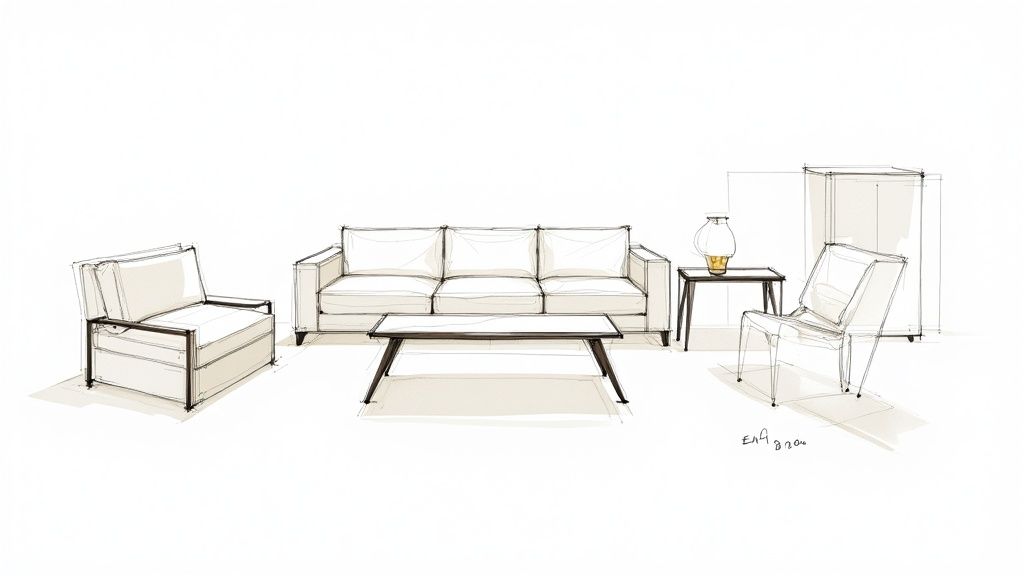
This philosophy means investing in pieces that are both stunning and built to last. It’s a commitment to enduring quality that has fueled the luxury segment of the Italian furniture market, which was valued at around $1.5 billion in 2025. It's projected to grow by over 4.5% each year through 2033, thanks to a global love for authentic craftsmanship. You can dig into the numbers with detailed insights on the growth of the luxury Italian furniture market.
Selecting Your Anchor Pieces
Every well-designed room needs a focal point. Start by identifying the main purpose of your space, then choose one spectacular item to anchor it.
- For the Living Room: The anchor is usually the sofa. Select one with a strong, clean silhouette and low-profile legs that give it a sense of lightness. A modular sofa in supple leather or a textured fabric is a perfect choice, offering both timeless style and flexibility.
- For the Dining Room: The dining table is the star. Choose a table with a sculptural base—in stone or metal—topped with warm wood or sleek glass. It should be a beautiful object that invites gathering, even when not in use.
Once your anchor piece is in place, build around it with complementary items that share the same design language of clean lines and premium materials.
Mastering the Art of Uncluttered Layouts
How you arrange your furniture is as crucial as the pieces themselves. The goal is to create an effortless flow in a space that feels open and full of light.
To do this, always leave clear pathways. Walk through the room and ensure your path is unobstructed. A key designer trick is to pull furniture away from the walls. This creates a more intimate, breathable arrangement and makes the entire space feel larger.
Treat negative space as a design element. The empty areas around your furniture create a sense of calm and allow each piece to truly shine.
The Value of Made-in-Italy Craftsmanship
When you invest in authentic "Made in Italy" furniture, you're buying a piece of design history built on generations of artisanal skill and innovation. These items aren’t mass-produced—they are future heirlooms, crafted with passion.
To make a piece truly your own, explore bespoke options. Choosing made-to-order furniture allows you to select the exact materials, finishes, and dimensions that fit your vision. This transforms an object you own into a personal statement, elevating your home to a unique sanctuary.
Mastering the Art of Atmospheric Lighting
In Italian modern design, lighting is more than a utility; it's the soul of a room. It carves out atmosphere, injects drama, and wraps the space in a warm glow. A thoughtful lighting plan can elevate a beautiful room into something breathtaking.
Forget a single overhead light. The secret is to layer different types of light, each with a specific job. Weaving them together creates a dynamic, balanced, and intentional environment.
The Three Layers of Light
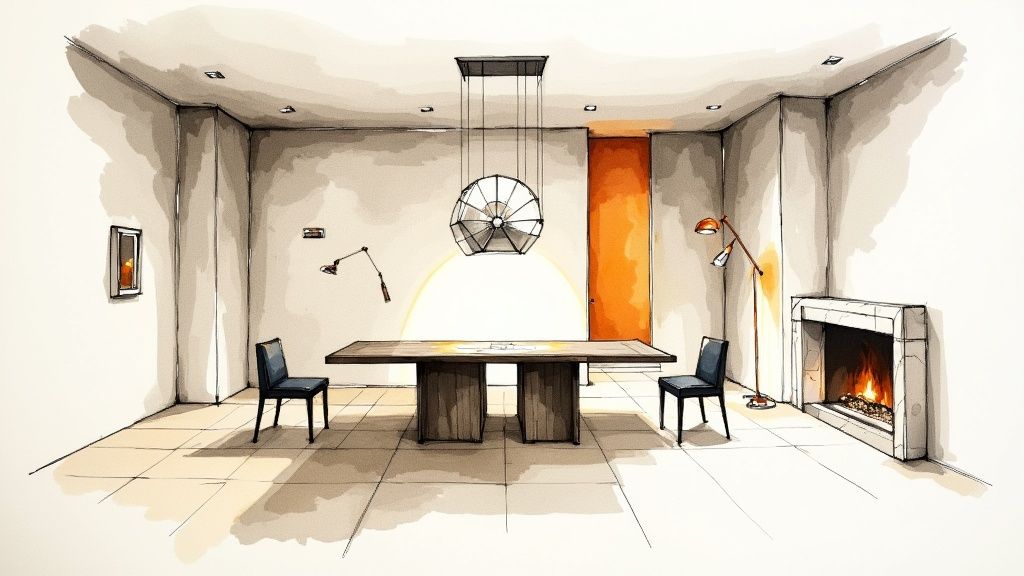
To get that signature Italian warmth, think about your lighting in three distinct layers. Each one builds on the other to create a rich, sophisticated effect.
-
Ambient Lighting: This is your foundation—the general, all-over light. Achieve this with discreet recessed lighting or a minimalist flush-mount fixture to keep the ceiling clean. The goal is a soft, even light without harshness.
-
Task Lighting: This is focused, functional light. Use a sleek, adjustable reading lamp beside an armchair or install elegant under-cabinet strips to illuminate a kitchen workspace. It adds function without sacrificing style.
-
Accent Lighting: This is the "jewelry" of your room. Use accent lighting to draw the eye to your favorite features. Spotlight a textured wall, a piece of art, or use a floor lamp to wash a corner in a gentle radiance. This is how you create mood and highlight beauty.
A powerful lighting statement can come from a single, show-stopping sculptural piece. One iconic fixture can do more for a room than a dozen generic lights.
Actionable Lighting Strategies
Here’s how to translate this into your home:
Hang a dramatic, sculptural pendant light low over your dining table. This single piece serves as both task lighting and a stunning accent, creating an intimate dining experience.
In the living room, place an iconic floor lamp like the Arco lamp. Its sweeping curve provides targeted light over a sofa or chair, while its form adds a touch of design history.
Beyond fixtures, a deep appreciation for lighting fixture detailing is what separates good design from great. Every detail, from placement to integration with the architecture, contributes to the final effect.
By thoughtfully combining these elements, your lighting becomes a core part of your italian modern interior design, actively shaping how you experience and enjoy your home.
Accessorizing with Intention and Personality
Accessories are the final layer that transforms a house into your home. In Italian modern design, this means making deliberate, artful choices, not filling empty spaces. Think of it as the punctuation that gives your design story rhythm and soul.
The goal is to curate a personal gallery where every object has a purpose and room to breathe. This disciplined, 'less is more' philosophy elevates a space from simply decorated to truly designed.
Choose High-Impact Statement Pieces
Instead of scattering many small trinkets, focus on a few incredible pieces that can command a room. One powerful object will always have more impact than a dozen generic ones.
A large-scale abstract painting on a bare, neutral wall is a perfect example. It instantly injects color, emotion, and a dynamic focal point. The most important rule is that you must love it; the piece should feel like an extension of your personality.
The secret to Italian accessorizing is restraint. The empty space around an object is just as important as the object itself.
Incorporate Heritage and Craftsmanship
Italian design is built on respect for artisanal skill, and your accessories are the perfect way to showcase this. A single, exquisite piece of handcrafted Murano glass on a console table connects your home to a centuries-old tradition of artistry. These are functional sculptures, not just objects.
Don't forget texture. Drape a luxuriously soft cashmere or merino wool throw over a sharp, leather sofa to create a beautiful dialogue between hard and soft. This adds a layer of warmth and sensory richness that counters the clean lines of modern furniture.
How to Curate Your Personal Collection
Your home should tell your story. Follow these practical steps to bring it all together with intention:
- Group Objects Thoughtfully: When arranging smaller items, think in odd numbers. A group of three or five objects feels more natural and visually balanced. Play with height and texture—pair a tall ceramic vase with a low, sculptural metal bowl and a small stack of beautiful books.
- Balance Art and Mirrors: A large, minimalist mirror can amplify light and make a room feel larger. Position it so it doesn't compete with your artwork. Let one be the star of the wall.
- Edit Relentlessly: A curated space is never static. Every few months, step back and reassess. Does every object still earn its place? Don't be afraid to put things away for a season or rotate your collection. This is how your home evolves with you.
By choosing each piece with care, you infuse your Italian modern interior with a personal luxury that feels both timeless and completely authentic.
Your Italian Modern Design Questions Answered
Stepping into the world of Italian modern design can bring up a few questions. Getting the details right is what takes a room from looking good to feeling truly special. Here are answers to common challenges to help you navigate the finer points with confidence.
How Can I Make Minimalism Feel Warm and Livable?
The key to avoiding a cold, stark look is to focus on warm minimalism. The secret isn't adding more stuff; it’s layering rich, thoughtful textures. Think beyond what you see and focus on how a room feels.
- Introduce Soft Textiles: Place a high-pile wool rug under a streamlined sofa, drape a cashmere throw over a leather armchair, or hang sheer linen curtains to soften the light. These elements instantly increase comfort.
- Use Natural Wood Tones: A piece of furniture in walnut or oak provides an organic, grounding counterpoint to cooler materials like chrome, glass, or marble.
- Layer Your Lighting: Avoid a single, harsh overhead light. Create atmosphere with a mix of floor lamps, table lamps, and subtle accent lights. Use warm-toned bulbs—around 2700K is the sweet spot—to cast a cozy, inviting glow.
Is Italian Modern Design Suitable for Small Spaces?
Absolutely. The style's principles are a small space's best friend. The emphasis on clean lines, uncluttered layouts, and functional furniture can make a compact room feel significantly larger and more peaceful.
The philosophy of "quality over quantity" is your greatest asset in a small space. One perfectly chosen, beautifully crafted piece of furniture will always make a stronger statement than a room full of smaller, less considered items.
To open up the space, choose furniture with a light visual weight. Look for sofas and chairs with slim legs that lift them off the floor, creating a sense of airiness. Use large, well-placed mirrors to bounce light and create an illusion of depth.
How Do I Source Authentic Italian Pieces Without a Huge Budget?
Investing in authentic Italian design doesn't have to mean buying brand-new iconic pieces. With patience and a curious eye, you can find incredible furniture and decor that bring "Made in Italy" soul into your home.
- Hunt for Vintage and Secondhand Treasures: Online marketplaces, antique shops, and consignment stores can be gold mines for mid-century Italian lighting, seating, and accessories. Look for brands like Stilnovo or Artemide, or train your eye to spot sculptural forms and high-quality materials.
- Invest in a Single "Hero" Piece: Focus your budget on one high-impact item you'll love forever, like a breathtaking floor lamp or a perfectly crafted armchair. Build the rest of the room around it with more affordable, complementary minimalist pieces.
- Discover Emerging Artisans: The legacy of Italian craftsmanship is carried on by smaller, independent studios. Seeking them out can lead to stunning, made-to-order pieces that honor tradition without the hefty price tag of a famous brand, giving your home a unique story.
At Griseo Interior, we’re passionate about making authentic Italian design accessible. Explore our collection of made-to-order vases and decor, crafted with a unique blend of modern innovation and timeless artisan skill, to bring a genuine piece of Italy into your home.
Discover the Griseo Interior collection and find your next treasure.