

Eco Friendly Home Furnishings for a Stylish Home
Creating a home that is both beautiful and sustainable is easier than you think. Eco-friendly home furnishings are about making conscious choices that align your living space with your values, without sacrificing style. This guide provides actionable steps to help you furnish your home with purpose.
The Shift to Sustainable Style in Your Home

This is your practical roadmap to creating a more conscious living space. We'll show you how to identify sustainable materials, understand key certifications, and choose pieces that are made to last. By making thoughtful, empowered choices, you can elevate your home’s design while protecting the world we all share.
More Than a Trend, It’s a Movement
The move towards sustainable decor isn't just a fleeting style. It reflects a significant shift in consumer values. As we become more aware of our environmental impact, we're actively seeking ways to make a positive difference through our purchasing decisions.
The numbers confirm this change. The global market for eco-friendly furniture jumped from USD 50.44 billion to USD 54.57 billion in a single year and is projected to reach nearly USD 100.4 billion over the next decade. This growth is a clear indicator of a collective demand for more responsible living. You can explore these market growth insights at 360iResearch.com.
What This Means for Your Home
Choosing sustainable furnishings is a direct way to align your home with your principles. It's more than just buying a chair made from recycled plastic; it’s a holistic approach to creating a healthier, more intentional environment.
To start, prioritize furnishings made with durable, non-toxic materials from ethical producers. This single step creates a healthier environment for your family and contributes to a healthier planet. It's a choice that feels both personal and profoundly impactful.
This approach encourages you to ask critical questions before you buy. Where did this material come from? How was it made? What is its end-of-life plan? By asking these questions, you become a curator of a home filled with intention and soul—a true sanctuary that nurtures you from the inside out.
Understanding Sustainable Materials and Methods
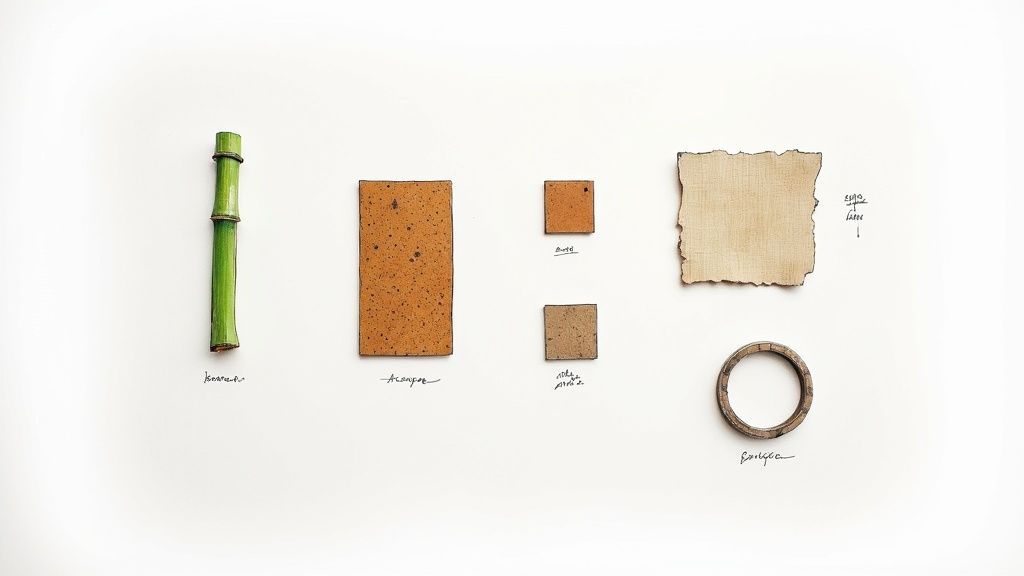
To choose genuinely eco friendly home furnishings, you need to understand the materials and production methods behind them. This knowledge empowers you to see past marketing buzzwords and select pieces that truly align with your values.
Think of it as developing a practical checklist for green design. When you know what to look for, you can confidently choose items that bring a positive legacy into your home.
The Foundation of Green Design: Materials
The material is the core of any piece of furniture. Your most effective action is to choose materials that are renewable, reclaimed, or recycled. Each offers distinct environmental benefits and brings unique character to your space.
-
Choose Fast-Growing Wonders: Opt for materials that replenish quickly. Bamboo can grow several feet in a day, while cork is harvested from tree bark without harming the tree. Look for these as durable alternatives to slow-growing hardwoods in flooring, furniture, and kitchenware.
-
Select Reclaimed and Reimagined Pieces: Seek out furniture made from reclaimed wood. This material often comes from old barns, ships, or warehouses, carrying a unique history. Using it prevents landfill waste, saves new trees, and adds unmatched character to your home.
-
Prioritize Recycled and Resilient Options: Look for furniture made from recycled metals like aluminum and steel, which can be reformed endlessly while saving massive amounts of energy. Recycled plastics are also being transformed into stylish, durable fabrics and furniture frames.
For example, aluminum is a popular choice for modern kitchens due to its durability and recyclability. You can learn more in The Practical Guide to Aluminium Kitchen Cabinets.
This table offers a quick guide to some of the most popular eco-friendly materials.
Comparing Common Eco-Friendly Furniture Materials
| Material | Key Environmental Benefit | Commonly Used For | Durability |
|---|---|---|---|
| Reclaimed Wood | Reduces deforestation and landfill waste | Tables, shelving, flooring, wall accents | Very high (often stronger than new wood) |
| Bamboo | Rapidly renewable (matures in 3-5 years) | Flooring, furniture, kitchenware | High (comparable to many hardwoods) |
| Cork | Harvested from tree bark; tree remains alive | Flooring, wall tiles, furniture details | Moderate to high; self-healing from dents |
| Recycled Metal | Saves 95% of the energy vs. new production | Furniture frames, legs, kitchen cabinetry | Extremely high; rust-resistant |
| Organic Cotton | Grown without pesticides or harmful chemicals | Upholstery, pillows, bedding | Moderate; soft but can wear over time |
Choosing the right material is an actionable step that adds texture, history, and beauty to your home.
Textiles That Nurture and Comfort
The fabrics you choose have a direct impact on your home's health and the environment. Conventional textile production often involves pesticides and harsh chemicals. Your action step here is to seek out organic and natural alternatives.
Look for materials like organic cotton, linen, and hemp. These are grown without synthetic pesticides or fertilizers, resulting in cleaner soil and water. The fabrics are breathable, naturally hypoallergenic, and bring a sense of calm to any room.
Actionable Tip: When buying upholstered furniture or decor, check the label for organic textiles. This simple check creates a healthier indoor environment for your family while supporting farming practices that work in harmony with nature.
This ensures that every element of a piece contributes to a holistic vision of wellness and sustainability.
The Art of Mindful Manufacturing
How furniture is made is as crucial as its materials. Traditional mass production often leads to significant waste, as factories produce large inventories that may never sell, fueling the "fast furniture" cycle.
You can counter this by supporting brands that use mindful manufacturing methods.
-
Support Small-Batch Artisanry: Choose pieces from artisans who create in limited quantities. This approach emphasizes quality craftsmanship and a direct connection to the maker, ensuring your furniture is built with expertise and passion.
-
Opt for Made-to-Order Models: This is the most effective way to combat waste. Furniture is created only after an order is placed, eliminating unsold inventory and ensuring every material is used with purpose.
This shift towards intentional production is redefining the industry. You can learn more about brands adopting sustainable manufacturing practices that set a new standard. When you support these methods, you become a patron of a more thoughtful and sustainable way of making things.
How to Identify Genuinely Green Furnishings
https://www.youtube.com/embed/PmwoSqg0dqI
Navigating the world of eco-friendly home furnishings requires a discerning eye. Many brands use vague terms like "green" or "natural," making it difficult to know what's truly sustainable. Here are concrete actions you can take to identify genuinely green products and furnish your home with confidence.
Think of yourself as a savvy investigator for your home. Your goal is to find proof, not just marketing claims. This means seeking hard evidence that a piece of furniture is good for the planet and healthy for your home.
Look for Trustworthy Third-Party Certifications
The most effective way to verify a brand's commitment is to look for third-party certifications. These seals of approval come from independent organizations that have rigorously audited a product's materials and manufacturing processes. They provide clear, unbiased proof.
Here are the key certifications to look for on product labels and websites:
-
Forest Stewardship Council (FSC): If you see the FSC logo, the wood comes from a responsibly managed forest. This certification guarantees that ecosystems are protected, workers' rights are respected, and the forest's long-term health is preserved.
-
GREENGUARD: This certification focuses on indoor air quality. GREENGUARD tests products for over 10,000 volatile organic compounds (VOCs)—harmful chemicals that can be released from furniture. A GREENGUARD-certified product ensures cleaner, healthier air in your home.
-
Fair Trade Certified™: This seal confirms the social impact of your purchase. It guarantees that the artisans and workers who made your product received fair wages and work in safe conditions.
Use these certifications as your checklist. They offer the transparency you need to make an informed decision.
Be Aware of Greenwashing Red Flags
Just as important as knowing what to look for is knowing what to avoid. Greenwashing is a marketing tactic where companies make misleading claims to appear more eco-friendly than they are. Train yourself to spot these red flags to become a smarter shopper.
Actionable Tip: A truly sustainable brand is transparent. They will openly share details about their material sourcing and production methods. If a company is secretive or its claims are vague, consider it a red flag.
Watch out for these common warning signs:
- Vague and Fluffy Language: Be skeptical of undefined terms like "eco-smart," "earth-friendly," or "all-natural" that lack specific proof. These words sound good but often mean nothing.
- Hidden Information: If you have to search extensively for a company’s sustainability practices on their website, proceed with caution. Authentic brands feature this information prominently.
- Focusing on a Single Attribute: A company might highlight that a product is made from "recycled materials" while ignoring the toxic dyes or unethical labor used. True sustainability considers the entire lifecycle of a product.
The Power of Informed Consumer Choices
Your purchasing decisions have a significant impact. Every time you choose a genuinely sustainable product, you contribute to a growing demand that pushes the entire industry toward more responsible practices.
North America, for example, now holds a 43.6% market share in eco-friendly furniture, valued at USD 18.7 billion. This demand is driven by consumers like you who are actively seeking products that align with their values. For more details, you can explore this in-depth market report at Market.us.
By asking questions and demanding transparency, you are voting for a healthier planet, fairer labor practices, and a more mindful way of living. Your home becomes a direct reflection of that powerful choice.
Bringing Sustainable Design into Your Home

This is where your values meet your personal style. Choosing eco friendly home furnishings is your opportunity to curate a space that is chic, personal, and sustainable. Forget the myth that eco-friendly design is aesthetically limited. Today, conscious design is at the forefront of style, offering rich textures and timeless forms.
Here are four actionable ways to integrate sustainable design into your home.
Make a Statement with Reclaimed Materials
Anchor your room with a single, impactful piece made from reclaimed wood. A dining table crafted from old barn beams or a coffee table with a storied past can become the soul of your space. These items serve as natural focal points and conversation starters.
A statement piece grounds your design with a sense of history and intention that new items cannot replicate.
Actionable Tip: When designing a room, start with one reclaimed wood piece. Use it as the centerpiece and build the rest of your design around its unique character and story. This act of preservation brings soulful energy into your home.
Layer Textures for Warmth and Depth
Create an inviting atmosphere by layering sustainable textiles. Organic linen, hemp, and ethically sourced wool add tactile richness that instantly elevates a space. Think of it as decorating with texture to add comfort and visual interest.
Drape a chunky organic cotton throw over your sofa or add hemp-covered cushions for a touch of rustic sophistication. These natural fibers are free from the harsh chemicals found in many conventional textiles, contributing to a healthier indoor environment.
Bring the Outdoors In with Natural Palettes
Connect your home to the natural world by using a color palette inspired by nature. Earthy ochres, soft greens, sandy beiges, and deep ocean blues create an immediate sense of calm. These timeless colors pair beautifully with natural materials.
Take these practical steps to enhance this connection:
- Add Houseplants: Place greenery in every room to add life and naturally purify the air.
- Incorporate Stone and Terracotta: Use accents made from natural stone or clay for a grounding effect.
- Maximize Natural Light: Keep windows unobstructed to create a bright, airy feeling that highlights your sustainable pieces.
This approach helps create a peaceful retreat that nurtures your well-being.
Curate a Unique Story Through Mixing and Matching
The most inspiring homes feel collected over time. To achieve this, artfully blend vintage finds with new, sustainable items to create a dynamic and unique look. This is your opportunity to express your personality and build a home that is exclusively yours.
Try pairing a modern sofa made from recycled materials with a vintage armchair you've had reupholstered in organic linen. Place a contemporary, 3D-printed vase on an antique side table. This mix-and-match approach results in a space that feels authentic, layered, and full of life.
For more inspiration, get tips on choosing beautiful and eco-friendly home accents. By thoughtfully combining old and new, your home becomes a living gallery of your taste and values.
Extending the Life of Your Furniture

Acquiring eco friendly home furnishings is just the first step. True sustainability lies in stewardship—caring for your belongings to ensure they last a lifetime. This mindset transforms a simple piece of furniture into a future heirloom.
By adopting a maintenance-focused approach, you learn to see potential in imperfections. A small scratch becomes a memory, and faded fabric becomes an opportunity for a refresh. This is how you honor the materials and craftsmanship, extending the story of each piece.
Gentle Care for Lasting Beauty
Maintain your furniture using simple, non-toxic methods that protect both the piece and your indoor air quality. You don't need harsh chemicals to keep your items looking their best.
- For Wood: Clean most wood surfaces with a soft cloth dampened with a solution of diluted white vinegar and water. To restore shine, apply a small amount of natural oil, like linseed or tung oil, to nourish the wood.
- For Organic Fabrics: For spills on fabrics like organic cotton or linen, blot the spot immediately with a clean cloth. For a deeper clean, use a small amount of pH-neutral soap and water. Always test on an inconspicuous area first.
These simple cleaning habits prevent the buildup of toxins and allow your furniture to develop a beautiful patina over time.
The Art of Renewal and Repair
When a piece shows signs of wear, consider it an opportunity for a creative update rather than a replacement. Repairing and renewing furniture is one of the most rewarding and sustainable actions you can take.
Instead of discarding a worn item, learn how to reupholster furniture to give a beloved armchair a new look. Simple fixes, such as tightening a wobbly leg or sanding and refinishing a scratched tabletop, can breathe new life into a piece.
Actionable Tip: Before replacing any furniture, ask yourself if it can be repaired, reupholstered, or refinished. This one question helps you reject the "fast furniture" cycle, conserve resources, and fill your home with unique, personalized items.
A Graceful End of Life
Even the most cherished furniture may eventually no longer fit your needs. When it's time to part ways, a responsible choice ensures its story continues elsewhere, not in a landfill. This final act of stewardship is as important as the care you provided over the years.
Here are three ways to give your furniture a new life:
- Sell: List your items on online marketplaces or take them to local consignment shops.
- Donate: Give high-quality furniture to local charities, shelters, or community centers.
- Recycle: If a piece is beyond repair, find a local facility that can recycle its wood, metal, or fabric components.
This approach is central to a sustainable lifestyle. If you want more ideas, learn how to reduce waste at home. Every step, from cleaning to responsible rehoming, contributes to a more intentional world.
Common Questions About Eco-Friendly Home Furnishings
Embarking on a conscious home design journey is exciting, but it often comes with questions. Here are clear, straightforward answers to some common uncertainties to help you make confident decisions.
Is Eco-Friendly Furniture More Expensive?
While some eco-friendly pieces may have a higher initial cost, it's more accurate to view it as an investment in durability. The price often reflects higher-quality materials, ethical labor practices, and craftsmanship designed to last for decades. A well-made, sustainable piece can save you money in the long run by eliminating the need for frequent replacements.
Fortunately, the market is expanding. As demand for sustainable options grows, more affordable choices are becoming available. Materials like bamboo and recycled metals make it easier to find stylish, eco-conscious pieces at various price points.
What Is the Most Impactful Change I Can Make?
The single most impactful change is to shift from a disposable mindset to one focused on durability. Before buying any new item, pause and ask yourself two questions: "Is this built to last?" and "Will I love this for years to come?"
This simple habit of intentional purchasing is transformative. It helps you break free from the wasteful cycle of "fast furniture" and guides you toward timeless pieces—whether new or vintage—that you will value for the long term.
This change alone will redefine your relationship with your belongings and help you create a home filled with things that truly matter.
How Do I Verify a Company's Green Claims?
In a market full of buzzwords, your best tool is to look for proof, not just promises. Go beyond marketing labels and seek concrete evidence of a brand's commitment to sustainability. The most reliable proof comes from credible, third-party certifications.
Here are the key certifications to look for:
- FSC (Forest Stewardship Council): Ensures wood is sourced from responsibly managed forests.
- GREENGUARD: Certifies that a product has low chemical emissions, promoting better indoor air quality.
- Fair Trade: Confirms that workers were paid fair wages and treated ethically.
A transparent company will proudly display these certifications and provide detailed information about their materials and production process. If a brand's claims are vague or unsubstantiated, consider it a red flag.
At Griseo Interior, we believe that true beauty is born from mindful creation. Our made-to-order approach blends classic Italian artisanry with modern precision, ensuring every piece is crafted just for you. This way, we eliminate unnecessary waste and honor the planet we all share. Discover timeless design with a conscience and bring the soul of Italy into your home.
Explore our collection at https://griseointerior.com.