
A Guide to Modern Wall Units for Your Home
Forget everything you thought you knew about wall units. We're not talking about the bulky, standalone cabinets of the past. Today’s wall units are more like architectural elements, seamlessly integrated into your home to bring order, beauty, and a sense of calm to your most-loved spaces.
The New Era of Home Design: Modern Wall Units
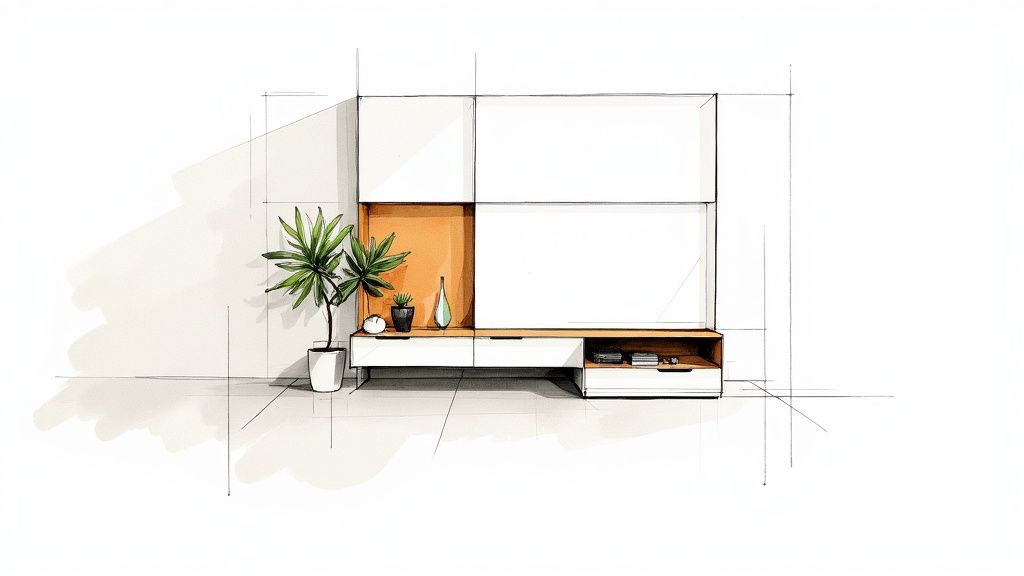
Leave the oversized, disconnected entertainment centers in the past. To truly elevate your space, you need furniture that actively shapes the flow and feel of a room.
Modern wall units are the new centerpiece of the living room. They act as powerful anchors that create a focal point that is both visually stunning and incredibly practical.
Imagine a space where every item has a dedicated place, technology is neatly concealed, and your personal style shines through in a clean, curated display. This is the direct result of a well-designed wall unit. It cuts through clutter, reduces visual noise, and helps you live more intentionally. By artfully combining open shelving, closed cabinets, and floating elements, these systems offer a perfectly tailored solution to modern living.
More Than Just Furniture
Think of a modern wall unit as part of your home’s DNA. It’s a canvas for your personality and a practical tool for a more efficient life. These systems are built on a few core principles you can apply:
- Embrace Clean Lines: Opt for sleek, geometric forms that let your home’s character speak for itself, without fussy ornamentation.
- Prioritize Smart Functionality: Ensure every component has a purpose, from elegantly hiding cables to showcasing a piece of art you love.
- Seek Seamless Integration: The best units blend into the wall, creating a continuous look that makes any room feel larger and more pulled-together.
Actionable Tip: A great wall unit doesn’t just occupy space—it creates it. Choose a system that utilizes vertical space to consolidate storage. This will free up your floor plan, making your home feel more open and genuinely livable.
A Growing Movement Toward Integrated Design
This shift isn't just a passing trend; it’s a direct response to how we live now. Modern wall units are a cornerstone of contemporary interiors, embodying the key elements of a modern home.
As our cities grow and living spaces become more precious, the need for smart, space-saving solutions has never been greater. It's no surprise the global wall units market was valued at around USD 100 billion in 2023. This isn't just about buying furniture; it's about investing in a lifestyle that values both form and function.
This guide will give you the actionable advice needed to see your space in a new light, showing you how the right wall unit can elevate your interior from ordinary to truly extraordinary.
Choosing Your Materials and Finishes
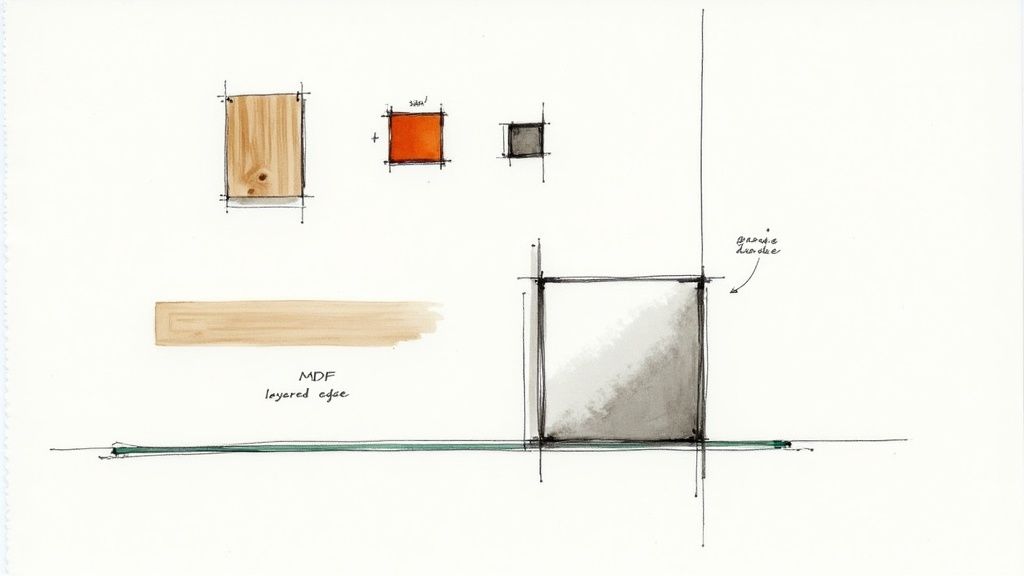
If the layout is the blueprint of your wall unit, the materials are its heart and soul. This is the moment to choose the textures, colors, and finishes that will define the feel of your entire room. Your goal is to select materials that not only look good but also align with your lifestyle and your home’s unique character.
Think of it as casting the lead roles in a play. Will you choose the organic warmth of wood, the sleek, industrial edge of metal, or the airy, light-reflecting quality of glass? Each brings a different energy, and the best results often come from combining them.
This decision is also a powerful statement of your values. With many sustainable options available, you can create a stunning centerpiece that is built to last and is also kind to our planet.
The Timeless Allure of Wood
Wood brings an irreplaceable warmth and organic texture that can make even the most modern space feel inviting. To make the right choice for your home and budget, you need to understand the difference between solid and engineered options.
- Solid Wood: Pieces crafted from oak, walnut, or maple offer incredible durability and an authentic feel. View them as a long-term investment that requires a bit more care to maintain its beauty.
- Engineered Wood: Options like MDF (Medium-Density Fiberboard) and high-quality plywood are the workhorses of modern design. They provide stability and a perfectly smooth surface for flawless paint or veneer finishes, making them a smart, practical choice at a more accessible price.
Wood continues to dominate the market, accounting for over 40% of market share. Its classic appeal and robustness are hard to beat. You can dig deeper into these material trends in the wall units market to see just how popular it remains.
The Sharp Sophistication of Metal and Glass
For a more industrial or minimalist aesthetic, turn to metal and glass. These materials create clean lines and reflect light, making them perfect for achieving a sense of openness in a room.
Metal elements, typically steel or aluminum, can form a striking structural frame or serve as ultra-thin shelving. They provide a beautiful contrast to softer materials and are exceptionally durable.
Glass, whether it’s clear, frosted, or smoked, adds a touch of weightless elegance. Use it for display shelves to showcase objects without adding visual bulk. Back-painted glass doors are another clever touch, hiding clutter while bouncing light around the room.
Actionable Tip: Don't be afraid to mix materials. Combine a warm walnut cabinet with a slim, black steel frame. Or pair frosted glass doors with a crisp white lacquer unit. This interplay of textures is what elevates a good design to a great one.
Making Conscious and Sustainable Choices
Choosing materials for your wall unit is a chance to make a choice you can feel good about. As you explore options, look for these key markers of sustainability to invest in a piece that’s as thoughtful as it is beautiful.
- Look for Certified Woods: Seek out wood certified by the Forest Stewardship Council (FSC). This label guarantees the timber was harvested from responsibly managed forests.
- Choose Low-VOC Finishes: Volatile Organic Compounds (VOCs) in paints and glues can be released into your home's air. Opting for low-VOC or zero-VOC finishes is a simple switch that significantly improves your indoor air quality.
- Consider Recycled Materials: Many stunning modern designs now feature recycled metals like aluminum and steel. They offer the same sleek look and strength as new materials but with a much smaller environmental footprint.
By focusing on these elements, you’re not just designing a beautiful home—you’re helping build a more sustainable future. The perfect modern wall unit looks incredible, works beautifully, and reflects your commitment to mindful living.
Finding Your Perfect Fit: Modular vs. Built-In
When choosing a wall unit, you have two primary options: a modular system or a custom built-in. Think of it like deciding between high-end, designer building blocks and a bespoke, tailored suit. One offers incredible freedom and flexibility; the other provides a flawless, custom fit that feels integral to your home’s architecture.
There’s no single “right” answer. The best choice depends on your space, lifestyle, and future plans. Do you need a solution that can adapt and change, or one that maximizes every last inch? Let's determine which path is right for you.
The Creative Freedom of Modular Wall Units
A modular wall unit is a dynamic system of individual components—shelves, cabinets, drawers, media consoles—that you can arrange and rearrange. This approach puts the design power in your hands, letting you craft a setup that can grow and evolve with you.
Modular systems are the champions of adaptability. Their flexibility makes them a fantastic choice for renters, as they can be easily disassembled and moved. They are also ideal for anyone who likes to refresh their decor. A modular modern wall unit can be reconfigured to fit a new layout, accommodate a larger TV, or simply create a new look.
-
Choose Modular If:
- You need flexibility to add, remove, or reconfigure the layout.
- You are renting or plan to move in the future.
- You have a set budget; they are generally more affordable than custom built-ins.
- You need a solution quickly and want to avoid long custom work lead times.
The Seamless Perfection of Built-In Wall Units
If modular is about freedom, built-in is about perfect integration. A built-in is custom-designed and constructed to fit your space precisely, becoming a true architectural feature. It flows from wall to wall and floor to ceiling, creating a polished, high-end look.
This is the ultimate problem-solver for awkward alcoves, sloped ceilings, or off-center fireplaces. A built-in wall unit can transform these architectural quirks into stunning, functional statements, while seamlessly hiding everything from messy wires to radiators.
A built-in is an investment in your home’s character and value. It’s a permanent addition that feels intentional, elevating the entire space with a sense of permanence and sophisticated design.
However, this level of customization has trade-offs. Built-ins are permanent and cannot be moved. The design and construction process is also more involved, requiring professional expertise and a larger budget.
-
Choose Built-In If:
- You are a homeowner with no plans to move soon.
- Your primary goal is to maximize storage in a room with architectural challenges.
- You are planning a significant home renovation and have a larger budget.
- You are willing to wait for a custom-designed and installed piece.
Making the Right Choice for Your Home
To decide which path to take, ask yourself these direct questions about your life, space, and long-term plans.
Actionable Checklist: Your Decision-Making Guide
- Assess Your Timeline: Do you see yourself in your current home for more than five years? If no, a modular system is a smarter value that can move with you.
- Evaluate Your Space: Does your room have unusual dimensions, tricky alcoves, or architectural challenges? A built-in unit is the best way to get a flawless, integrated solution.
- Consider Your Budget: Are you working with a specific budget? Modular units almost always offer a more accessible price point for a high-quality design.
- Think About Future Needs: Do you expect your storage or display needs to change? The adaptability of a modular system will let you evolve your setup over time.
For more ideas on creating adaptable storage, check out our guide on finding the perfect contemporary shelf unit. By weighing these factors, you can confidently choose the modern wall unit that not only looks incredible but also works perfectly for your life.
Designing a Layout for Any Room Size
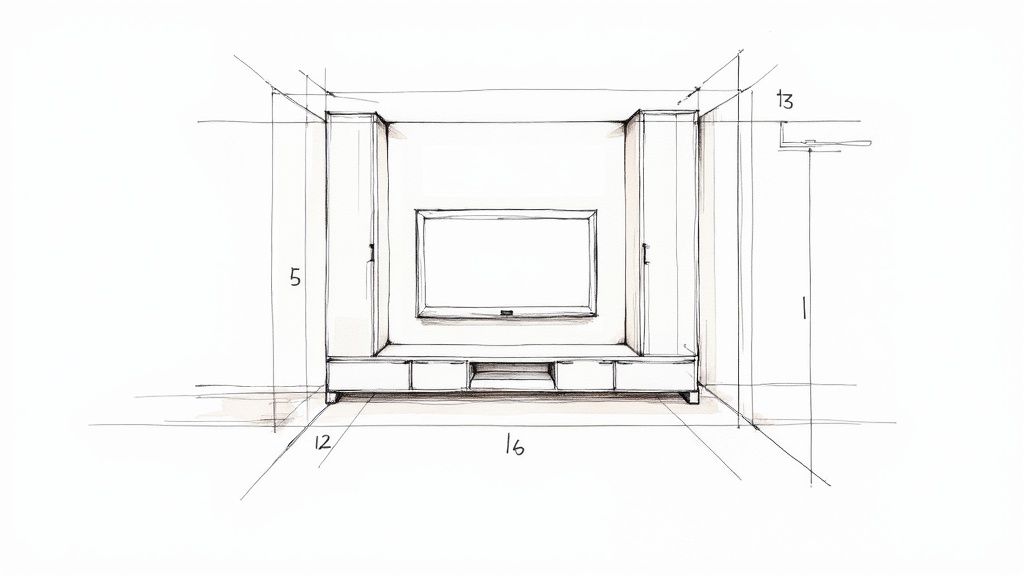
A wall unit’s success isn't just about its style; it's about the fit. A perfectly designed layout elevates the entire room, bringing a sense of balance and flow. To achieve this, you need to think like a designer and craft a configuration that works for your lifestyle.
Forget guesswork. With a few design principles and a clear plan, you can map out a layout that feels intentional, whether you’re working with a vast living area or a cozy apartment. It all begins with understanding your space.
Mastering Scale and Proportion
Before choosing components, grasp two critical design concepts: scale and proportion. Scale is how your wall unit relates to the room's size, while proportion is how the individual pieces of the unit relate to each other. Getting this right creates visual harmony.
The goal is to find the sweet spot where the unit feels substantial enough to anchor the room without overpowering it.
An effective layout works with your space, not against it. Plan around existing features like windows or outlets, turning them into thoughtful design elements rather than obstacles.
For those navigating smaller rooms, mastering scale is crucial. Our guide on how to decorate small spaces offers more tips to make rooms feel larger and more intentional.
Your Step-by-Step Measurement Guide
A great layout is built on accurate measurements. Follow these steps to create a detailed map of your wall.
- Measure the Core Space: Get the total width and height of the wall. For accuracy, take three measurements for each—at the top, middle, and bottom for width, and on the left, center, and right for height. Use the smallest measurement to ensure your unit will fit.
- Map Every Obstacle: Note the exact location and size of every fixed element on the wall: windows, doors, light switches, outlets, and thermostats. Measure their distance from the floor, ceiling, and corners.
- Plan for Flow and Clearance: A room needs space to breathe. As a rule, leave at least 30-36 inches of clear walking space around major furniture. If your unit is near a doorway, ensure the door can swing fully open without hitting anything.
Actionable Layout Tips for a Perfect Fit
With your measurements in hand, you can plan the ideal dimensions for your modern wall unit. Use these practical guidelines to create a balanced and functional look.
- Ideal Width: Avoid spanning the unit from wall to wall. Leaving "negative space" on either side prevents the room from feeling cramped. Aim for the unit to occupy between 50% and 75% of the total wall width.
- Optimal Height: For units that don’t reach the ceiling, height is key. A lower, longer media console can make a room feel wider. For taller units, try aligning the top with an existing architectural feature, like a window frame, to create a clean line.
- TV Placement: If a TV is part of the plan, its placement is your anchor. The center of the screen should be at eye level when seated, typically around 42 inches from the floor. Build your surrounding shelves and cabinets out from this central point.
By putting these principles into practice, you are actively designing your environment, creating a layout that is perfectly scaled, beautifully proportioned, and seamlessly woven into the rhythm of your home.
How to Style Your Wall Unit Like a Pro
Once your wall unit is installed, the fun begins: transforming it from furniture into a reflection of you. This is an art built on simple, actionable principles that anyone can master.
Treat your shelving as a personal gallery, not just storage. The goal isn't to cram every inch with stuff but to create a composition that feels balanced, personal, and inspiring.
The Foundation of Great Styling
Before placing any items, understand the core ideas that separate a cluttered shelf from a designer-worthy display.
One of the most powerful tools is the rule of three. The human eye finds groupings of odd numbers, especially threes, more appealing. Arrange three objects of varying heights—like a small sculpture, a stack of books, and a taller vase—to create a dynamic visual triangle.
Equally important is embracing negative space—the empty, breathing room around your objects. Resisting the urge to fill every surface allows each piece to shine.
Actionable Tip: Good styling is an act of curation, not collection. It's about what you choose to display and what you choose to leave out. This deliberate use of space is what creates a feeling of calm and sophistication.
It's no surprise that furniture offering this blend of storage and display is in high demand. The market for living room wall units is expected to hit roughly USD 15 billion by 2033, driven by this need for smart, stylish design. You can learn more about this growing market trend.
Actionable Tips for a Curated Look
Ready to bring your modern wall unit to life? Use these hands-on strategies to arrange your treasures with intention.
1. Create Depth Through Layering
Don't just line things up. Place larger items like framed art or decorative trays at the back and layer smaller objects in front of them. This simple trick adds dimension and prevents your display from feeling flat.
- Try This: Lean a large, minimalist art print against the back of a shelf, then place a small potted plant and a decorative box slightly in front of it and off to one side.
2. Balance Books and Objects
Books add warmth, but a solid wall of spines can feel heavy. Break it up by stacking some horizontally to use as a pedestal for a smaller decorative piece. Then, mix in sculptures, vases, or photos to create visual interest. For more ideas, our guide on selecting statement pieces for your living room can spark inspiration.
3. Unify with Color and Texture
To create a cohesive look, stick to a limited color palette. Pick two or three main colors and repeat them in different objects throughout your display. Then, introduce a mix of textures—smooth ceramic next to rough wood, or shiny metal beside soft textiles—to add tactile sophistication.
4. Organize Concealed Storage
The magic of a modern wall unit is what you see and what you don't. Use drawer dividers, bins, and organizers inside your cabinets to keep everyday clutter neatly tucked away. When the inside is organized, maintaining a clean, curated look on the outside becomes effortless.
Common Questions About Modern Wall Units
As you get closer to choosing your wall unit, practical questions will arise. Here are clear, straightforward answers to the most common queries to help you move forward with confidence.
How Hard Is It to Install a Modern Wall Unit?
The difficulty depends on the type you choose. A simple, freestanding modular unit can often be assembled as a DIY project, similar to other flat-pack furniture.
However, wall-mounted or floating units require precision. You must locate wall studs, ensure everything is level, and anchor each component securely. For these systems, and especially for custom built-ins, professional installation is strongly recommended to guarantee a flawless look and complete safety.
Can Modern Wall Units Really Work in a Small Apartment?
Yes, they are a small-space secret weapon. The key is to think vertically and choose designs that create a feeling of spaciousness.
- Go Vertical: A tall, slender unit draws the eye upward, making ceilings feel higher.
- Float Your Furniture: Wall-mounted designs free up floor space, making the entire room feel larger and less cluttered.
- Choose Light Colors: Stick to finishes in white, light grey, or pale wood. These tones reflect light, keeping the space feeling airy and bright.
A well-chosen wall unit in a small apartment adds architectural depth and intention, proving that great style isn't dependent on square footage.
With any tall furniture, stability is a priority. To ensure maximum safety, especially in homes with children, it's crucial to follow essential tips for securing furniture to the wall.
Is a Modern Wall Unit a Timeless Investment?
Absolutely, provided you choose with intention. The core principles of modern design—clean lines, uncluttered forms, and functionality—are enduring.
To ensure your investment lasts, stick to classic finishes like natural wood, crisp white, or sophisticated black. A high-quality modular system is an especially smart choice, as its ability to be reconfigured means it can evolve with your life for years to come. That adaptability is what makes a piece truly timeless.
Ready to bring a piece of timeless Italian design into your home? Explore the curated collection of modern furniture and decor at Griseo Interior, where every object is crafted with intention and a commitment to sustainable beauty. Discover your next statement piece at https://griseointerior.com.