

Pottery Hand Painted: Your Guide to Artisan Pieces
Hand-painted pottery is the time-honored craft of decorating ceramic pieces by hand. Unlike items that roll off a production line, each piece is truly one-of-a-kind, carrying the distinct spirit and personal signature of its creator. This guide provides actionable advice for choosing, styling, and caring for these unique works of art.
The Soul of Hand-Painted Pottery

To create a home that truly speaks to you, fill it with objects that tell a story. Choosing hand-painted pottery is a practical step away from the generic. A single, artist-touched piece can completely shift the energy of a room by introducing a layer of warmth and personality that factory-made décor cannot match. Look for the subtle wobble in a line or the gentle blend of color—these are the permanent records of the hands that shaped and painted the piece.
More Than Just Decoration
Integrate this functional art into your daily life to enrich simple moments. Use a hand-painted mug for your morning coffee or arrange flowers in a bespoke vase. By doing this, you connect with a long tradition of craftsmanship and appreciate the beauty found in imperfection.
To curate a life filled with meaning, select pieces that are not just seen, but felt. Choose objects that carry energy, history, and a piece of the artist's soul directly into your home.
When you bring these pieces into your life, you are actively choosing:
- Authenticity: Select pieces with unique personalities, complete with the subtle "flaws" that make them perfect.
- Artistic Expression: Support an artist’s vision and celebrate their craft with every purchase.
- Timeless Quality: Invest in timeless works of art designed to last, not throwaway trends.
Ultimately, hand-painted pottery is an invitation to slow down. Use it as a chance to appreciate the artistry and human connection woven into the fabric of your everyday life.
From Clay to Canvas: The Artist's Process
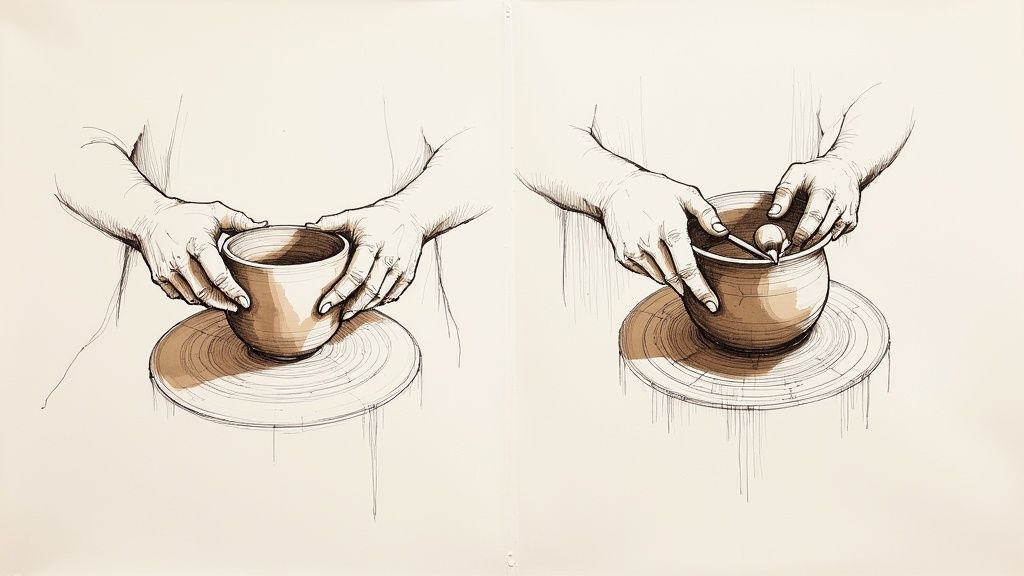
Understanding how a lump of earth becomes a vibrant work of art helps you appreciate its value. The journey of pottery hand painted is a slow and deliberate merging of raw material and artistic vision, demanding skill, patience, and an intuitive feel for how clay, pigment, and fire work together.
It starts with preparing the clay through wedging. This process, much like kneading dough, removes air bubbles and creates a uniform consistency. This step is vital; a single trapped air bubble can expand in the kiln's heat, causing the piece to crack or explode.
Once the clay is ready, the potter brings it to the wheel. With steady hands and focus, they shape it into a bowl, vase, or mug. This is a sculptural dance where every subtle pressure helps define the final silhouette.
The First Transformation: Bisque Firing
After shaping and air-drying to a "leather-hard" state, the piece undergoes a low-temperature bisque firing at around 1000°C (1832°F). This transforms the delicate clay into a porous, chalky ceramic known as bisque.
The bisque piece is now a blank, three-dimensional canvas. It is hard and permanent but still absorbent enough to accept underglazes and paints without the design bleeding, creating the perfect surface for the artist to begin painting.
This tradition of decoration has ancient roots, evolving over millennia. From ancient Egypt's stylized motifs to China's treasured Ming and Qing dynasty porcelain, the art form has a rich global history. You can find more insights into the journey of art ceramics on dataintelo.com.
The Artist's Brushstroke: Two Paths
With the bisque canvas ready, the painter must choose a technique that will define the final look. Here are the two primary methods:
-
Painting on Bisque (Underglazing): This is the most common path for achieving detailed, crisp pottery hand painted designs. The artist applies special ceramic paints (underglazes) directly onto the porous bisque. Because the surface acts like a sponge, every brushstroke must be steady and confident.
-
Painting on Glaze (Overglazing or On-glaze): In this technique, the piece is first coated with a base glaze and fired. The artist then paints their design onto this smooth, glassy surface using special overglaze enamels. This method allows for brilliant, jewel-like colors and extremely fine details.
The moment an artist lays the first brushstroke is where the piece truly gains its soul. It's a commitment—a mark that transforms a well-made object into a unique story, forever captured in pigment and clay.
The Final Trial by Fire
After painting, the piece returns to the kiln for a high-temperature glaze firing. A clear glaze is typically applied over the underglaze design to seal it, create a durable, glossy surface, and make the colors vibrant.
This final firing, often exceeding 1200°C (2192°F), melts the glaze into liquid glass that fuses with the ceramic body. The intense heat matures the underglaze pigments, deepening their colors in ways that are never 100% predictable. It is a moment of surrender where the final result becomes a beautiful, permanent fusion of form, color, and fire.
How to Spot True Artisanal Quality
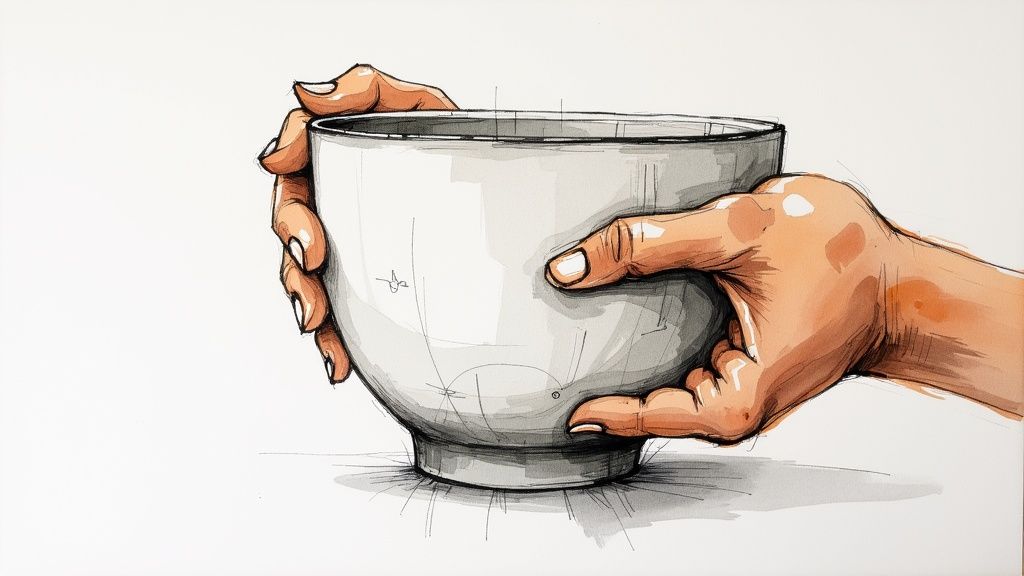
To confidently select high-quality pottery hand painted, you need to train your senses to recognize the signs of exceptional craftsmanship. This practical guide will teach you how to trust your touch, train your eye, and identify the marks of authenticity that give a piece its soul.
Feel the Difference
Your first test of quality is touch. Hold the piece in your hands to assess its physical presence.
- Balance and Weight: A well-crafted piece feels balanced. It should not be awkwardly heavy or flimsy. This indicates the artist distributed the clay with skill, creating a form that is both strong and graceful.
- Surface and Foot: Run your fingers along the surface. It should have a smooth, consistent glaze without bumps or pits. Then, turn the piece over and check the foot—the unglazed ring on the bottom. It should be sanded smooth to prevent scratching furniture, a crucial sign of a meticulous maker.
These tactile qualities reveal the artist's mastery over their material before any paint was applied.
Look for the Human Touch
The magic of hand-painted pottery lies in its beautiful imperfections. These are not flaws; they are the fingerprints of the creative process.
An artist's hand is not a machine. Actively seek out the subtle variations in line, the faint overlaps in color, and the gentle inconsistencies in pattern that breathe life into a piece.
Examine the design closely. Do the lines vary slightly in thickness? Can you see where one brushstroke ends and another begins? These are the honest signs of an authentic piece, distinguishing it from the flawless, repetitive patterns of decals or factory machines. The charm of Italian craftsmanship, for instance, is rooted in this rich artistic history, a topic you can explore further by discovering what makes an item truly Made in Italy.
Find the Artist’s Signature
One of the most definitive signs of authentic hand-painted pottery is the artist's mark. Always turn the piece over and look for a signature, a symbol, or a studio stamp on the bottom.
This mark is a signature of pride. It is the artist's way of claiming their work and standing behind its quality. For a collector, this mark is the ultimate stamp of authenticity, transforming an anonymous object into a documented piece of art.
Artisanal vs Mass-Produced Pottery A Buyer's Guide
Use this table to sharpen your eye and confidently identify the difference between real craftsmanship and a convincing imitation.
| Feature | Authentic Hand Painted Pottery | Mass-Produced Imitation |
|---|---|---|
| Brushstrokes | Visible variations in line weight and texture. You can often feel the slight texture of the paint. | Perfectly uniform, flat lines with no variation. The design feels printed and smooth. |
| Symmetry & Form | Minor irregularities and asymmetries that add character and prove it was shaped by hand. | Flawlessly symmetrical and identical to other pieces from the same production line. |
| Signature | An artist's signature, initials, or a studio mark is often present on the bottom. | Typically has a printed brand name, a sticker, or no mark at all. |
| Glaze Quality | The glaze is rich and may have subtle variations in depth and color, especially around edges. | The glaze is often thin, perfectly even, and lacks depth or character. |
| Overall Feel | Feels unique, substantial, and balanced. It carries a sense of individuality and artistic spirit. | Can feel lightweight or generic. It lacks the unique personality of a handmade item. |
By learning to recognize these signs, you can make thoughtful choices and confidently invest in pieces that honor the skill and passion poured into them.
Styling Your Pottery for Modern Living
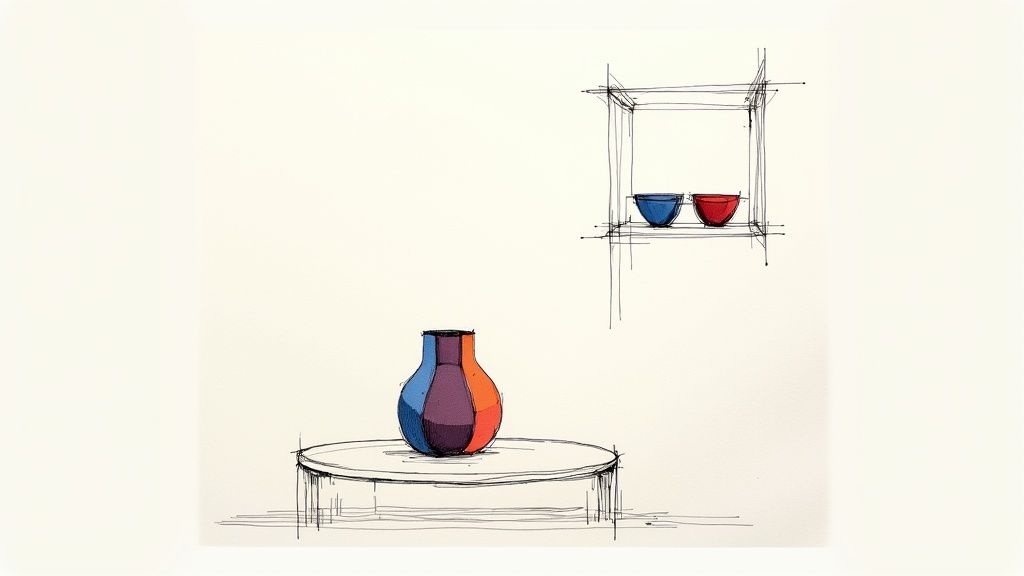
Bringing artisanal pottery into your home is a joyful act of self-expression. Each piece injects warmth, texture, and personality into modern spaces. Styling pottery hand painted is about creating moments of beauty that feel both intentional and effortless. Use these tips to move beyond generic decoration and curate a space that is authentically you.
Create a Powerful Focal Point
In minimalist design, a single, bold piece of hand-painted pottery can anchor an entire room. This strategy sets a sophisticated tone without creating clutter.
Place a large, sculptural vase with a dramatic glaze on a console table in your entryway. It will make an immediate statement about your appreciation for craftsmanship. That one object can provide all the color and texture a quiet corner needs.
Let one exceptional piece do the heavy lifting. A striking vase or an oversized platter doesn't need much company; its artistic presence is enough to command attention and elevate the entire space.
Apply this approach to coffee tables, minimalist shelving, or a clean kitchen island. The tension between an organic, handcrafted form and the crisp lines of modern furniture creates a compelling visual dialogue.
Curate the Perfect Shelf Story
Styling shelves is an art form. This is where your smaller pieces of hand-painted pottery can shine, allowing you to build a captivating visual narrative.
Group items with a common thread. You can stick to a unified color palette for a serene look or mix different shapes and sizes from the same artist to showcase their range.
Here are actionable ideas to get you started:
- Color Harmony: Group pieces in similar tones—like earthy terracottas with warm ochres—to create a calming, cohesive display.
- Varying Heights: Combine a tall, slender vase with a low, wide bowl and a tiny bud vase. This creates a natural rhythm that guides the eye.
- The Rule of Threes: Display items in odd numbers, especially groups of three. This classic design principle feels more balanced and organic.
By thoughtfully arranging your collection, you can transform a simple shelf into a personal gallery. This is an effective way to arrange contemporary decorative objects and tell a story in your home.
Integrate Art into Daily Routines
The best way to enjoy pottery hand painted is to weave it into your everyday life. When art becomes functional, it turns mundane moments into beautiful rituals.
Start your morning by sipping coffee from a hand-painted mug. Serve a simple snack in a vibrant, artisanal bowl. Keep your pens in a small, decorated pot on your desk. These are not just practical choices; they are small acts of self-care that enrich your daily experience and make your home a true sanctuary.
Caring for Your Hand Painted Treasures
When you acquire a piece of hand-painted pottery, you become its custodian. With the right care, its beauty can last for generations. Protecting these treasures is about adopting gentle habits and understanding what makes a handcrafted item unique.
The best way to preserve any pottery hand painted is with a gentle hand-wash. While some modern pieces may be labeled "dishwasher safe," the harsh heat and detergents can dull vibrant colors and wear away delicate details over time.
The Golden Rule: Avoid Thermal Shock
The single most important rule for ceramic longevity is to avoid thermal shock. This occurs when pottery experiences a sudden, extreme temperature change, forcing the clay to expand or contract too quickly. This stress can cause fine cracks in the glaze (crazing) or even break the piece entirely.
Think of it like pouring boiling water into a cold glass—the sudden stress can be too much. Protect your pottery by shielding it from extreme temperature shifts to ensure its structural integrity for years to come.
To prevent this, never take a pot from the refrigerator and place it directly into a hot oven. Similarly, let a cold mug come to room temperature before pouring in steaming coffee. This simple act of patience is your best defense against damage.
Smart Display and Handling Strategies
How you display and handle your pottery is as crucial as how you clean it. A thoughtful spot not only showcases its beauty but also protects it from daily hazards.
Follow these practical tips:
- Mind the Sunlight: Constant, direct sun exposure can fade the pigments in hand-painted glazes. Display your most colorful pieces away from windows that receive harsh afternoon light.
- Create a Safe Zone: Position your pottery away from high-traffic areas where it could be bumped. A sturdy shelf, a quiet mantelpiece, or a dedicated art niche is ideal.
- Give It Space: Avoid overcrowding shelves. Allowing each piece its own space highlights its form and prevents accidental chipping. Abstract ceramic forms, in particular, need room to breathe. You can learn more about styling in our guide to ceramic abstract sculpture.
When it's time to move your treasures, proper handling is key. To keep them safe during a move, learn how to safely ship ceramics. Following these guidelines ensures your art remains as stunning as the day it was created.
How to Find Your Perfect Piece
Ready to bring this art into your life? Finding your perfect piece of pottery hand painted is an adventure. This is your map for navigating the journey to find something that truly resonates with you. Your piece is out there, waiting to elevate your space and spark joy every day.
Exploring the Best Venues for Artisanal Finds
Knowing where to look is key to a successful hunt. Each venue offers a unique experience, from the energy of a craft fair to the focused discovery of an online search.
-
Local Art Fairs and Craft Markets: This is your best opportunity to engage with the art in person. You can hold the pieces, feel their texture, and talk with the artists who made them. This is the most intimate way to buy and learn the story behind the work.
-
Online Marketplaces: Digital hubs like Etsy and Saatchi Art open up a global studio. To find quality work, look for shops with great photography, detailed descriptions, and positive reviews.
-
Direct from the Artist's Studio: Many artists now sell work through personal websites and social media. Follow your favorite potters on platforms like Instagram to watch their process, get first access to new collections, and build a direct connection.
Commissioning a Custom Piece of Pottery
If the perfect piece doesn't exist yet, commission it. A custom work is a collaboration between you and an artist, resulting in pottery hand painted that is uniquely yours.
The desire for personalization is strong; people are often willing to pay a 20-30% premium for artisanal ceramics that capture their taste. This trend is fueled by platforms that connect artists directly with a global audience. You can dive deeper into the thriving pottery market on researchandmarkets.com.
To start, find an artist whose style you admire. Be prepared to share your vision, but remain open to their creative expertise.
Here is a simple roadmap for a successful commission:
- Share Your Vision: Create a mood board with colors, shapes, and patterns you love. Be clear about the piece's function (e.g., dinner plates, a statement vase) and approximate size.
- Discuss the Details: The artist will discuss possibilities, sketch ideas, and provide a clear quote and timeline. Be aware that custom work can take weeks or months.
- Trust the Process: Once the plan is set, let the artist work. They may send updates, but commissioning requires faith in their skill.
- Receive Your Treasure: The final reveal is a special moment. You will unwrap a piece of art that holds both your vision and the artist's soul.
Commissioning art is an act of faith and creativity. You are not just buying an object; you are participating in its creation, weaving a piece of your own story into the clay and glaze.
Whether you find your piece at a market or create it with an artist, the journey of bringing meaningful art into your home is the best way to make a space feel authentically yours.
Let's Talk About Your Pottery
This section provides answers to common questions about pottery hand painted. Use this practical guide to choose, use, and enjoy your pieces with confidence.
Is Hand-Painted Pottery Food Safe?
Usually, yes, but you must follow one crucial rule: always confirm it with the artist or seller.
A reputable modern potter will use food-safe, lead-free glazes for functional pieces like mugs, bowls, and plates. Look for descriptions that explicitly state "food-safe," "dinnerware-safe," or "non-toxic." If a piece is vintage or if you have any doubt, treat it as a decorative object to be safe.
How Can I Tell if It's Hand-Painted or a Decal?
Spotting the difference between a real brushstroke and a printed design comes down to looking for imperfection.
- Look for Variations: A genuine hand-painted design will have subtle differences in line thickness and color saturation. You might even see the faint texture of brushstrokes under the glaze.
- Check for Uniformity: A decal is too perfect. Its edges will be crisp and digital-looking, with no variation between repeated patterns.
- Find the Signature: An artist’s signature or studio mark on the bottom is one of the clearest signs that you are holding an authentic, handcrafted piece.
The human touch is never flawless—and that’s what makes it so valuable. The slight waver in a line or the unique blend of colors is the artist's signature, proving the piece was made with intention and care.
Does Hand-Painted Pottery Increase in Value?
While not every piece is a financial investment, work from recognized artists or respected studios can appreciate over time. The value of pottery hand painted depends on the artist's reputation, the uniqueness of the design, its artistic merit, and its condition.
If you are hoping for future value, buy pieces from artists whose work you genuinely connect with. Keep the pottery in excellent condition and save any documentation you have about its origin and story.
Inspired to bring the soul of Italian craftsmanship into your home? Explore the curated collection of modern, artisan-finished décor at Griseo Interior and discover a piece that tells your story. Find your perfect piece today.