

How to Reduce Your Carbon Footprint at Home: An Actionable Guide
Reducing your carbon footprint at home comes down to a series of smart, practical choices. Simple actions, like switching to LED lighting or improving your home's insulation, can make a huge difference—transforming your house into an efficient, eco-friendly living space.
Your Home's Blueprint for a Lighter Footprint
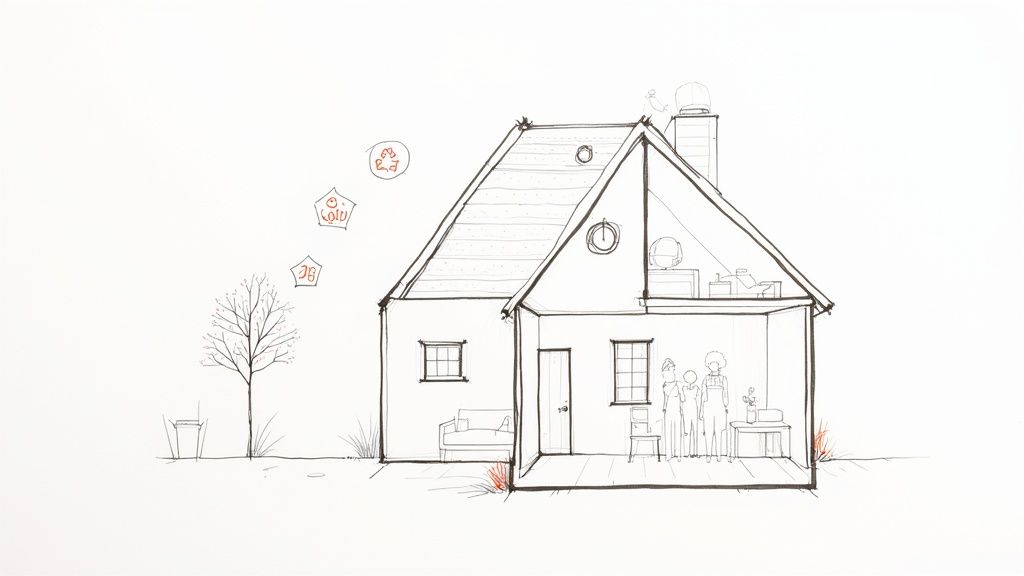
This guide provides a roadmap to weave sustainability into your daily life, proving that an eco-conscious home can also be comfortable and stylish. It's about taking care of your family and the planet.
Let’s move past overwhelming statistics and focus on tangible actions you can start today. From how you power your space to the furniture you choose, every shift creates a positive ripple effect.
Understanding Your Starting Point
Before making changes, you need to know where you stand. The most effective first step is to get a clear picture of your home’s current impact. Take a moment to calculate your home's energy consumption to identify where your efforts will matter most.
This initial audit can be eye-opening. You might find an old heating system is the main issue, or that a few older appliances are draining power. This isn’t about guilt; it’s about gaining knowledge to create a concrete, personalized action plan.
Embracing a Holistic Vision
Creating a lighter footprint is about more than just lowering utility bills. It's a holistic approach that affects every part of your home—the materials you choose for a renovation, the brands you support, and the waste you produce.
As you begin, keep these core ideas in mind:
- Energy Efficiency: Focus on how your home uses and retains energy.
- Conscious Consumption: Choose well-made items that are built to last.
- Waste Reduction: Rethink what you bring into your home and what you throw away.
By focusing on these interconnected areas, you're building a comprehensive strategy. The principles of eco-friendly interior design are a fantastic guide here, helping you make choices that are both beautiful and beneficial for the planet, ensuring every decision supports your goal.
Rethinking Your Home's Energy and Climate

Let's get straight to your home's biggest environmental impact: heating and cooling. For most households, climate control consumes the largest share of energy. This makes it the most powerful area to focus on for shrinking your carbon footprint.
It's about more than just turning down the thermostat. We're talking about making our homes comfortable, low-carbon spaces that work with the climate, not against it. This is a practical shift toward a smarter, more responsible way of living.
The Future is a Heat Pump
If you’re ready for a major upgrade, start by looking at modern electric heat pumps. Today’s models are highly efficient systems that provide both heating and cooling.
Instead of burning fossil fuels to create heat, a heat pump moves it. In winter, it pulls warmth from the outside air and transfers it inside. In summer, it reverses the process, moving heat from inside your home to the outdoors, functioning like an advanced air conditioner.
One of the most impactful changes you can make is upgrading your home's heating, ventilation, and air conditioning (HVAC) system. Residential buildings are responsible for about 12.5% of global greenhouse gas emissions, a huge portion of which comes from this energy use. Switching to a system like a heat pump can slash your home’s energy consumption by up to 50%, cutting emissions by an estimated 1.5 to 2 tonnes of CO2 annually per household. You can explore the full global emissions data at climatetrace.org.
Start with a Home Energy Audit
Before investing in new equipment, find out where your energy is going. While a professional home energy audit is a great investment, you can start with a simple DIY walkthrough to spot obvious problems. The goal is to find energy vampires and hidden drafts.
- Hunt for Phantom Loads: Many devices use power even when "off." Unplug chargers and electronics when not in use, or plug them into smart power strips that cut the power completely.
- Check Your Appliances: Look at the age and energy rating of your refrigerator, dishwasher, and washing machine. Models over a decade old are likely major energy hogs.
- Feel for Drafts: On a windy day, walk through your home and hold your hand near windows, doors, and electrical outlets. Even small drafts add up to significant heat loss.
This process gives you a tangible to-do list, turning the abstract goal of "reducing my carbon footprint" into a set of actionable tasks.
Seal and Insulate: The Foundation of Efficiency
Even the best heat pump is ineffective if warm or cool air leaks outside. Sealing air leaks and adding insulation are crucial for a low-carbon home. They help your climate control system work smarter, not harder.
Think of it as turning your home into a well-designed thermos, keeping the inside temperature stable without constant energy boosts.
When planning your projects, consider how different upgrades compare. Some are quick wins, while others are larger investments with a massive long-term payoff.
High-Impact Home Energy Upgrades
| Upgrade Action | Estimated Annual CO2 Reduction | Typical Upfront Cost | Key Benefit |
|---|---|---|---|
| Upgrade to a Heat Pump | 1.5 – 2 tonnes | High | Provides ultra-efficient heating and cooling, dramatically cutting fossil fuel use. |
| Add Loft Insulation | Up to 700 kg | Low to Medium | Heat rises, making this one of the most cost-effective ways to prevent energy loss. |
| Seal Air Leaks | 100 – 200 kg | Low (DIY friendly) | Immediately improves comfort and reduces the workload on your HVAC system. |
| Install Smart Thermostat | Up to 300 kg | Low | Learns your habits and optimizes heating/cooling schedules automatically. |
Each of these upgrades complements the others. Sealing drafts with caulk and weatherstripping is a weekend project with immediate benefits. Adding insulation to your attic or walls is a more involved but worthwhile investment.
By creating a tightly sealed, well-insulated home, you ensure that every bit of energy you use for climate control is put to good use.
Powering Your Home with Clean Energy Solutions
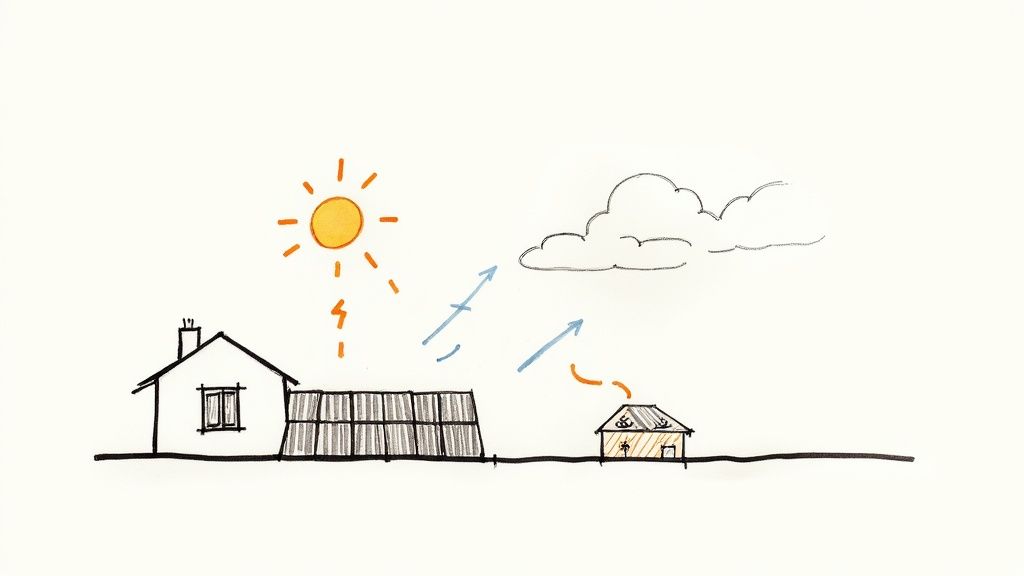
Once you’ve improved your home’s energy efficiency, the next step is to rethink where that energy comes from. Switching to clean power is one of the most direct ways to shrink your carbon footprint. This is your chance to move away from fossil fuels and turn your home into a model of sustainable living.
The move away from fossil fuels is critical. Fossil fuel combustion is responsible for roughly 37.4 billion tonnes of CO2 emissions worldwide. A home with rooftop solar can cut its carbon footprint by a stunning 50% to 70%. This shows that individual choices can help push the entire grid toward a cleaner future.
Harnessing the Sun with Rooftop Solar
For many homeowners, clean energy starts with the sun. Installing residential solar panels turns your roof into a personal power plant, generating clean electricity right where you need it. This move reduces your reliance on the grid and provides a sense of self-sufficiency.
The process begins with an assessment to see if your home is a good candidate. A solar installer will evaluate factors like your roof’s orientation (south-facing is ideal in the Northern Hemisphere), its pitch, and any potential shading from trees or buildings. They will also review your past energy bills to design a system that meets your family’s needs.
Of course, it's a big step, and many homeowners want to understand the long-term payoff. It’s natural to wonder if is installing solar panels a worthwhile investment. But when you factor in the long-term environmental and financial rewards, it becomes an incredibly compelling choice for a sustainable future.
By generating your own power, you're not just lowering bills; you're actively participating in the energy transition. You become a producer, not just a consumer, contributing to a more resilient and cleaner local grid.
Beyond Your Own Roof: Alternatives to Solar Panels
What if rooftop solar isn’t an option for you? You can still champion clean energy if you rent, live in an apartment, or have an unsuitable roof.
Here are two effective alternatives:
- Community Solar Projects: These programs let you buy or subscribe to a share in a local solar farm. In return, you get credits on your electricity bill for the power your share generates. It’s a smart way to go solar without installing panels on your roof.
- Green Energy Suppliers: Many utility companies allow you to switch to a green energy plan. By opting in, you direct your provider to purchase renewable energy on your behalf, feeding clean power from wind, solar, or hydro into the grid to match your home's usage.
Making the Switch Simple
Choosing a green energy supplier is often the easiest and fastest way to decarbonize your electricity. It usually takes just a few minutes online or a quick phone call. While the electricity flows through the same wires, your payment directly supports clean power generation and investment in renewable infrastructure.
This simple choice sends a powerful market signal that consumers demand alternatives to fossil fuels. When thousands of people make this switch, it helps accelerate the transition to a 100% renewable grid.
Curating a Home with Conscious Decor and Furnishings
Every object in your home has an environmental footprint. The chair you sit in, the vase on the mantel, and the rug on the floor all have a journey that contributes to your home's carbon total.
Choosing your furnishings with intention is a personal and powerful way to live your values. It’s about creating a home filled with conscious, beautiful choices.
Adopt a philosophy of ‘less, but better.’ This is a practical move away from fast furniture, where flimsy materials and fleeting trends create waste. Instead, support craftsmanship, quality, and timeless design. When you buy something you love that is built to last, you won’t need to replace it.
Choose Local and Made-to-Order
One of the biggest hidden carbon costs in home decor is transportation. An item shipped from across the globe has a massive footprint compared to one made locally. By seeking out local artisans, you reduce shipping emissions and support your community.
Another powerful action is to embrace the made-to-order model. Brands that craft items only after an order is placed are leading a revolution against waste. This eliminates overproduction and unsold inventory that often ends up in landfills. It ensures every resource is used for an item that is already wanted.
Choosing made-to-order pieces is a vote for a more responsible production system. It’s a shift from a 'just in case' model to a 'just for you' reality, where craftsmanship is valued, and waste is designed out of the process from the very beginning.
Embrace the Beauty of Sustainable Materials
The materials in our furniture and decor are at the heart of their environmental impact. Learning to prioritize sustainable options is a game-changing skill. This doesn't limit your style; it expands your palette to include planet-friendly materials.
Look for items made from materials like these:
- Reclaimed Wood: This option gives a second life to timber from old buildings, saving it from landfills and reducing the need for new logging.
- Bamboo: As one of the fastest-growing plants on Earth, bamboo is a highly renewable resource that can be harvested repeatedly from the same plant.
- Recycled Textiles: Fabrics made from recycled plastics or post-consumer textile waste keep materials out of landfills and use far less energy and water than new fibers.
The world of eco-friendly home furnishings is full of beautiful and innovative materials. Making informed choices here is a direct way to shrink your carbon footprint.
Seek Out Secondhand Treasures
Pre-loved furniture has a unique character that can't be replicated by new items. Thrifting, antiquing, or browsing online marketplaces is not just budget-friendly; it’s a profoundly sustainable act.
Every secondhand piece you bring home is one less new item that needs to be manufactured, packaged, and shipped. This circular approach extends the life of well-crafted objects and prevents them from becoming waste. A vintage armchair or retro sideboard adds a unique story to your space, making your home feel personal and thoughtfully curated.
A Quick Guide to Sustainable Material Choices
Making the right choice can feel overwhelming, but this simple guide breaks down the benefits of popular and beautiful eco-friendly materials.
Sustainable Material Choices for Your Home
| Material | Key Environmental Benefit | Ideal For | Things to Consider |
|---|---|---|---|
| Reclaimed Wood | Reduces deforestation and landfill waste by reusing existing timber. | Dining tables, shelving, flooring, and statement furniture pieces. | Ensure it's sourced from a reputable dealer to avoid treated or toxic woods. |
| Bamboo | Highly renewable and fast-growing, requiring minimal pesticides or fertilizers. | Kitchenware, smaller furniture items, flooring, and decorative accents. | Look for bamboo that is sustainably harvested and processed without harsh chemicals. |
| Recycled Plastic | Diverts plastic waste from oceans and landfills, using less energy than new plastic. | Outdoor furniture, rugs, textiles, and innovative decorative objects. | Check the percentage of recycled content and ensure it's durable for its intended use. |
| Cork | Harvested from the bark of cork oak trees without harming the tree itself. | Flooring, wall tiles, coasters, and placemats. | It's naturally antimicrobial and insulating, making it a functional and beautiful choice. |
By filling your home with items that are locally sourced, made on-demand from sustainable materials, or given a second life, you are creating a testament to a more thoughtful, beautiful, and sustainable way of life.
Mastering the Art of a Low-Waste Kitchen

The kitchen is the heart of the home, but it’s often a hub for waste and emissions. Transforming this space into a sustainable hub is a rewarding, hands-on way to shrink your carbon footprint.
This is about making thoughtful, conscious choices. From the food you buy to the scraps you discard, every action matters. Adopting a low-waste philosophy in the kitchen is a practical step toward a lighter footprint.
Confronting Food Waste Head-On
The most impactful change you can make in the kitchen is to stop throwing away food. When food rots in a landfill, it releases methane, a greenhouse gas far more potent than carbon dioxide.
Here’s how to start:
- Plan Your Meals: A simple weekly plan helps prevent impulse buys and ensures every ingredient has a purpose.
- Shop Smart: Use a shopping list and be realistic about how much food your household needs.
- Embrace Imperfection: Buy "ugly" fruits and vegetables. They are just as nutritious and it helps reduce waste at the farm level.
Being intentional with your food honors the resources—water, soil, and energy—used to produce it.
Food waste has an enormous environmental cost. Globally, if food waste were a country, it would be the third-largest emitter of greenhouse gases. Tackling this in our own homes is a direct and powerful form of climate action.
The Power of Your Plate
What we eat is directly tied to our carbon footprint. Meat and dairy production are resource-intensive. You don’t have to become vegan to make a difference; small shifts have a big impact.
Try introducing "Meatless Mondays" or aim for half your weekly meals to be plant-based. This can significantly lighten your environmental load.
Another effective strategy is to eat seasonally. Food that travels thousands of miles has a heavy carbon price tag. Shopping at a local farmers' market cuts transport emissions and connects you with your food source.
Ditching Single-Use for Good
Our kitchens are often filled with single-use packaging. The energy used to produce and ship plastic wrap, paper towels, and disposable containers adds up. The solution is to find durable, reusable alternatives.
Here are a few simple swaps:
- Bulk Bin Shopping: Take your own jars and cloth bags to the store. Buying staples like rice, pasta, and nuts this way eliminates packaging waste.
- Reusable Storage: Invest in a good set of glass containers, silicone bags, or beeswax wraps to replace plastic wrap and single-use bags.
- Cloth Over Paper: Swap paper towels for a stack of cloth napkins and washable rags. This small change saves trees and reduces landfill waste.
For a deeper dive, our guide on how to reduce waste at home has even more tips for extending these principles throughout your space.
Closing the Loop with Composting
Even with careful planning, some food scraps are unavoidable. Composting is the final step in a zero-waste kitchen. Instead of sending peels, cores, and coffee grounds to the landfill, you can transform them into nutrient-rich soil for your garden.
Whether you use a small bin, a tumbler, or a backyard pile, composting prevents methane emissions, shrinks your trash, and gives back to the earth. It’s a tangible way to see your sustainable efforts come full circle.
Got Questions? Let’s Talk Real-World Impact
As you integrate sustainability into your home, questions will arise. It’s important to know where to focus your energy for the biggest impact. Let's tackle some common questions.
What Is the Single Most Impactful Change I Can Make?
If you want the one change that will make the biggest difference, focus on your heating and cooling. This accounts for nearly half of the total energy use in most homes. Addressing this is a game-changer.
Upgrading to a modern electric heat pump is a major step. When combined with better insulation and sealing air leaks around windows and doors, you can cut your annual carbon emissions by several tonnes. This foundational shift not only shrinks your footprint but also improves your home's comfort.
I Am a Renter—What Meaningful Actions Can I Take?
Renting doesn't leave you powerless. While you may not be able to make major structural changes, your daily habits and spending choices are powerful tools for change.
A great place to start is switching to a green energy provider. This often takes just a phone call and immediately shifts your electricity demand to renewable sources.
Beyond that, focus on small, consistent actions:
- Swap out every old bulb for energy-efficient LEDs.
- Use smart power strips to cut power to electronics when they're off and tackle "phantom load."
- Get into the habit of unplugging chargers and devices when not in use.
Never underestimate your consumer power. When you reduce food waste, choose a secondhand piece of furniture instead of buying new, or support businesses with sustainable practices, you're voting for a better world with every dollar.
You may not own the building, but you are the curator of everything that happens inside it. Your home can be a testament to conscious living, proving that anyone can make a difference.
Are Expensive Eco-Upgrades Really Worth the Investment?
It's smart to weigh the cost of big-ticket upgrades. It helps to think of them as an "investment" rather than an "expense," because the returns are more than just financial.
Some upgrades, like adding attic insulation, can pay for themselves in a few years through lower energy bills.
For bigger projects like a heat pump installation, the payback period might be 5-10 years. Look for government rebates and tax credits that can shorten this timeline. In the end, you're not just saving money; you're increasing your home's value, creating a healthier living space, and making a tangible contribution to the planet.
At Griseo Interior, we believe a beautiful home and a sustainable one should be one and the same. Our made-to-order decor is crafted with intention, minimizing waste and ensuring every piece in your home reflects a commitment to both timeless design and a lighter footprint. Explore our collection and bring conscious Italian craftsmanship into your space at https://griseointerior.com.