

A Practical Guide on How to Reduce Waste at Home
The idea of going "zero-waste" can feel overwhelming. If you're picturing a life of radical, overnight change, take a deep breath. The journey to reduce waste at home doesn't start with a massive overhaul. It begins with small, simple, and manageable steps.
This guide is your personal invitation to start. Use these actionable tips to begin building a more conscious and fulfilling lifestyle, one thoughtful choice at a time.
Your Low-Waste Journey Starts with Small Changes
Globally, households generate over 2 billion tons of waste every single year. While projections show that number climbing by 2050, change is possible. Countries like Japan and South Korea have already shown that focused efforts in recycling and waste management make a massive difference.
This guide is here to empower you with practical actions. It’s about shifting your focus from the world’s problems to your own four walls and turning inspiration into everyday action.
Forget Perfection, Embrace Progress
The single most important step you can take is to just start. A low-waste lifestyle isn't a rigid, all-or-nothing destination. It's a process of learning, adapting, and discovering what works for you.
The goal is not to be perfectly "zero-waste" overnight. Instead, focus on making conscious choices that, when combined, create a significant positive impact on your home and the environment.
Adopting this mindset is the key to avoiding burnout. For more guidance on breaking down this journey, this piece on how to live more sustainably without overwhelm is a fantastic resource.
Build a Foundation of Mindfulness
At its heart, reducing waste is about shifting from mindless consumption to mindful living. Before you buy, use, or toss something, pause and ask a few simple questions. This habit naturally leads to a home that feels more intentional and peaceful.
The practical benefits are clear:
- Save money. Buying less and reusing more leaves more in your bank account.
- Live healthier. Surround yourself with fewer harsh chemicals and enjoy more fresh, unpackaged foods.
- Feel more connected. A deeper appreciation for quality over quantity builds a stronger bond with your home and the things in it.
This mindful philosophy doesn't just apply to your trash bin; it shapes your entire living space. We explore this connection in our guide to modern minimalist home decor.
Transform Your Kitchen from Wasteful to Wonderful
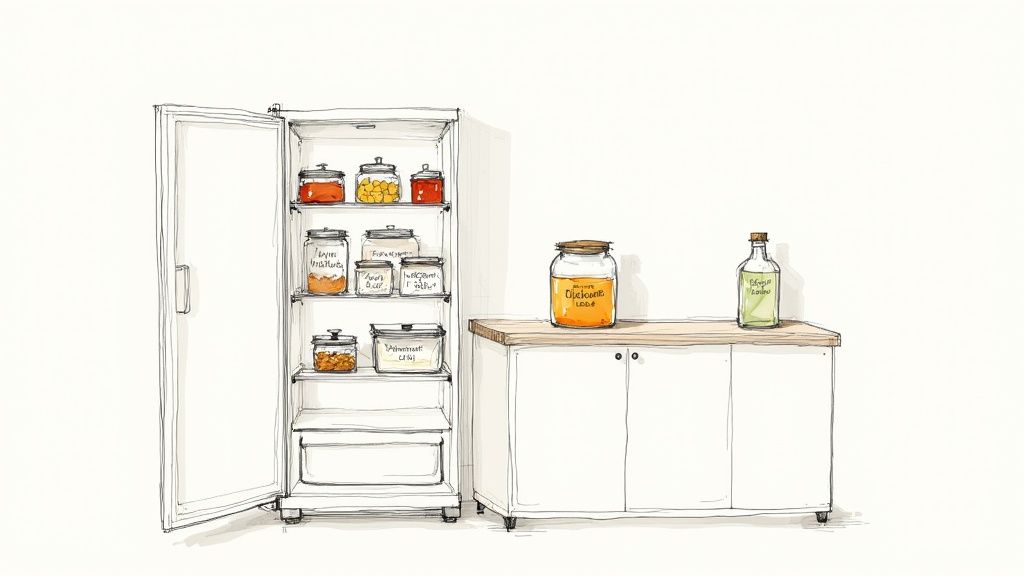
The kitchen is often ground zero for household waste, from food scraps to packaging. This makes it your greatest opportunity for tangible change. Rethinking your kitchen habits is where you can make an immediate and powerful impact.
In 2022, households, stores, and restaurants generated 1.05 billion metric tons of food waste. But success stories, like the UK's 31% reduction in household food waste between 2007 and 2018, show us that what we do in our own kitchens truly can turn the tide.
Master Your Meal Plan and Food Storage
The most effective way to slash kitchen waste is to prevent food from spoiling. Your best tool for this is a simple meal plan.
Before shopping, take a quick inventory of your fridge and pantry. See what needs using up, then build a few meals around those ingredients. This one habit prevents impulse buys and ensures every item you bring home has a purpose.
Proper storage is also crucial. Learn your fridge's different climate zones to keep produce fresh longer. Store delicate herbs in a small jar of water on the door, and keep heartier root vegetables in a cool, dark part of the pantry.
Actionable Tip: Keep a bag in the freezer for vegetable scraps like onion skins, carrot peels, and celery ends. Once it’s full, simmer them in a pot of water to create a rich, flavorful, and completely free vegetable broth.
Make Friends with Reusables
Single-use items create a mountain of trash. Breaking up with them is easier than you might think. Start with a few smart swaps.
Here is a quick guide to some of the easiest and most impactful changes you can make today.
Simple Kitchen Swaps for Big Impact
Use this table to replace common disposables with lasting alternatives.
| Single-Use Item | Sustainable Swap | Long-Term Benefit |
|---|---|---|
| Plastic Wrap | Beeswax Wraps or Silicone Lids | Creates an airtight seal, washable, lasts for years. |
| Paper Towels | Cut-up Old T-shirts or Cloth Towels | Absorbent, washable, and saves trees and money. |
| Plastic Baggies | Reusable Silicone Bags | Durable, freezer-safe, and perfect for snacks or storage. |
| Paper Napkins | Cloth Napkins | Adds a touch of style and eliminates constant repurchasing. |
| Plastic Grocery Bags | Canvas Tote Bags | Stronger, holds more, and keeps plastic out of landfills. |
Each of these swaps is a small step, but together, they represent a huge leap away from throwaway culture.
Turn Food Scraps into Garden Gold
Even with perfect planning, some food waste is inevitable. Composting transforms coffee grounds, eggshells, and fruit peels into nutrient-rich soil for your plants.
When food waste goes to a landfill, it releases methane, a potent greenhouse gas. Composting closes the loop.
Don’t be put off if you don’t have a backyard. Modern composting solutions are designed for every home, from compact worm bins that fit under your sink to sleek countertop electric composters. To get started, learn about starting a home composting system. This simple practice turns what was once trash into a treasure for your houseplants or garden.
Simplify Your Bathroom and Laundry Routines
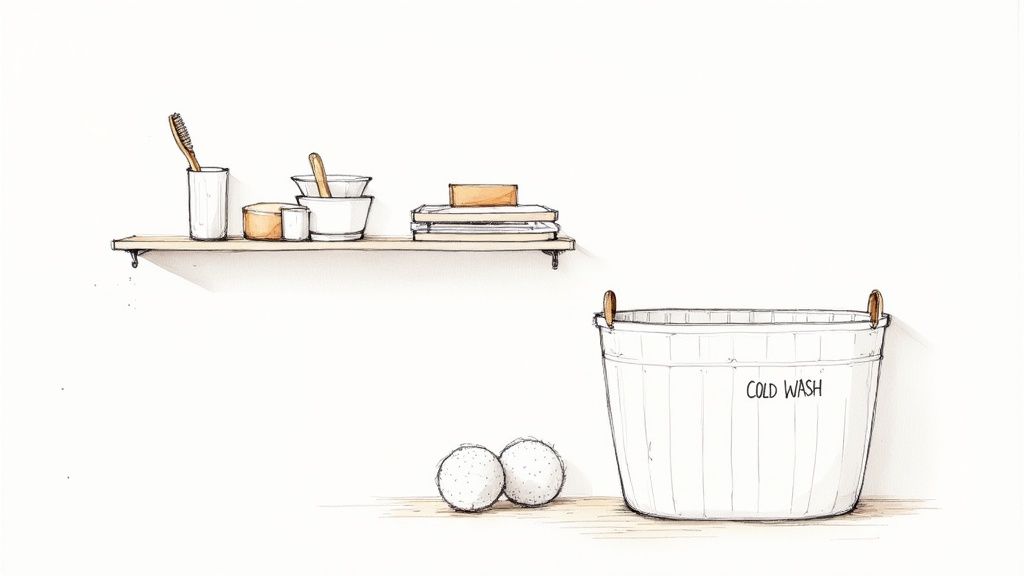
Let's tackle two other household hotspots for waste: the bathroom and the laundry room. A few thoughtful changes here can transform these routines from wasteful to wonderful.
Taking a closer look at our daily rituals gives us the power to shrink our packaging footprint. This is an empowering way to reduce waste at home, one small habit at a time.
Reimagining Your Personal Care
Look at your bathroom counter and picture all those plastic bottles replaced with simpler, lasting alternatives. This journey isn't about giving things up; it's about upgrading your experience while decluttering your space.
Start with one or two swaps that feel genuinely appealing:
- Switch to Solid Shampoo and Conditioner Bars: Replace clunky plastic bottles with concentrated bars that last for months. They’re a game-changer for travel.
- Use Bamboo Toothbrushes: When it’s done, the handle can be composted, unlike its plastic cousin that will linger in a landfill for centuries.
- Adopt a Safety Razor: A well-made metal safety razor offers a superior shave and is a buy-it-for-life item. The only waste is a tiny, recyclable metal blade, saving you enormous amounts compared to disposable cartridges.
- Get Reusable Cotton Rounds: Ditch single-use cotton balls and makeup wipes. Soft, washable fabric rounds can be used, tossed in a mesh bag, and washed with your regular laundry.
Embracing these changes means choosing quality over quantity. A single safety razor or a luxurious shampoo bar replaces dozens of disposable items, creating less waste and a more intentional daily ritual.
The Laundry Room Revolution
The laundry room is another goldmine of opportunity for high-impact changes. Making a few tweaks here won't just slash your waste—it will also save you money on energy bills and supplies.
Low-Waste Laundry Habits
- Switch to Wool Dryer Balls: A brilliant replacement for single-use dryer sheets, these balls soften fabrics and cut down on drying time. A good set can be reused for over 1,000 loads. Add a few drops of essential oil for scent.
- Wash with Cold Water: Roughly 90% of the energy your washing machine uses is to heat the water. Most modern detergents work perfectly in cold water, making this one of the easiest ways to lower your energy consumption.
- DIY Your Cleaner: Make an effective all-purpose cleaner with equal parts white vinegar and water. Keep it in a glass spray bottle to tackle countertops, floors, and windows without the waste from plastic bottles and harsh chemicals.
The Power of Mindful Purchasing
The most impactful step you can take to reduce waste at home happens before anything hits your trash can. It’s the decision you make before you buy. Moving from passive consumption to conscious curation is the secret to a low-waste life.
It’s not about becoming a perfect recycler; it’s about becoming a thoughtful acquirer. Every purchase you make is a vote for the kind of world you want. By stopping waste at the source, you make everything easier.
The Five Rs: A Framework for Conscious Choice
Use this simple but powerful framework to guide your choices. Think of them as a series of questions to ask yourself.
-
Refuse: This is your first line of defense. Say "no, thank you" to things you don't need—the freebie pen, the plastic straw, the paper receipt you'll just throw away.
-
Reduce: Simply buy less. Before you click "add to cart," take a breath. Ask yourself, "Do I truly need this?"
-
Reuse: Fix that broken lamp. Find a perfect replacement at a thrift store. This is about extending the life of things.
-
Recycle: Use this as one of your last options, not your first. It's for when refusing, reducing, and reusing aren't possible.
-
Rot: For everything else, especially food scraps, let it return to the earth through composting.
By putting Refuse and Reduce at the top, you stop waste before it even enters your home. This proactive way of living helps the planet and clears your home of unnecessary clutter.
Reshaping the Market with Your Wallet
Every time you choose veggies without plastic wrap or buy from a local artisan, you're sending a message to the market. You're telling businesses what you value: sustainability, durability, and ethics. When enough of us send that same message, the market listens.
This also applies to big-ticket items like furniture. When you opt for pieces made from solid, high-quality materials, you're investing in a less disposable future. For instance, taking a moment to understand the benefits of solid acacia wood furniture can empower you to choose pieces built to last for generations.
From Impulse Buys to Intentional Investments
Trade the cheap thrill of an impulse buy for the lasting satisfaction of owning something truly special. When you prioritize quality over quantity, you build a home filled with meaning and purpose, not disposable trends.
At Griseo Interior, this is the philosophy we pour into our work. By creating pieces on demand, we ensure every item has a purpose and a home waiting for it. This sidesteps the colossal waste from overproduction and warehouse storage. It’s a slower, more intentional process that honors both the artisan's skill and our planet's resources. Choosing this way is a declaration that you value thoughtful creation over instant gratification.
Weaving Sustainability into Your Home's Story

A low-waste home goes beyond the bin. It’s a mindset that shapes what you bring through your front door and what you cherish for years. This is where your sustainable journey and your home's design story come together.
Start with intentional decluttering. This isn't about a frantic purge. It’s a thoughtful process of looking around and surrounding yourself only with things that you truly use and love. As Marie Kondo says, "first discard those that have outlived their purpose." This shift creates physical and mental space to appreciate what really matters.
Give Old Pieces a New Beginning
Before you discard an item, ask if it could have another life. Repurposing and upcycling are creative ways to reduce waste at home and transform what might have been landfill-bound into a unique treasure.
That wobbly old wooden chair could become a plant stand. An old suitcase can be a quirky side table. Sometimes, a fresh coat of non-toxic paint or new hardware is all it takes to reinvent a piece of furniture.
Upcycling is the ultimate act of creative sustainability. It honors the resources of the past and gives a beloved item a second chance to shine.
Choose Quality That Endures
We've all been tempted by "fast furniture." It’s designed to be trendy, cheap, and disposable, fueling a massive cycle of waste. The most powerful action you can take is to turn away from fleeting trends and toward timeless, well-made pieces.
Investing in furniture built to last might be a bigger commitment upfront, but it saves money and resources in the long run. When you choose pieces you won't have to replace in a year, you're building a home with intention. For more ideas, explore our complete guide to eco-friendly interior design. This is how you create a space filled not with things, but with stories.
Have Questions? Let's Find Some Answers.
Taking the first steps toward a less wasteful home is a huge win, but it's normal to have questions. Let's walk through some common ones and find answers that will keep you moving forward.
Is a Low-Waste Lifestyle Expensive?
This is the biggest myth out there. The heart of this lifestyle is about consuming less, which is a surefire way to save money.
The most powerful changes don't cost a thing.
Start by saying "no" to things you don't need. From there, make swaps that pay for themselves quickly. A reusable water bottle means you stop spending money on bottled water. When it comes to bigger items like clothes or furniture, shopping secondhand keeps good items out of the landfill and saves you a ton of cash.
What if the People I Live With Aren’t on Board?
This is a common challenge. Lead with inspiration, not rules. No one responds well to being lectured.
Instead, show them how it’s done. Focus on changes that make life better for everyone, like saving money on groceries by meal planning together or creating a healthier home with DIY cleaners.
Make it easy for them to join in:
- Set up a clear and accessible composting and recycling station.
- Keep reusable grocery bags hanging right by the front door.
- Celebrate the small victories! A little positive reinforcement goes a long way.
Be patient. People come around at their own pace. A gentle, collaborative approach will always work better than pressure.
I Live in a Tiny Apartment. Can I Still Compost?
Absolutely! You don't need a backyard to make a difference with your food scraps. Composting in a small space is completely doable with modern indoor systems designed to be small, efficient, and odor-free.
A worm bin (vermicomposting) is a fantastic option that can be tucked under your kitchen sink. Another great choice is a Bokashi bin. It uses fermentation to pickle all food scraps—even meat and dairy—in a sealed, odor-free container.
If managing a bin at home isn't for you, check for local options. Many communities have compost drop-off spots at farmers' markets or community gardens, making it easy to contribute.
At Griseo Interior, we believe a sustainable home is built one thoughtful choice at a time—from the daily habits you nurture to the pieces you choose to live with. Our made-to-order approach means every item is crafted with purpose, eliminating overproduction and celebrating timeless, conscious design. See how our pieces can bring that story of intention into your home at https://griseointerior.com.