

Your Actionable Guide to Modern Minimalist Home Decor
Modern minimalist home decor isn't just an aesthetic; it's a practical approach to crafting a living space that feels intentional, functional, and deeply serene. The goal is to simplify and prioritize quality over quantity, curating a home that breathes clarity. This philosophy doesn't just clear your space—it clears your mind.
The Philosophy of Modern Minimalist Decor
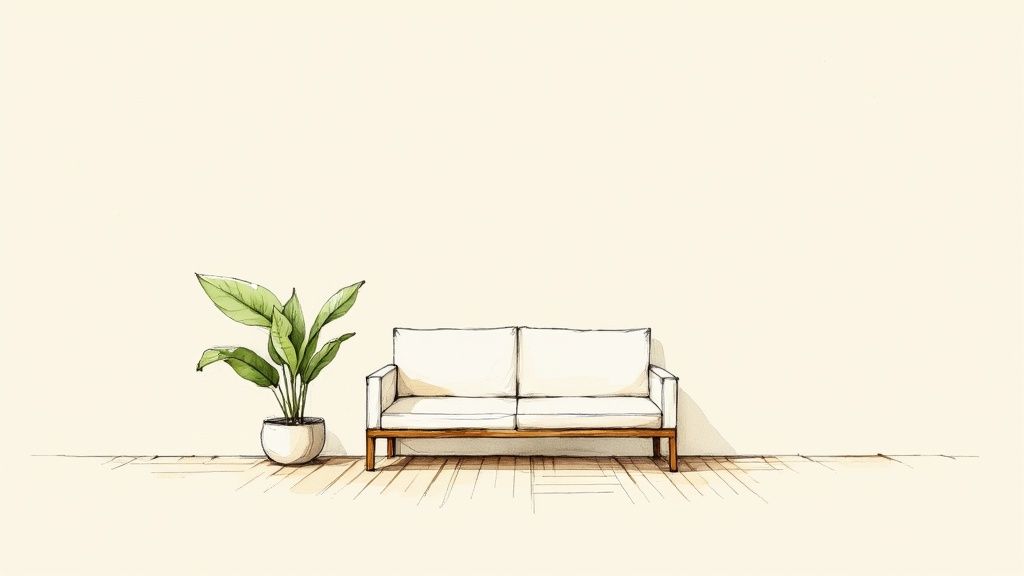
At its core, modern minimalism is about surrounding yourself only with what truly matters. This isn't about creating cold, empty rooms. It's about the practical process of building a home where every single item has earned its place, whether it serves a vital function, sparks joy, or holds special meaning.
This intentional approach naturally reduces stress and mental clutter, helping you focus on what's important. It's a conscious choice to edit your environment for a better life.
Embracing Intentional Living
To adopt minimalism, you must shift from a mindset of accumulation to one of appreciation. Start by choosing impeccable craftsmanship that lasts over trends that fade. When you surround yourself with fewer, better things, you'll see the profound beauty in simplicity.
This way of living offers tangible benefits that go beyond just looking good:
- Create a Calmer Mind: An uncluttered room directly leads to a less cluttered mind. To achieve this, clear surfaces of anything that isn't beautiful or useful. This reduces visual noise, allowing you to think more clearly.
- Sharpen Your Focus: By removing physical distractions, a minimalist environment helps you pour your energy into your work, hobbies, and relationships. Designate specific zones for activities to maintain this focus.
- Gain Financial Freedom: Invest in timeless, well-made pieces instead of buying frequently. This conscious approach to consumption saves money and cuts down on waste in the long run.
The goal is to design a space that supports the life you want, rather than one that complicates it. The principles of modern Italian home decor perfectly embody this marriage of form and function.
The point of modern minimalism isn't to have an empty house. It's to have a home that is full of what you love and free of everything you don't. It's a sanctuary built on purpose.
More Than Just an Aesthetic
Ultimately, modern minimalist decor is a practical journey. It’s a path toward creating a home that mirrors your truest values. It’s about making room for light, air, and movement—not just physically, but mentally and emotionally, too.
By stripping away the non-essential, you allow the true character of your home—and the beautiful pieces within it—to take center stage. This philosophy is incredibly liberating. It’s an invitation to define what "home" truly means to you and to start living more intentionally, one beautiful object at a time.
Crafting Your Minimalist Color Palette
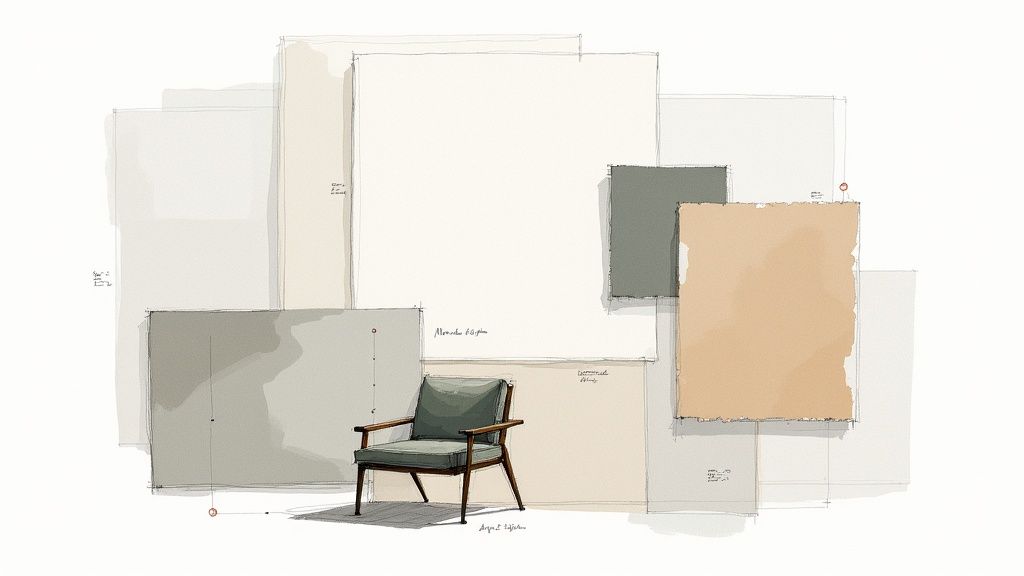
In modern minimalist home decor, color is a tool for creating an expansive sense of calm. The goal is to move beyond a simple coat of white paint and build a sophisticated foundation that feels intentional, warm, and anything but sterile.
This process begins with a thoughtful embrace of neutrals. Don't just pick one color; think of your primary shade as the first layer in a rich composition. Layer different shades of whites, soft grays, and warm beiges to create subtle yet profound depth. These calming hues have a real psychological effect, proven to help lower stress. The secret to keeping a neutral space from feeling flat is texture, which creates plays of shadow and light that infuse the room with warmth.
Building Your Neutral Foundation
Your primary neutral shade sets the entire mood. First, decide what atmosphere you want to create. Do you want a crisp, gallery-like white? A soft, inviting greige? Or a warm, earthy beige? Your choice will guide all subsequent decisions.
Once you’ve set that base, start introducing subtle variations. For instance, if you choose a soft off-white for the walls, bring in a slightly deeper beige for a large sofa or choose light gray for sheer curtains. This tonal variation keeps the eye gently engaged without feeling cluttered. This approach creates a cohesive and serene backdrop that lets the elegant form of your furniture and natural light become the stars.
Think of your neutral palette as a quiet conversation between different shades and textures. It's not about the absence of color, but the celebration of nuance and subtlety.
Introducing Intentional Accent Colors
The magic in a minimalist palette happens when you add a deliberate accent. This isn't about splashing color everywhere. It’s about a single, confident stroke of personality that brings the entire room to life.
Choose one or two muted, earthy tones. These colors feel grounded and natural, complementing the neutral foundation instead of competing with it. They add character while preserving the peaceful atmosphere.
Here are a few powerful yet understated accent choices to start with:
- Sage Green: Brings a sense of nature and calm. Use it for textiles like throw pillows or a cozy blanket.
- Deep Navy: Adds sophistication and depth. Use it for a single piece of art or a striking sculptural vase.
- Terracotta: Provides a warm, organic feel. Ideal for pottery or a small accent chair.
- Charcoal Gray: As a darker neutral, charcoal is fantastic for grounding a room. Apply it to a feature wall or a large area rug.
Applying Color with the 60-30-10 Rule
To bring it all together, use the classic 60-30-10 rule as a practical framework. This guide helps you distribute color harmoniously, making your modern minimalist home decor look thoughtfully curated.
Here’s a simple way to build your palette using this principle.
The Minimalist Color Palette Framework
| Color Role | Percentage | Colors to Use | Application Examples |
|---|---|---|---|
| Primary Neutral | 60% | Layered whites, soft grays, warm beiges | Walls, large furniture pieces like sofas, large area rugs |
| Secondary Neutral | 30% | A slightly deeper or contrasting neutral | Curtains, accent chairs, bed linens, wooden furniture |
| Accent Color | 10% | Muted, earthy tones (e.g., sage, navy) | Cushions, throws, artwork, decorative vases, a single piece of statement decor |
By following this structure, you can confidently build a color palette that feels rich, layered, and perfectly aligned with the minimalist philosophy, giving you the freedom to inject personal style without disrupting the peace.
Using Texture to Create Warmth and Depth
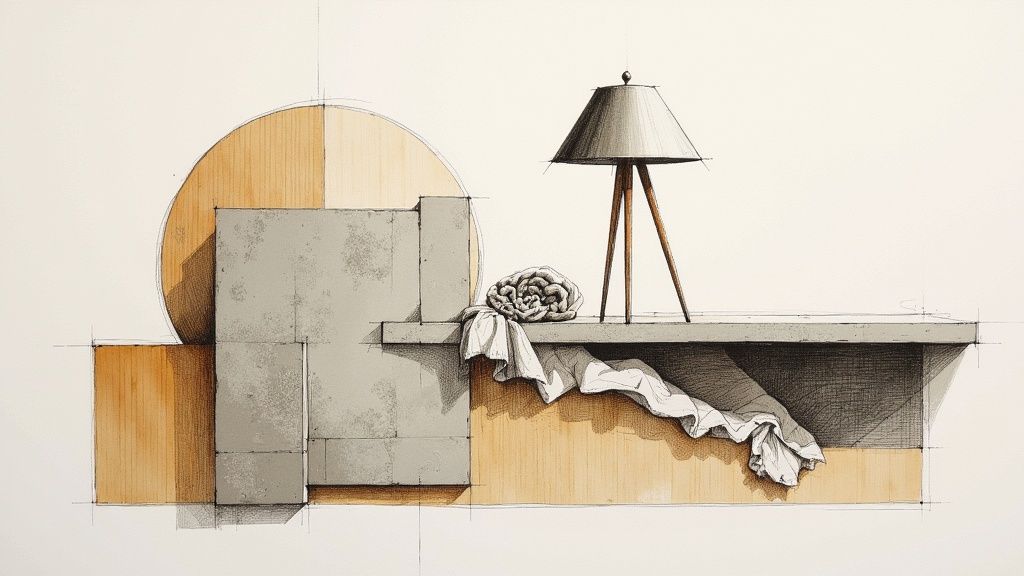
The secret to a warm, inviting minimalist home isn't adding more stuff—it’s adding more feeling through texture. Texture turns a visually pleasing space into a sanctuary by inviting you to touch and experience the room. While a simple color palette is beautiful, texture is what makes it feel beautiful. By thoughtfully layering different materials, you build a space that’s both clean and incredibly cozy.
To do this, combine authentic materials. Light-toned oak, raw concrete, brushed steel, and soft, rumpled linen each have their own character. Your job is to bring these distinct voices together to create a symphony for the senses that feels personal, grounded, and warm.
The Art of Tactile Contrast
The magic happens when you introduce contrast between surfaces. When a rough material meets a smooth one, or a soft textile is set against a hard element, you create a dynamic energy that makes each piece stand out. This simple act of pairing builds character and depth in a room.
For example, a polished concrete floor is modern and clean, but on its own, it can feel stark. Throw a plush, chunky wool rug over it. Suddenly, the floor seems even sleeker, and the rug feels impossibly soft. The contrast elevates both elements. This principle is your most powerful tool for creating warmth without clutter.
In modern minimalist design, texture does the work that pattern used to do. It creates visual interest, guides the eye, and makes a space feel complete and lived-in—all while maintaining that serene, uncluttered aesthetic we love.
This is how you infuse personality into your home in a sophisticated way. Create little moments of delightful contrast that engage the senses and make your home a joy to be in.
Actionable Pairings for a Rich Sensory Experience
Building a textured space is a hands-on art. It’s all about making deliberate choices that layer in comfort. Instead of asking, "What can I add?" ask, "What can I swap for a more tactile alternative?"
Here are a few simple pairings to get you started on your modern minimalist home decor:
- In the Living Room: On a sleek leather sofa, toss a few soft linen and bouclé cushions. The contrast between the cool leather and nubby textiles is immediately welcoming.
- In the Bedroom: Place a gauzy linen duvet on a solid oak bed frame. The organic, wrinkled texture of the linen softens the strong, clean lines of the wood.
- In the Dining Area: Set matte ceramic dinnerware on a smooth, reclaimed wood table. The earthy feel of the ceramics against the polished wood adds an artisanal touch.
- In an Entryway: Place a sculptural, 3D-printed vase with a unique finish, like those from Griseo Interior, on a sleek metal console table. The organic form against the cool metal creates an unforgettable first impression.
By focusing on these intentional combinations, you can prove that a minimalist home can be the most comfortable and soulful place of all. You’re not just decorating a space; you are crafting an experience.
Choosing Furniture With Purpose and Style
In a minimalist home, furniture is the soul of the space. Every piece must earn its spot by being thoughtful in design, high in quality, and reflective of your personal style. Become the curator of your own home by hand-picking items that are not just beautiful, but deeply useful and meaningful to you.
The key is to shift your mindset. Instead of buying multiple trendy, disposable items, choose one perfectly crafted sofa. Focus on clean lines, simple shapes, and smart functionality to create a home that feels both intentional and effortlessly chic.
The Curator's Mindset Before You Shop
Before browsing, the most critical step is to define the room's true purpose. Go beyond "the living room" and ask deeper questions to determine how you really want to live in that space. This clarity will act as your guide, steering you away from impulse buys and ensuring every piece fits your vision.
Use this checklist to get started:
- Primary Function: What is the number-one activity for this room? Is it for quiet reading, hosting gatherings, or family movie nights?
- Secondary Functions: What else will happen here? Will it double as a home office or a yoga spot?
- Emotional Goal: How do you want this space to make you feel? Calm and serene, energized and creative, or warm and inviting?
- Essential Items: Based on your answers, list the absolute non-negotiables: a comfortable sofa, a solid coffee table, a supportive armchair.
Running through this exercise ensures every piece of furniture has a job, building a foundation of pure intention.
Investing In Timeless Quality Over Fleeting Trends
Modern minimalism offers a more soulful, sustainable path than fast furniture. Invest in one high-quality, timeless piece instead of five trendy ones that will look dated in a year. A beautifully made item is an investment in your daily comfort and your home’s lasting style.
Consider an impeccably crafted Italian-made bookshelf. It's more than storage; it's functional sculpture, built with superior materials that will look just as good in a decade. This philosophy elevates your space and is a more responsible way to live. It's a growing movement—the global minimalist furniture market was valued at USD 49.66 billion in 2023 and is projected to hit USD 81.11 billion by 2030. Quality is making a comeback.
When you choose furniture with purpose, you're not just buying an object. You are investing in a lifetime of use, beauty, and joy. It’s an heirloom in the making.
Selecting Your Statement Pieces
Once your functional foundation is set, add personality. Bring in one or two special pieces that elevate the room without creating clutter. A striking piece of art or a sculptural object can become a powerful focal point, giving the eye a place to rest and infusing the room with your story.
This is the final, artful layer of curation. Every item is chosen because it either serves a function or brings you pure joy. There is no in-between.
- Statement Art: A single large-scale abstract painting can anchor a room, adding color and energy without overwhelming the space.
- Sculptural Lighting: Choose a beautifully designed floor lamp that acts as both a light source and a work of art.
- Meaningful Objects: A handcrafted vase or a uniquely designed bookshelf can tell a story and add personal meaning.
When you choose your furniture and decor with this level of intention, you're creating a true sanctuary that is a perfect reflection of a life lived with purpose.
Maximizing Natural Light and Open Space
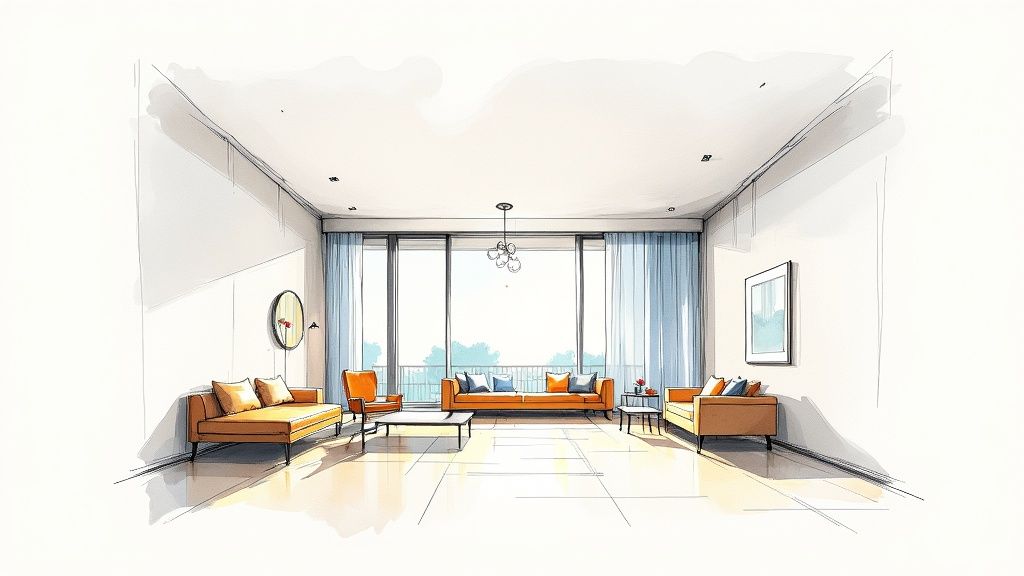
In modern minimalism, light and space are not just design elements; they are active tools you can use to make any room feel larger, brighter, and more peaceful. The key is to work with them to transform your home into a serene, expansive sanctuary.
This starts with appreciating negative space. Far from being empty, negative space is a powerful design tool. It’s the visual quiet that allows your carefully chosen furniture to breathe and your mind to unwind.
Arranging Furniture to Welcome Light
Your furniture placement can either block light or invite it in. Your mission is to create clear pathways that pull sunlight from the windows deep into the room. This single shift can make a space feel instantly more open.
Identify your main source of natural light—usually the largest window—and arrange your furniture from there. Orient your primary seating, like the sofa, to either face it or run parallel to it. Avoid turning its back to the window. This simple adjustment creates a more connected, airy atmosphere.
Negative space is not wasted space. It is the canvas that allows your minimalist decor to shine, creating a sense of calm and order that is essential to the entire philosophy.
By keeping pathways clear and choosing furniture that doesn't obstruct views, you honor the room's architecture and its connection to the outdoors. The effect is immediate: a space that feels both larger and more tranquil.
Amplifying Sunlight and Creating Illusions of Space
With your layout in place, use a few strategic tricks to amplify every ray of sun. These simple techniques can dramatically change a room's feel.
- Sheer Window Treatments: Swap heavy drapes for lightweight, sheer curtains in a neutral color. They maintain privacy while letting diffused sunlight filter through, bathing the room in a gentle glow.
- Cleverly Placed Mirrors: Place a large mirror on the wall opposite a window. This classic trick doubles your light source and creates a powerful illusion of depth, making any room feel bigger.
- Reflective Surfaces: Incorporate pieces with reflective surfaces, like a glass coffee table or a metallic side table. These items bounce light around the room without adding visual weight.
These techniques are game-changers, especially for limited square footage. For more ideas, explore our guide on how to decorate small spaces.
Designing a Layered Artificial Lighting Plan
While natural light is king, a thoughtful artificial lighting plan creates warmth after sunset. For a minimalist home, layer light sources to add function and mood without visual noise.
Structure your lighting in three distinct layers:
- Ambient Lighting: This is your room’s overall illumination. Use simple, sculptural ceiling fixtures or discreet recessed lighting.
- Task Lighting: This is focused light for specific activities, like a sleek floor lamp beside a reading chair or under-cabinet lighting.
- Accent Lighting: This final layer adds depth by highlighting artwork or architectural details, such as a single spotlight on a sculpture.
Choose light fixtures that are sculptural and beautiful in their own right, with clean lines and understated forms that act as pieces of functional art.
Adopting a Minimalist Mindset at Home
True modern minimalist design is more than an aesthetic—it's a way of life. It’s about creating a tangible link between your serene space and your daily intentions. This final step is about inspiring a lasting shift in how you live, starting with a thoughtful approach to decluttering.
Forget the idea of a ruthless purge. This is about gently re-evaluating your relationship with your belongings to create a home that supports you, not one you constantly struggle to manage.
The Art of Intentional Decluttering
To get started, move beyond simply asking if an item "sparks joy." A more practical mindset will set you up for long-term success. Ask more pointed questions about each object. This reframes decluttering from an act of loss into an act of empowerment. You’re not just getting rid of things; you're actively curating a home that reflects who you are today.
Here are a few powerful questions to ask yourself:
- Does this serve a real purpose in my life right now? Be honest about its current usefulness, not some imaginary future scenario.
- If I were shopping today, would I buy this again? This cuts to the heart of what you truly value versus what you've collected over time.
- Does this support the life I'm trying to build? If you're chasing a calmer lifestyle, that cluttered corner filled with stressful items has to go.
- Am I holding onto this out of guilt or obligation? Let go of the "shoulds" and focus on what genuinely brings value to your world.
Embracing minimalism isn't about deprivation. It's about making room for more: more time, more peace, and more of what you love by removing what you don’t.
Maintaining Clarity with Smart Organization
Once you've decided what stays, organize those items with intention. The goal is to maintain clean, clear surfaces that give you room to breathe. Your best friend in this pursuit is elegant, hidden storage.
Look for multi-functional furniture, like a coffee table with concealed drawers or an ottoman that stores blankets. This keeps essentials within reach but neatly out of sight, preserving a peaceful, uncluttered feeling.
This isn't a niche idea; it’s part of a massive cultural shift. Across the United States, the move toward minimalist decor is tied to a broader focus on decluttering and well-being. As homes become sanctuaries, we crave designs that maximize light and foster calm. You can learn more about these trends and their impact on modern living on Renub.com.
Ultimately, adopting this mindset is a continuous practice. It’s a commitment to protecting the peace you've built, inspiring you to be more conscious in what you bring into your life and to cherish the beauty of a well-curated home.
Common Questions & Expert Answers
Diving into modern minimalist design can spark a few questions. Here, we tackle some of the most common hurdles to give you the clarity and confidence to create a space you love.
How Do I Stop My Minimalist Home From Feeling Cold and Empty?
The key to a warm, inviting minimalist space is adding texture. This is how a room comes alive. Your goal is to create a space that engages more than just your eyes.
Instead of a thin, flat rug, choose a thick, high-pile wool one. Swap out simple cotton pillows for the rich feel of chunky knit, bouclé, or relaxed linen. These aren't just details; they are layers of comfort. By thoughtfully choosing materials like warm woods, handcrafted ceramics, and soft fabrics, you build a sensory experience that feels full and welcoming, all without a hint of clutter.
Is Color Off-Limits in Modern Minimalist Decor?
Not at all! Minimalism isn't about an absence of color; it's about the intentional use of color. Think of your neutral palette as the canvas and color as the deliberate brushstroke that adds personality.
The trick is to use it with purpose. Stick to one or two accent colors to maintain a serene feeling. Muted, organic tones often work best—a deep forest green, a warm terracotta, or a sophisticated navy blue can add incredible depth.
Here are a few simple ways to bring in color:
- Create a focal point with an accent wall behind your sofa or bed.
- Let a single statement armchair in a beautiful hue anchor a corner.
- Weave in your chosen color through smaller touches, like a piece of art or a cozy throw blanket.
What’s the Real Difference Between Minimalism and Modern Design?
It's easy to mix these up, as they work so well together. Here’s the best way to think about it: modern design is a specific style, while minimalism is a guiding philosophy.
Modern design refers to a particular era—mostly the early to mid-20th century. It’s defined by clean lines, organic curves, and the honest use of natural materials like wood, leather, and metal.
Minimalism, on the other hand, is the timeless principle of "less is more." It’s a way of thinking that can be applied to almost any design style. When you bring the two together, you get modern minimalist home decor. You're taking the clean forms of modernism and applying the "essentials-only" filter of minimalism. The result is a look that feels both historically grounded and profoundly personal.
Ready to find that perfect piece that speaks to your vision of intentional living? Discover the soul of Italian craftsmanship at Griseo Interior. Explore our curated collection of minimalist, made-to-order decor and find the sculptural accent your space has been waiting for at Griseo Interior's online collection.