

A Guide to Hand-Painted Ceramics in Your Home
Imagine filling your home not with mere objects, but with stories. That’s the real magic of hand-painted ceramics. In a world dominated by mass production, these unique pieces offer a genuine connection to an artist's vision and touch, turning everyday items into small works of art.
Bringing Stories Home with Hand-Painted Ceramics
Every hand-painted ceramic piece is far more than just decor—it's a little chapter in a much larger story of creativity, tradition, and personal expression. Unlike items that roll off an assembly line, each vase, plate, or sculpture carries the unmistakable imprint of the person who made it. The subtle variation in a single brushstroke or the unique depth of a glaze tells a tale of human artistry, making each piece a true one-of-a-kind treasure.
This guide is your personal invitation into that vibrant world. We'll show you how to choose pieces that truly resonate with your style, learn to spot authentic work from a clever imitation, and care for these future heirlooms so they can be loved for a lifetime.
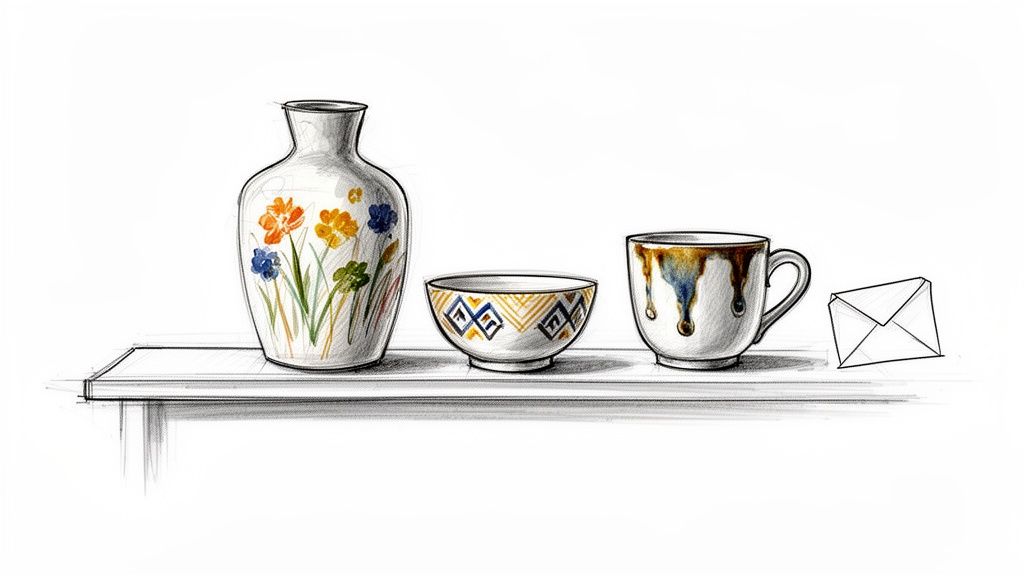
The Soul of the Artisan in Your Space
When you bring hand-painted ceramics into your home, you're not just decorating; you're curating. It’s a thoughtful act of selecting items that reflect who you are and what you value. A brightly colored bowl can evoke memories of a sun-drenched vacation, while a sleek, minimalist vase can add a quiet, sculptural calm to a busy room.
To make the most of their versatility, use them as:
- Powerful Statement Makers: Place a single, large hand-painted vase in your living room or entryway to create a captivating focal point.
- Charming Subtle Accents: Arrange a small cluster of painted bowls on a bookshelf to introduce a welcome pop of color and personality.
- Everyday Functional Art: Use a set of hand-painted mugs to elevate your morning coffee from a routine into a daily ritual of appreciation.
Ultimately, these objects beautifully bridge the gap between art and life. Just as a painting can completely shift the mood of a room, a well-chosen ceramic abstract sculpture can introduce an entirely new layer of depth and character to your space.
A New Chapter for an Ancient Craft
The world of hand-painted ceramics is steeped in history, from ancient pottery traditions to iconic styles like Italian Maiolica that have been passed down for centuries. But this craft is anything but static. Today’s artisans are masterfully blending those timeless techniques with contemporary design, writing an exciting new chapter for this ancient art form.
By choosing handmade, you're doing so much more than buying an object. You are supporting an artist's livelihood, helping to preserve a craft, and bringing a piece with a soul into your home.
This guide is designed to give you the confidence to navigate this world. You’ll see how tradition and innovation can coexist beautifully, empowering you to curate a home that is truly and uniquely yours. Let's start this journey of transforming your space from a simple collection of things into a personal gallery of stories.
2. The Soul of the Craft: Understanding the Artisan's Process
What breathes life into a simple lump of clay, transforming it into a cherished piece of art? It’s more than just skill; it’s an intimate conversation between the artist and their materials, guided by techniques passed down through generations.
The journey of every hand-painted ceramic piece starts with its heart—the clay itself. Think of it like a master painter selecting their canvas. A ceramicist chooses their clay with intention, knowing its unique personality will shape everything that follows.
The Three Foundational Canvases of Ceramics
At the core of the craft, there are three primary types of clay. Each one offers a distinct feel, a different voice for the artisan to work with.
- Earthenware: This is one of the oldest clays known to humankind. Fired at lower temperatures, it remains slightly porous and has a wonderfully rustic, earthy quality. It’s perfect for decorative pieces that sing with warmth and history.
- Stoneware: Fired much hotter, stoneware becomes incredibly durable and non-porous. It’s a workhorse of a clay, making it the go-to for functional art that’s meant to be used and loved every day, like your favorite coffee mug or dinner plates.
- Porcelain: The aristocrat of clays. Fired at the highest temperatures, porcelain becomes beautifully dense, smooth, and almost translucent when thin. It provides a brilliant, pure white canvas that makes colors pop, ideal for intricate and refined designs.
Each clay doesn't just determine the piece's strength; it fundamentally changes how paint and glaze behave, whispering suggestions to the artist at every step.
To help you get a feel for these materials, here's a quick side-by-side look.
Comparing Common Ceramic Types
| Ceramic Type | Key Characteristic | Best For | Typical Finish |
|---|---|---|---|
| Earthenware | Porous, rustic, opaque | Decorative items, sculptural art, tiles | Often earthy, can be brightly glazed |
| Stoneware | Durable, dense, stone-like | Dinnerware, mugs, bakeware | Opaque, often with a speckled texture |
| Porcelain | Translucent, non-porous, fine | Fine china, delicate vases, detailed art | Smooth, glass-like, brilliant white |
Understanding these basics is the first step to truly appreciating the choices an artist makes before a single brushstroke is applied.
Bringing the Clay to Life with Color
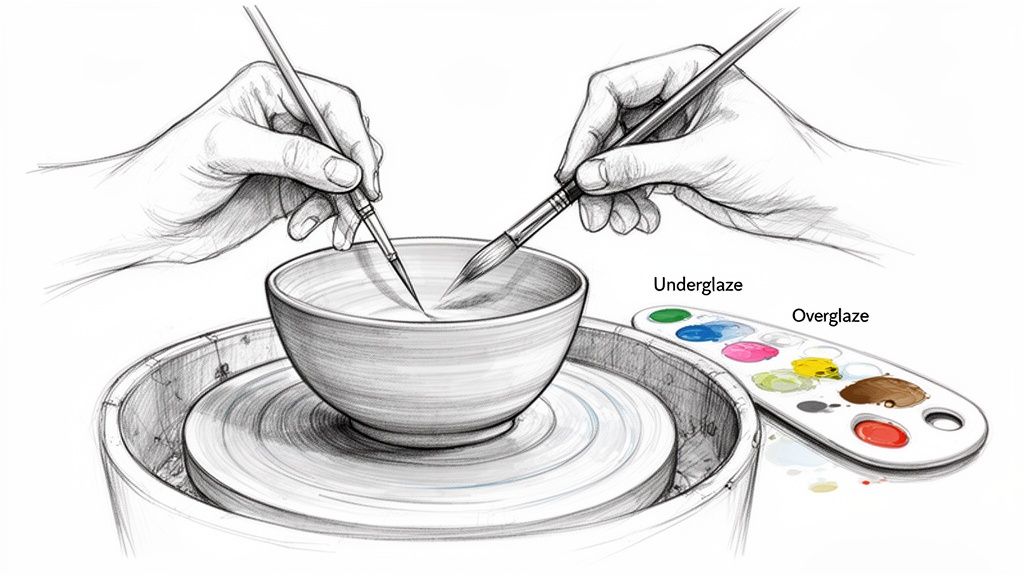
Once a piece is shaped and fired for the first time—a state we call "bisque"—the real magic can begin. An artisan has two main paths for applying color, and the choice creates a dramatically different feel in the finished work.
It’s a bit like the difference between a watercolor painting, where the color sinks into the paper, and an oil painting, where the pigment sits vibrantly on the surface.
The real artistry is in knowing which technique will best serve the design. It's a dialogue between the painter and the clay, where each brushstroke is a deliberate choice that contributes to the final story of the piece.
This is where true craftsmanship shines. The global ceramics market is projected to soar from USD 41.3 billion in 2025 to USD 62.5 billion by 2030. This incredible growth isn’t just about decor; it’s fueled by a deep, collective craving for authentic, handmade quality. People are searching for pieces with a story and a soul, a trend explored in the full art ceramics market growth report.
Underglaze and Overglaze: Two Paths to Beauty
The two core methods are known as underglazing and overglazing.
Underglaze painting is exactly what it sounds like. Color is applied directly to the porous bisque before the final, clear glaze goes on. The pigment soaks right into the clay. When it's fired again, that color is sealed forever beneath a protective, glassy layer. This technique creates incredibly durable, food-safe designs, making it perfect for items you'll use daily. The result is often a softer, more integrated look, where the design feels like part of the ceramic itself.
Overglaze painting, on the other hand, happens after the piece has already been glazed and fired. Special enamels are painted onto the finished glassy surface, and the piece is fired one more time at a much lower temperature to fuse the new colors on top. This allows for stunningly brilliant, sharp details and vibrant colors—including metallics like gold or platinum—that couldn't survive the intense heat of the main firing. These pieces are often breathtakingly decorative.
From the bold, sun-drenched floral patterns of traditional Italian Maiolica that champion overglaze, to the quiet, clean lines of modern design that favor the subtlety of underglaze, these methods give each piece its unique voice. When you understand this process, you can look at a hand-painted ceramic and see beyond its beauty—you can feel the hours of passion, the focused intention, and the incredible skill poured into its creation.
How to Identify Authentic Hand-Painted Ceramics
Here is how you can sharpen your eye and learn to see the difference between a true artisan piece and a factory-made imitation. Think of it like a live concert versus a recorded track—one is full of life and subtle variations, while the other is perfectly uniform. Learning to spot authenticity is about trusting your senses and recognizing the beautiful, tell-tale signs of human craftsmanship.
When you hold a piece of hand-painted ceramics, you’re holding a story. Each one is a testament to the growing hunger for unique, handcrafted objects in our homes. In fact, the global pottery ceramics market, valued at around USD 11.83 billion, is expected to swell to USD 17.27 billion by 2033. Tableware alone makes up over 73% of that market. This incredible growth shows just how much we all value the very qualities you’re about to learn to identify. You can dive deeper into the pottery ceramics market data to see the numbers behind this movement.
Look for the Human Touch in Brushstrokes
The most immediate sign of a hand-painted piece is right there in the brushwork. Mass-produced ceramics use transfers, decals, or stencils to create flawless, identical designs. An artisan’s work, by contrast, celebrates imperfection.
Lean in close and inspect the lines. You'll begin to notice the artist's hand at play:
- Subtle Variations in Line Weight: A real brushstroke naturally thins and thickens as the artist adjusts pressure and lifts from the surface.
- Slight Inconsistencies: Notice the tiny overlaps in color or the minuscule differences in repeating patterns. These aren't mistakes; they’re proof of humanity.
- Visible Texture: Sometimes, you can even see the faint texture of the brush bristles in the paint—a detail a machine could never replicate.
These "perfect imperfections" are the artist’s signature, woven directly into the design. They breathe life and energy into the piece in a way a machine never could.
Feel for Authenticity and Balance
Your sense of touch is just as vital as your sight. Pick up the piece. Feel its weight. Authentic artisan ceramics often have a satisfying heft that signals the quality of the clay.
Pay attention to the glaze. A hand-dipped or hand-brushed glaze might be glassy smooth, or it could have a gentle ripple where it pooled a little thicker in some spots during firing.
A machine-made object is engineered for uniformity. An artisan-made object is a record of a moment in time—a physical expression of skill, focus, and creativity. Trust your hands to feel that difference.
Finally, run your fingers along the bottom. The unglazed "foot" where the ceramic sat in the kiln should feel slightly rough. You might even find subtle marks from the tools used to trim the clay.
Examine the Artist's Mark and Signature
Now, turn the piece over. The bottom of an authentic hand-painted ceramic is like the credit roll of a great film—it tells you who was behind the creation and is one of the surest signs of its origin.
Be on the lookout for these identifiers:
- An Artist's Signature or Initials: Many potters will sign or initial their work by hand, either etched directly into the clay or painted on before the final firing.
- A Studio Stamp or "Chop": Some artists and studios use a unique stamp, often called a chop mark, to identify their work.
- Location Details: You might find the name of the city or region where it was made, especially in areas with a long, proud ceramic tradition.
A perfectly smooth, blank bottom is often a red flag for mass production. A mark, however humble, connects the object back to a real person and a real place, ensuring the piece you bring into your home holds genuine, lasting value.
Actionable Ways to Style Ceramics in Your Home
It's time. Let's get those beautiful hand painted ceramics out of the back of the cabinet and give them the spotlight they deserve. These aren't just objects; they're stories told in clay and glaze, waiting to become a living, breathing part of your home's character. Styling them isn't about rigid rules—it's about unleashing your creativity and letting your personality shine through.
Use the following ideas as starting points—'recipes' for creating arrangements that feel intentional, beautiful, and uniquely you. Our goal is to make your collection feel alive and perfectly at home in your space.
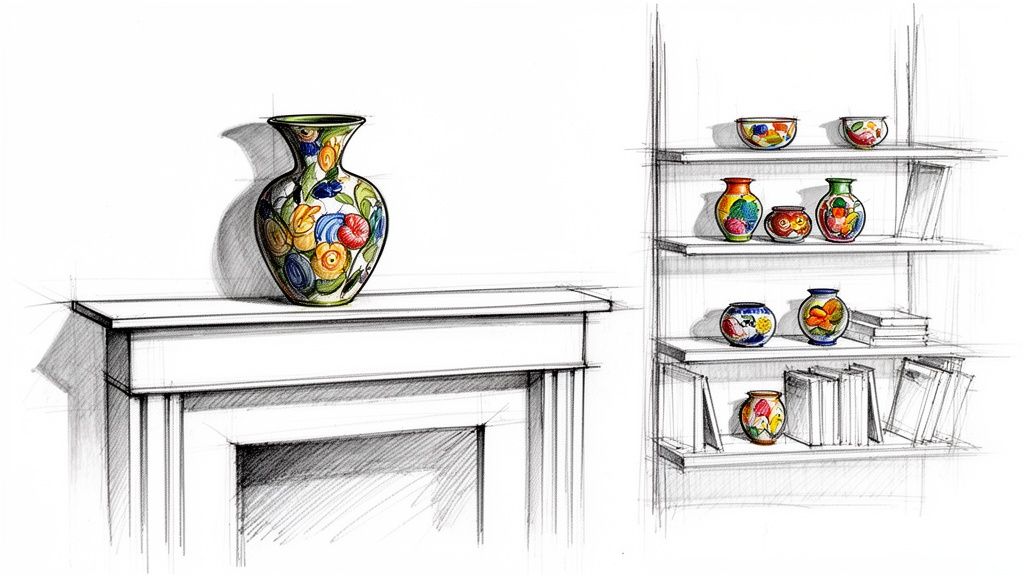
Create a Powerful Focal Point
Sometimes, one stunning piece is all you need. A large, sculptural vase or a platter with an incredible, intricate design can single-handedly anchor an entire room. This approach is a game-changer, especially in minimalist or contemporary homes where a single bold statement can make a massive impact.
To do this, place a tall, eye-catching vase on a clean-lined mantelpiece or a console table in your entryway. Then, step back and let it stand alone. Giving it space to breathe allows its form, color, and hand-painted artistry to become the undisputed star of the show. Resist the urge to clutter the space around it.
Group Smaller Pieces for Visual Interest
While one piece can be a showstopper, a thoughtfully curated collection of smaller ceramics tells a completely different kind of story—one with layers, depth, and personality. Grouping items on a bookshelf, side table, or open kitchen shelving can transform a simple surface into a captivating display.
To create a harmonious look, follow these practical tips:
- Play with Height: Don't just line things up. Arrange pieces of varying heights to create a dynamic, interesting "skyline" for the eye to travel across.
- Create Odd-Numbered Groupings: There's a reason designers love working in groups of three or five. It feels more natural and balanced to our eyes than even-numbered sets.
- Unify with Color or Theme: Tie your collection together with a common thread. You can build a collection around a shared color palette, or connect different pieces through a theme, like botanical motifs or bold geometric patterns.
This technique turns a plain shelf into a vibrant vignette that begs for a closer look. For more inspiration on building out a collection, our guide to using decorative ceramic plates has some great ideas for wall arrangements, too.
Embrace Balance, Scale, and Texture
Great styling is all about getting the balance right. Consider the scale of your ceramic piece in relation to the furniture it sits on. A tiny bud vase will feel lost and adrift on a huge dining table, while an oversized pot could easily overwhelm a delicate end table. Aim for a pleasing proportion that feels deliberate and thoughtful.
Use texture as your secret weapon for adding sensory richness. Pair a smooth, glossy hand-painted pot with the rough, warm grain of a wooden shelf. Or set it against the cool, hard surface of a marble countertop. The contrast makes both materials pop. A vibrant piece like this Casita Talavera Pot, for example, brings not just a burst of color but a tactile, glazed finish that instantly elevates the whole room.
The most beautifully styled homes feel like a personal reflection of the people who live there. Don't be afraid to experiment, move things around, and trust your intuition. Your ceramics are part of your story—let them speak.
By keeping these principles in mind, you can arrange your hand painted ceramics with confidence, creating a space that feels authentic, intentional, and deeply personal.
Caring For Your Hand-Painted Ceramics
When you bring an artisan ceramic piece into your home, you're not just acquiring decor; you're welcoming an heirloom. These are objects crafted with soul, meant to be cherished for years, even generations. Taking care of them is a beautiful act of stewardship—a way to honor the hands that shaped them and preserve their story.
Proper care isn't complicated. It’s really just about a gentle touch and understanding what makes your piece so special.
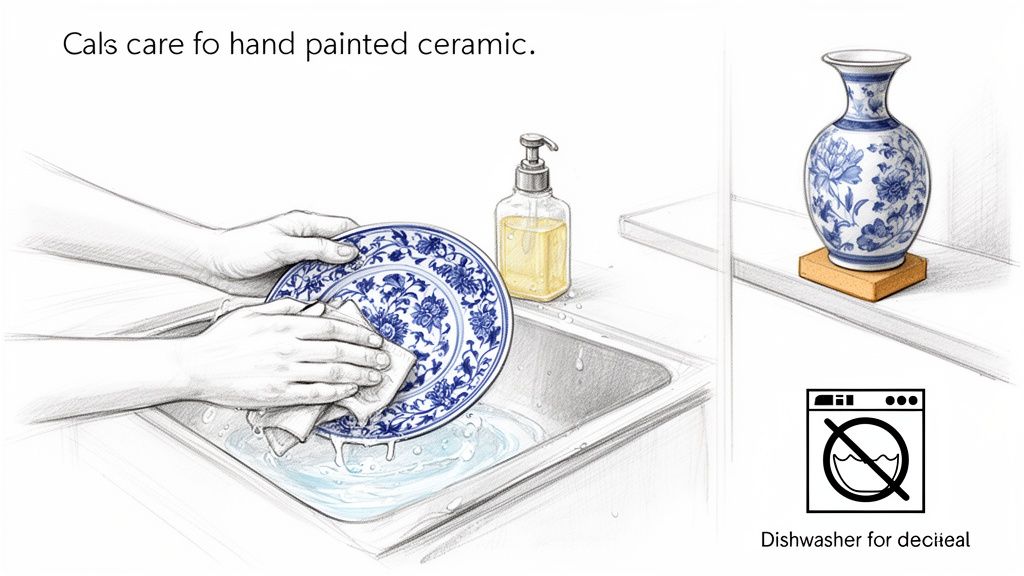
Gentle Cleaning for Lasting Beauty
If there's one golden rule, it's this: always hand wash. The dishwasher's intense heat and harsh detergents can strip the life from vibrant, hand-painted colors and even wear away delicate details. You wouldn't put a fine painting in the dishwasher, right?
Follow these simple steps for safe washing:
- Go Mild: Use a little gentle dish soap and warm water. Steer clear of anything abrasive, like scouring powders or pads, which can easily scratch the painted surface and the protective glaze.
This simple ritual isn't a chore; it’s a quiet moment to connect with and appreciate the art you've brought into your life.
Preventing Chips and Cracks
Of course, the best way to keep your ceramics looking perfect is to prevent damage in the first place. Most accidents happen from a simple bump or knock, but a little bit of foresight goes a long way.
Your ceramics are more than just objects; they are vessels of artistry and story. Handling them with care is a way of honoring the artist's touch and ensuring that story endures.
Here are a few practical tips for keeping your pieces safe and sound:
- Avoid Temperature Shocks: Drastic changes in temperature can cause thermal shock, which leads to cracking. Never pour boiling water into a cool vase or take a piece from the fridge straight to a hot oven.
- Secure Your Displays: For a vase sitting in a busy hallway, place a tiny dab of museum putty on the bottom. It provides an invisible anchor, protecting it from an accidental nudge from a guest or a curious pet.
- Store Smart: When stacking plates or bowls, place a small piece of felt or a soft cloth between them. This prevents the unglazed, slightly rough foot of one piece from scratching the beautifully painted surface of the one beneath it.
By embracing these simple habits, you're doing more than just cleaning—you're actively preserving a piece of art. You become the guardian of its story, ensuring its unique beauty will continue to bring joy for a lifetime.
The Future of Ceramics: Where Soul Meets Sustainability
The story of ceramics has always been one of evolution. It’s an ancient craft, yes, but it’s far from static. Today, we’re watching an exciting new chapter unfold, where timeless artistry is meeting the very modern call for sustainability and conscious creation. The hand-painted ceramics we welcome into our homes now carry more than just beauty; they carry a story of responsible, forward-thinking craftsmanship.
At the heart of this shift is a beautiful return to small-batch, mindful production. It’s a quiet rebellion against the mass-produced world, where volume often trumps quality and waste is just part of the process. The artisan way is different. By creating pieces on demand or in small, intentional runs, artists honor their materials and leave a much lighter footprint on the earth.
Merging Ancient Hands with Modern Minds
Innovation in ceramics isn't about replacing the artist's touch—it's about elevating it. Technology can be used to achieve a perfectly balanced, symmetrical form, creating an immaculate canvas for an artist's unique, free-flowing brushwork. This is the stunning fusion happening right now.
This blend of old and new allows for incredible precision without sacrificing an ounce of soul. It’s a partnership that unlocks entirely new artistic possibilities, giving us pieces that are both technically flawless and deeply, wonderfully human.
This conscious approach isn’t just about making things. It’s about making a positive impact. It’s about investing in art that is intentionally and responsibly crafted for a mindful, modern home.
And people are noticing. This growing appreciation for intentional, handcrafted goods is driving incredible growth in the market. Hand-painted ceramics are a huge part of the decorative pottery world, a market projected to jump from USD 17,883.62 million in 2025 to an incredible USD 28,514.73 million by 2032. This isn’t just a trend; it's a global movement toward authenticity. You can see the full picture in the complete decorative pottery market research.
The Power of Made-to-Order
The made-to-order model is a game-changer for responsible production. When you create an object only after it’s been chosen, you sidestep the massive waste of overproduction and unsold inventory. It’s not just a smart business decision; it’s an ethical one.
This philosophy has a ripple effect of positive change for both the planet and for you:
- Reduced Material Waste: Every resource is used with intention. No precious materials are wasted on items that might sit on a shelf forever.
- Lowered Energy Consumption: By getting rid of giant warehouses and the energy needed to run them, a company's carbon footprint shrinks dramatically.
- A Deeper Connection: There’s something special about knowing a piece was made just for you. It transforms a purchase into a commissioned work of art, fostering a much stronger, more personal bond.
This is the very principle that guides us at Griseo Interior. To see how we bring these ideas to life, you can dive into our guide to sustainable manufacturing practices. Choosing this path means you’re not just buying a beautiful object; you’re investing in a future where art, beauty, and environmental responsibility live in perfect harmony.
Your Questions, Answered
As you start to fall in love with the idea of bringing hand-painted ceramics into your world, some practical questions are bound to pop up. A huge part of the joy in collecting these pieces is feeling confident about how to choose and care for them.
Here are answers to common questions so you can enjoy your collection with confidence.
Are Hand Painted Ceramics Food Safe?
This is one of the most important questions, and the answer comes down to one thing: the glaze. A piece’s food safety depends on its final, protective coating and how it was fired.
To be considered food safe, a ceramic piece needs a lead-free, non-toxic glaze. It also must be fired at just the right temperature to seal the surface completely, making it strong and non- porous.
- Check for Confirmation: Always look for labels like "food safe" or "dinnerware safe" in the item description. Any reputable artist will be clear about a piece's intended use.
- When in Doubt, Decorate: If a piece has a matte texture, a crackled look (often called crazing), or shiny metallic details, play it safe. Assume it's for decorative use unless the artist explicitly says otherwise.
Why Do Hand Painted Ceramics Cost More?
When you see the price tag on a truly handmade ceramic piece, you're not just looking at the cost of clay and paint. You're seeing the price of time, immense skill, and a whole lot of heart. This isn't a soulless object from a factory line; it's an investment in a story of true craftsmanship.
When you buy a hand-painted piece, you're getting so much more than an object. You're supporting an artist, championing a timeless skill, and welcoming a totally unique work of art into your life.
The cost covers everything from the initial spark of an idea to shaping the clay, the multiple firings in a kiln (which can take days!), and of course, the hours spent with a brush in hand, patiently bringing the design to life. Every single step is a testament to the artisan's dedication.
Can You Fix a Chipped Hand Painted Ceramic Piece?
Absolutely. A little chip or crack doesn't have to be the end of the road. For small bits of damage on a decorative piece, use a special ceramic epoxy to create a strong, nearly invisible mend.
If you want to turn that flaw into a feature, explore the beautiful Japanese art of Kintsugi. This age-old philosophy is all about mending broken pottery with a lacquer mixed with powdered gold, silver, or platinum. Instead of trying to hide the break, Kintsugi highlights it, celebrating the piece's history and resilience. It's a stunning way to honor its journey.
For a truly priceless or deeply sentimental piece, your best bet is to find a professional ceramic restorer who can work some real magic.
At Griseo Interior, we live by the belief that your home should be filled with objects that tell a story. Explore our collection of made-to-order Italian designs, where modern innovation and timeless craftsmanship come together, and find the perfect piece to start your own story.