

Inspiration: minimalist living room decor ideas for a serene, stylish home
When people hear "minimalist living room," they often picture a cold, empty space. But true minimalism is about creating a sanctuary—a calm, intentional room built with a soft, neutral palette, furniture that’s as smart as it is beautiful, and just a few accessories that truly mean something to you.
It's not about what you remove, but about what you choose to keep. Every piece should earn its place, bringing a sense of peace and order to your most-lived-in space.
Embracing Simplicity in Your Living Space
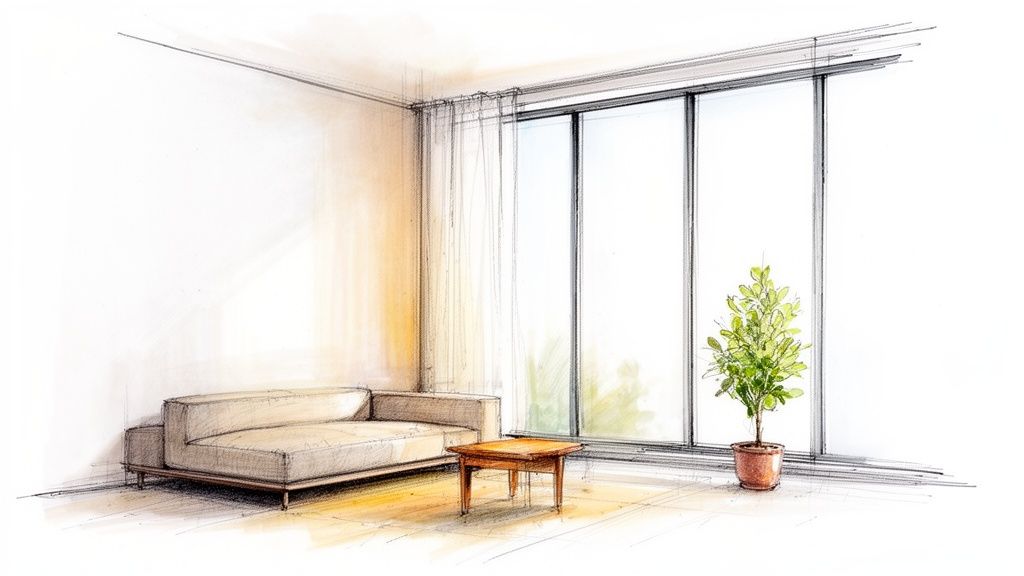
Imagine stepping into your living room and feeling your shoulders instantly drop. That's the real magic of minimalism. It’s not about living with less; it’s about making room for more of what truly matters—more calm, more clarity, and more you.
Think of it as a design philosophy that champions space, light, and purpose. The goal is to turn a potentially chaotic room into your personal haven.
This guide will give you actionable steps for that transformation. We'll move past the old-school idea that minimalism has to feel stark and dive into creating a space that feels warm, deeply personal, and incredibly inviting.
Redefining Your Approach to Decor
At its core, minimalism is a mindset, not a rigid set of rules. The goal is to curate a space where every single object has a purpose, whether it's functional, beautiful, or holds a special memory.
Your first step? Before you buy anything, take a moment to observe your current living room. Ask yourself two simple questions for every item: Does this serve me? and Is this just stuff? This initial audit is the most critical part of the process.
“Have nothing in your house that you do not know to be useful, or believe to be beautiful.” — William Morris
This simple quote from William Morris is your practical filter. Use it to guide every decision you make for the room.
What You Will Learn
This journey is about more than just aesthetics; it's about creating a home that genuinely supports your well-being. We’ll give you the practical tools and confidence to build that serene, stylish environment you’re dreaming of.
Here’s a preview of the actionable advice ahead:
- Select a Harmonious Palette: Get clear steps for using neutral colors and natural textures to craft a tranquil backdrop.
- Choose Purposeful Furniture: Learn how to identify and select pieces that blend clean, modern lines with everyday practicality.
- Decorate with Intention: Master the art of styling with just a few high-impact accessories that tell your story and bring your space to life.
- Embrace Sustainable Choices: Discover how to connect minimalist living with eco-conscious choices, creating a home that feels good in every way.
Let’s get started on the path to a more intentional home—one where every element works together to create a profound sense of peace.
The Heart of Minimalist Design
Minimalism is more than an empty room. To do it right, you need to craft a living room that’s soulful, warm, and deeply personal. It’s about creating a space that genuinely supports your life, rather than just holding your stuff.
To get there, lean on three core principles. Think of them as a compass to guide your decisions. With Intentionality, Functionality, and Quality over Quantity as your pillars, you'll be able to design with clarity and confidence.
Embrace Intentionality in Every Choice
This is your starting point. Intentionality is the simple, powerful act of asking "why?" before anything enters your living room. An intentional space is one where every single object has a reason to be there. It either serves a practical purpose, brings you joy, or holds a special meaning.
To put this into practice, become the curator of your home. Instead of filling empty corners just because they're empty, consciously choose pieces that add to the room's feeling and story. A vase shouldn't just be a vase; choose a sculptural form you love that catches the morning light. A throw blanket isn't just for warmth; select one whose texture adds a layer of visual comfort.
By curating your living room with intention, you create a space that tells your unique story, filled only with things you truly love and use.
This simple shift changes everything. Decorating becomes a mindful practice, not a chore. You'll quickly find that when every item is chosen with care, your living room naturally feels more peaceful and completely, uniquely you.
Prioritize Functionality in Form
In a minimalist living room, every piece of furniture and decor must earn its keep. This principle, functionality, is what makes your space not just beautiful, but effortless to live in.
Look for items that can pull double-duty. For example:
- Choose a sleek coffee table with hidden storage to tuck away remotes and coasters, keeping the surface clear.
- Select an elegant ottoman that can be a footrest, extra seating, and a home for cozy blankets.
- Place a beautiful wooden bench under a window to serve as a perch for plants and books, or a spot to sit.
Focusing on function doesn't mean sacrificing style. Many iconic minimalist pieces are celebrated for their marriage of clean lines and smart utility. By making functionality a priority, you naturally reduce clutter and the need for extra furniture. If you need more ideas, our guide on how to arrange furniture for modern minimalist home decor provides practical layouts.
Invest in Quality Over Quantity
This last pillar requires a shift in perspective. Move away from accumulating more things and toward investing in better things. Choosing quality over quantity is the practical secret to a minimalist living room that feels timeless and elevated.
This means choosing a single piece of art that truly speaks to you instead of covering a wall with mass-produced prints. It's the difference between buying a cheap sofa that will sag in a few years and saving for a beautifully crafted piece made from durable, natural materials that will last a lifetime.
This mindset has also shaped how minimalism itself has evolved. Industry analysis shows that by 2025, the definition of minimalism will be even more tied to natural materials, soft textures, and a few high-impact pieces. This trend, often called "warm minimalism," proves that a simple space can feel rich and inviting.
Building Your Minimalist Color and Material Palette
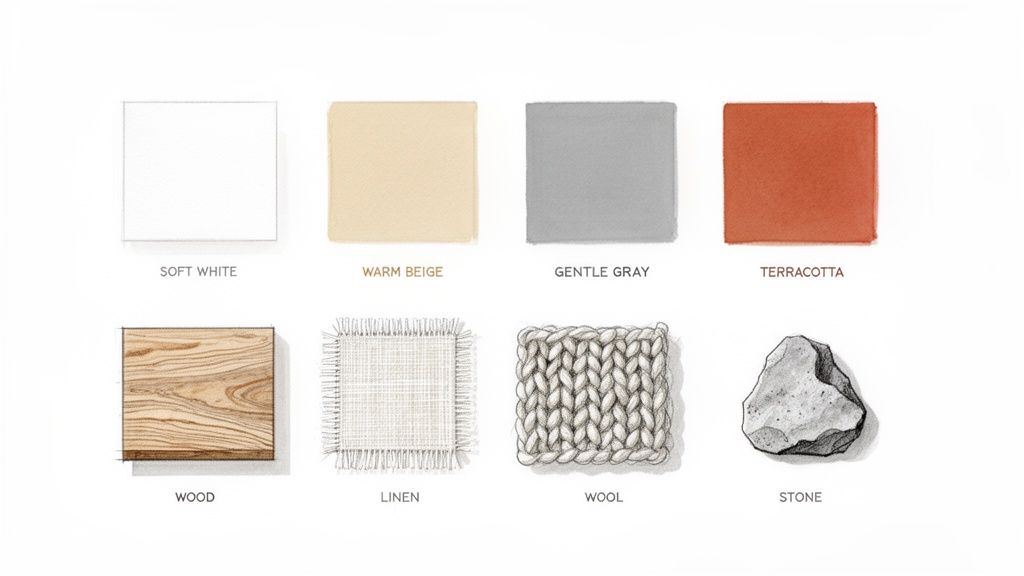
The right palette is the soul of your minimalist living room. It sets the tone and creates the serene atmosphere you're chasing. Your color and material choices are the most powerful tools you have for this transformation.
This section is your practical playbook for making these foundational decisions. Let's create a room that feels both clean and comforting, starting from the ground up.
Mastering the Neutral Color Scheme
When you picture minimalist living room decor ideas, your mind likely goes to neutrals. Soft whites, warm beiges, and gentle grays are the cornerstones of this look for a good reason. The trick is to see these colors not as a limitation, but as a source of power.
A neutral backdrop acts like a natural amplifier. It reflects sunlight, making your living room feel brighter and more open, which creates an immediate sense of tranquility.
A thoughtfully chosen neutral palette isn't about avoiding color; it's about celebrating light, space, and texture. It provides a calm foundation that allows your intentional decor pieces to truly shine.
To make this actionable, instead of a stark, clinical white, explore nuanced shades. Choose an off-white with a hint of cream, a greige that shifts with the light, or a soft, earthy beige to make the space feel more inviting. These quiet colors create a visual hush, giving your mind space to breathe.
The Secret to Warmth and Depth Is Texture
A room painted in a single neutral hue can easily feel flat. The secret ingredient that breathes life into it and creates a "warm minimalist" feeling is texture. Texture is the element you can feel with your eyes, adding depth and a vital sense of comfort.
Layering different textures is how you build a rich, sensory experience without adding clutter. Here's how to do it:
- Wood: Bring in pieces with a visible grain, like an oak coffee table or a walnut console, to add organic warmth.
- Linen and Cotton: Use these breathable, natural textiles for curtains or cushion covers for a relaxed, casual elegance.
- Wool and Bouclé: Add a chunky wool throw blanket or a bouclé armchair to introduce a layer of undeniable coziness.
- Stone and Ceramic: A marble side table, a slate coaster, or a handcrafted ceramic vase adds a cool, smooth counterpoint to softer textiles.
Selecting Your Core Materials
Once you understand how to balance color and texture, you can confidently choose your core materials. These foundational pieces will define the room, so choosing wisely is everything.
Every minimalist room has a "mood," largely driven by its palette. Are you drawn to something bright and airy, or grounded and earthy? Use the table below to build your own cohesive palette.
Minimalist Palette Mood Board
| Element | Cool & Crisp Minimalist Palette | Warm & Organic Minimalist Palette |
|---|---|---|
| Primary Neutrals | Pure White, Light Cool Gray, Charcoal | Creamy Off-White, Greige, Warm Beige |
| Accent Colors | Black, Slate Blue, Deep Navy | Terracotta, Olive Green, Burnt Sienna |
| Wood Tones | Ash, Bleached Oak, Light Maple | Walnut, Teak, White Oak |
| Metals | Matte Black, Polished Chrome, Stainless Steel | Aged Brass, Bronze, Copper |
| Textiles | Crisp Linen, Smooth Cotton, Sleek Leather | Chunky Wool, Nubby Bouclé, Soft Suede |
| Stone | White Marble, Polished Concrete, Slate | Travertine, Sandstone, Terracotta Tile |
Whether you mix and match or lean fully into one style, this framework helps ensure every material feels cohesive and intentional.
When selecting textiles, always aim for natural fibers like wool, cotton, and linen. They wear better over time and have a timeless quality that aligns with the "quality over quantity" ethos. For a deeper dive, this guide to luxury upholstery fabric is an incredible resource for sourcing materials that are both beautiful and durable.
Choosing Furniture With Form and Function
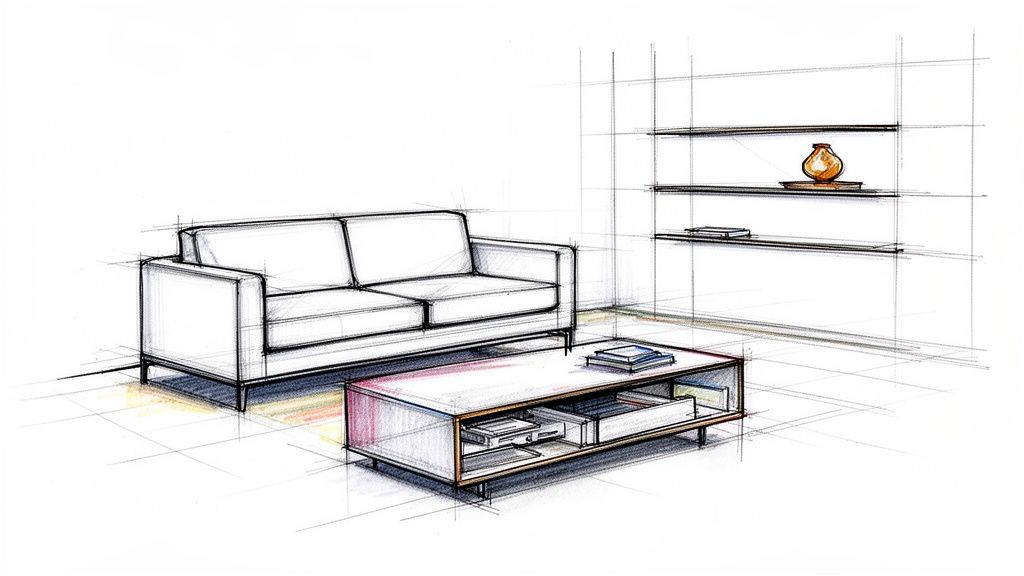
In a minimalist living room, furniture isn’t just filler—it’s the main event. Every piece defines the space, acting as functional sculpture. This is where you move from furnishing a room to consciously designing it.
The philosophy is simple: everything must earn its place by being both useful and beautiful. Look for furniture with clean, uncomplicated lines that does more with less. By selecting smart, multifunctional designs, you create a home that feels open and organized.
Selecting Your Anchor Pieces
Every great living room is built around a few star players. These anchor pieces are the foundation that sets the tone for everything else.
-
The Statement Sofa: As the biggest piece, this is your most important investment. Look for a sofa with a simple silhouette, high-quality fabric, and slim legs to create an illusion of more space.
-
The Hardworking Coffee Table: Your coffee table should do more than hold a drink. Choose a design with integrated storage, like hidden drawers or a lower shelf, to tuck away remotes and magazines.
-
The Curated Shelving: Minimalist shelving is a stage for your most treasured objects, not your entire library. Opt for open, airy shelving units or simple floating shelves that put the focus on your curated decor.
The Power of Negative Space
One of the most profound tools in minimalism is something you can’t buy: negative space. This is the intentional, empty area around your furniture. It’s the visual breathing room that allows each piece to be truly appreciated.
Negative space is not wasted space; it's an active design element. By embracing it, you create a sense of openness and flow, making your living room feel calmer and more expansive than it actually is.
To apply this, resist the urge to fill every empty corner or cover every blank wall. When you allow for these quiet moments in your design, you amplify the impact of the pieces you’ve so carefully chosen.
Creating a Functional Floor Plan
Before you buy anything, sketch out your floor plan. This is your blueprint for a room that flows. First, define the room's main purpose—is it for conversation, watching movies, or quiet reading? Once you know its function, you can arrange your furniture to support it.
Thoughtful furniture arrangement is key to a balanced, minimalist look. For practical layouts and expert tips, check out our complete guide on how to arrange furniture in a living room. A well-planned space ensures clear pathways for movement and that every piece has room to breathe.
Smart Storage as a Design Element
In a minimalist home, storage is your secret weapon for maintaining a serene, clutter-free feeling. The best storage solutions are the ones that blend seamlessly into your decor, hiding messes in plain sight.
This is where multifunctional furniture really shines. A gorgeous sideboard can conceal electronics, while a stylish storage ottoman can hold extra blankets. To weave storage into your design beautifully, consider these clever small living room storage ideas that maximize every inch without sacrificing style. The goal is to make your storage so elegant that it becomes part of the intentional design.
Styling Your Space With Intentional Decor
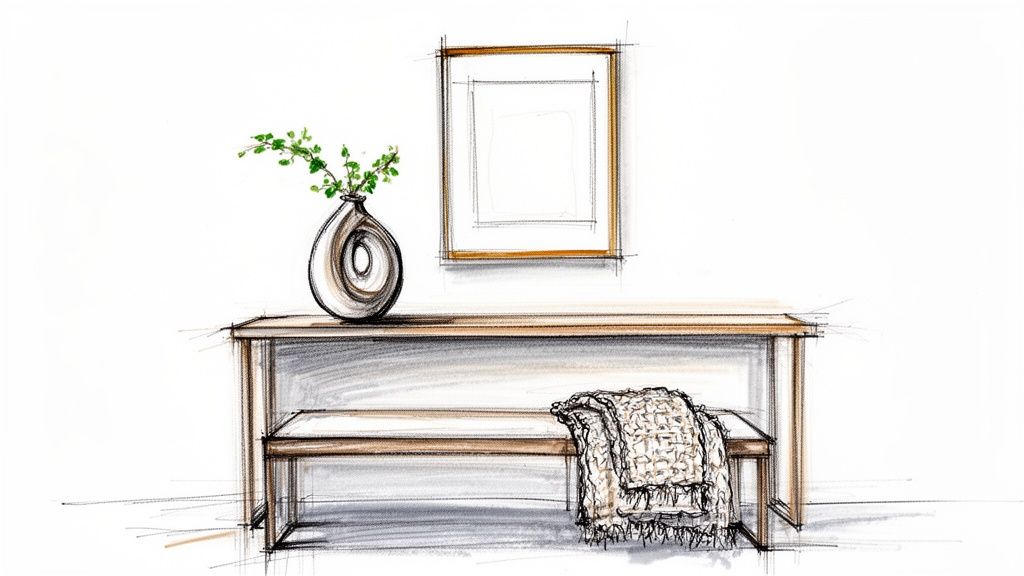
This is where you breathe life into the room. Your serene backdrop is set, the perfect furniture is in place, and now it's time for the final, most personal layer. Styling is what transforms a beautiful space into your sanctuary.
Forget about filling empty surfaces. This is about mindful curation, where every object has a purpose. The goal is to choose a few beautiful, high-impact pieces that tell your story—infusing the room with soul, without adding clutter.
Create a Compelling Focal Point
Every magnetic room has one: a focal point. It's the single, captivating element that instantly draws your eye and anchors the space. In a minimalist living room, this is your moment to let one incredible piece shine.
Instead of a collection of small trinkets, think bigger. A single, large-scale piece of abstract art leaning against a wall has a far greater impact than a gallery of tiny photos. A sculptural floor lamp with a dramatic arc is not just a light source; it's functional art that commands the room.
Your focal point must mean something to you. It's the conversation starter, the piece that makes you smile. By giving it the space it deserves, you amplify its power.
Tell a Story With Curated Objects
With your anchor in place, you can start layering in smaller objects. The secret is to group items into small, thoughtful vignettes instead of scattering them around.
A great guideline to follow is the "Rule of Three," a designer’s trick that suggests arranging items in odd numbers makes them more visually appealing. Try it out:
- On your coffee table: Arrange a tray holding a small stack of art books, a single handcrafted candle, and a small ceramic bowl.
- On a console table: Pair a tall, elegant vase like the Griseo Stoic Vase with a shorter object and a framed personal photo.
- On a bookshelf: Group three objects of varying heights and textures together, leaving plenty of negative space around them.
This technique creates curated "moments" that invite you to pause and look closer, turning ordinary surfaces into personal galleries.
Harness the Power of Texture and Greenery
In a minimalist space, texture adds warmth, depth, and comfort. It’s all about introducing elements that feel as good as they look.
Drape a soft, chunky-knit wool throw over the arm of the sofa. Add a single, luxurious velvet cushion to an armchair. A handwoven basket holding a cozy blanket brings in a natural, artisanal touch. These tactile details are what make a room feel inviting and lived-in.
Adding living greenery is the simplest way to breathe life and organic beauty into a minimalist room. A single fiddle-leaf fig in a corner or a delicate string of pearls draping from a shelf connects your space to the natural world.
This move toward a more curated, object-focused design isn't just a fleeting trend. Global interest in minimalist decor surged between 2023 and 2025, with the market for key accessories climbing into the tens of billions. It’s clear proof of a shift toward a more considered way of living. You can explore more about this cultural shift in Accio's business trend reports.
How Minimalism Connects to Sustainable Living
Minimalism is more than an aesthetic—it's a mindset that naturally weaves into the principles of sustainability. This philosophy shifts your focus away from fleeting trends and toward things with lasting value.
The bridge connecting these two worlds is the idea of quality over quantity. Instead of filling homes with fast-furniture destined for a landfill, the goal is to invest in well-crafted, durable items built to stand the test of time. This is the essence of mindful consumption.
The Power of Intentional Sourcing
Living sustainably means looking beyond the price tag and asking deeper questions: Where did this come from? and Who made it? It’s about becoming part of a healthier cycle of production and consumption.
Here's how to bring this mindset into your home:
- Source from Artisans: When you support small-scale makers, you’re not just buying a unique piece; you're helping a small business flourish.
- Opt for Natural Materials: Look for furniture and textiles made from renewable resources like wood, bamboo, linen, and wool. They are biodegradable and leave a lighter footprint.
- Support Transparent Brands: Choose companies that are open about their process. Brands that use on-demand production models, like Griseo, help eliminate waste by creating pieces only after they have a home.
A New Generation of Mindful Consumers
This move toward conscious consumption is a powerful movement driven by younger generations whose buying decisions are rooted in a desire for sustainability.
In fact, market analyses looking ahead to 2025 reveal a strong preference for limited runs, made-to-order items, and eco-conscious materials. It's a clear signal of a commitment to low-waste living. You can see more on these emerging home trends in this insightful market analysis.
By choosing fewer, better things, you're not just decorating your living room—you're casting a vote for a more responsible and sustainable future.
Ultimately, this connection is about creating a home that feels good on every level. It's a space that not only looks beautiful but reflects a commitment to living with intention. As you dive deeper, our guide to eco-friendly interior design can offer even more inspiration.
Common Questions About Minimalist Living Rooms
Stepping into minimalism can feel like a breath of fresh air, but it often brings up practical questions. Where does everything go? And how do you keep it from feeling cold?
Let’s walk through some common hurdles so you can move forward with confidence and create a space that’s not just beautiful, but truly works for you.
How Do I Keep a Minimalist Room from Feeling Cold and Empty?
This is the #1 concern, and the answer is simple: texture. A minimalist space doesn't have to be sterile. It's the perfect canvas for rich, tactile materials that invite you to relax.
Here are actionable steps:
- Drape a soft, chunky wool throw over your sofa.
- Hang linen curtains to diffuse light gently.
- Place a plush, high-pile rug under your feet for warmth.
- Layer your lighting. Use a floor lamp in a reading corner and a small table lamp to cast a warm glow. Ditch the harsh overhead light.
- Add a few houseplants to breathe life and organic warmth into any corner.
Warm minimalism isn't about what you remove; it's about what you intentionally keep. The goal is to create a room that feels like a gentle hug—calm, safe, and deeply restorative.
What’s the Secret to Storage in a Minimalist Home?
Smart, invisible storage is the unsung hero of a serene minimalist living room. The goal is to give your chosen decor room to breathe by tucking away the clutter of daily life. The best way to do this is to choose furniture that does more than one job.
Look for pieces that pull double duty: a coffee table with hidden drawers, a beautiful ottoman that opens up for blanket storage, or a sleek media console that hides electronics. When everything has a designated home behind a closed door, your space stays visually calm.
Can I Still Use Color?
Yes, absolutely! Minimalism is not a ban on color; it’s about using color with intention. Instead of overwhelming the space, use color as a deliberate, powerful accent against a calm, neutral backdrop.
Here are a few ways to do it right:
- Hang a single, bold piece of art to anchor the room's energy.
- Add a few vibrant throw pillows on a pale gray or beige sofa for a pop of personality.
- Choose an accent chair in a rich jewel tone, like deep emerald or navy, to add character without creating chaos.
The trick is to be selective. By choosing one or two complementary colors, you inject life and personality into the room while staying true to the core principles of simplicity and focus.
At Griseo Interior, we believe that creating a home you love should be a joyful, conscious process. Our made-to-order vases and decor are born from Italian artistry and a deep commitment to zero-waste practices, helping you tell your story, one beautiful object at a time.
Ready to find that perfect finishing touch? Explore our collection of minimalist accents for your living room at https://griseointerior.com.