

How to Choose a Coffee Table That Completes Your Room
Choosing the right coffee table comes down to three practical steps: measuring your space for the right proportion, defining the table's purpose for your lifestyle, and selecting a material that reflects your personality. When you get these right, your table will feel like a natural extension of your seating, not an obstacle you have to navigate. It will serve your daily life and showcase your personal style.
Finding the True Center of Your Living Space
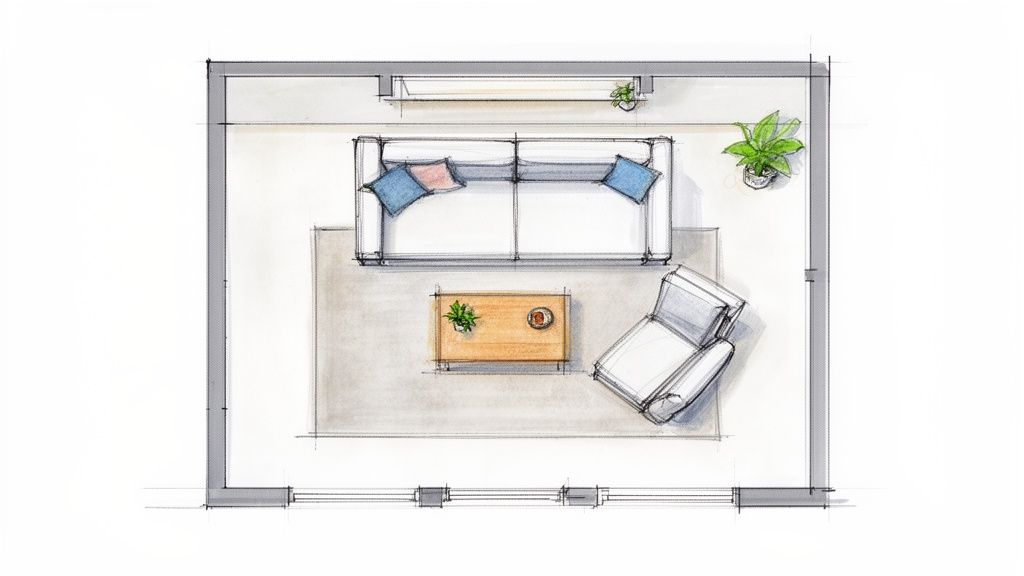
A great coffee table does more than hold your espresso; it anchors your entire living room. Use this guide to find the perfect piece—one that fits your space, works for your daily routine, and elevates your home. It’s time to find a table that acts as the functional heart of your room.
This central piece is where conversations happen, books are shared, and memories are made. As our living spaces blend work, relaxation, and socializing, you need a coffee table that can keep up.
More Than Just a Piece of Wood
Forget just filling an empty spot. A coffee table functions as “micro-architecture” within your room. The global coffee table market is projected to hit USD 5.7 billion by 2027, driven by a new appreciation for thoughtful home design. This means your choice needs to work in harmony with your seating, traffic flow, and storage needs to create a cohesive space.
Choosing a coffee table is an act of curating your home. Select a piece that not only fits but helps tell your story. To see how a coffee table can ground a room, it's helpful to explore diverse living room design scenarios.
The best coffee tables don't demand attention—they command it. They create a center of gravity that pulls the room together, making your sofa, chairs, and rug feel like a cohesive, intentional family of furnishings.
This guide will give you the core principles to make this choice inspiring, not overwhelming. We’ll cover everything from getting the measurements right to selecting the perfect material, ensuring your final decision is both beautiful and practical. Mastering these fundamentals is the first step; our detailed guide on how to arrange furniture in a living room can provide a broader perspective. This is your chance to define the soul of your room.
Getting Proportions and Placement Just Right
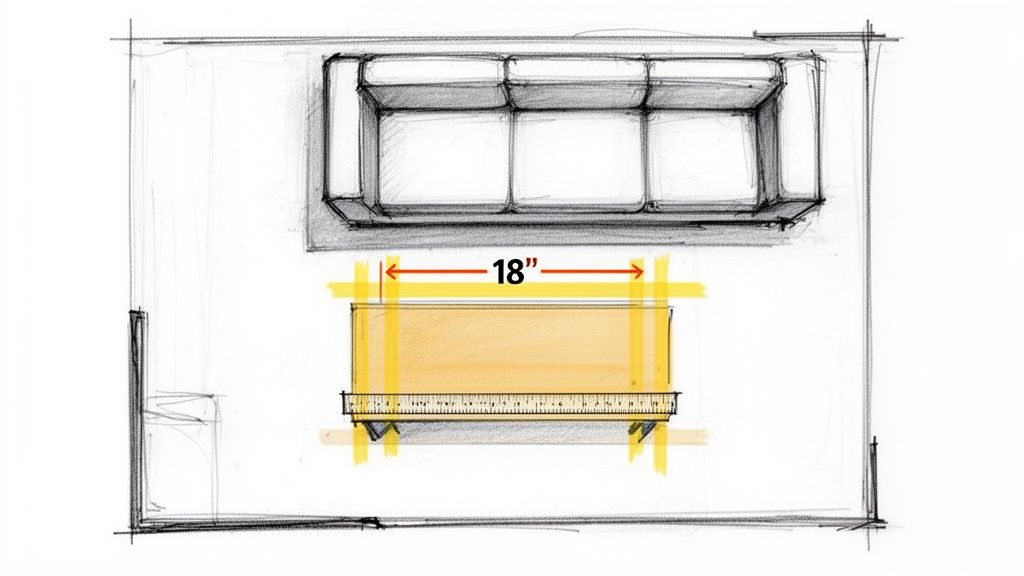
Before you fall in love with a design, you need to determine how the table will actually fit in your space. A perfectly proportioned coffee table doesn’t just look good; it creates an effortless flow that makes a room feel complete. Use these professional guidelines to ensure a perfect fit.
Mastering the Art of Measurement
The relationship between your sofa and coffee table is key to your living room's layout. Getting the scale right makes the whole space work. Get it wrong, and the table can feel like a tiny island or a clumsy obstacle.
Follow these two golden rules for perfect proportions. First, for length, your coffee table should be about two-thirds the length of your sofa. This simple ratio creates visual balance and makes the table accessible from any seat.
Second, for height, the top of your coffee table should be level with your sofa cushions or sit just one to two inches lower. This exact height means you can set down a glass or grab a book without an awkward stretch.
Your tape measure is your most important tool here. Don't eyeball it—precise measurements are what separate a table that simply 'works' from one that truly 'wows'. This is the first practical step in choosing a coffee table that feels custom-made for your room.
Defining Your Clearance Zone
The space around your coffee table is just as crucial as the table itself. This "clearance zone" is what makes your room easy to move through. It’s the difference between a room that feels spacious and one that feels cluttered.
As a rule of thumb, leave between 14 to 18 inches from the edge of your sofa to the edge of the coffee table. This provides ample legroom while keeping drinks and remotes within easy reach. Any closer feels cramped; any farther requires constant leaning.
Don't forget the other sides. Leave at least 30 inches of clear walkway between the coffee table and other furniture, like a TV console or armchair. This ensures you can move around freely.
For a quick reference, here are the key numbers to keep in mind.
Coffee Table Dimensions At a Glance
Use this table to get the essential measurements right for a professionally designed look and feel.
| Measurement Type | Actionable Tip | Why It Matters |
|---|---|---|
| Table Length | Measure your sofa; multiply by 0.67 for your ideal table length. | Creates a pleasing visual scale and ensures accessibility. |
| Table Height | Measure your sofa cushions; choose a table 1-2 inches lower. | Promotes comfort and easy access when seated. |
| Sofa Clearance | Place the table 14-18 inches away from the sofa. | Provides ample legroom while keeping items in reach. |
| Walkway Clearance | Leave at least 30 inches of clear path around the table. | Ensures a comfortable and uncluttered traffic flow. |
These simple guidelines will help you create a layout that is as functional as it is beautiful.
Visualize Your Future Table
To get a true sense of how a new piece will fit, you need to see its footprint in your room. Use this simple, hands-on trick before you buy.
Grab a roll of painter's tape or lay out newspapers to map the dimensions of a potential coffee table on your floor. This exercise lets you:
- Feel the Scale: Instantly see how much floor space the table will occupy.
- Test the Flow: Walk around the taped outline. Is there enough room to move comfortably?
- Check Proportions: Step back and look. How does the shape relate to your sofa, rug, and chairs?
This technique is especially helpful for tricky layouts. For an L-shaped sectional, you might realize a large square table fills the space perfectly. In a small apartment with a loveseat, a slim rectangular or oval shape will likely preserve precious walking room. By physically outlining the shape, you can buy with confidence, knowing you've found the perfect fit.
Aligning Your Table with Your Everyday Life
A stunning coffee table that doesn't fit how you live is just a beautiful obstacle. Once you've figured out the perfect dimensions, conduct a quick 'lifestyle audit'. Be honest about your daily routines, not an idealized version of them.
Your coffee table is a workhorse. It’s where drinks land, remotes get lost, and snacks are eaten. To find a table that genuinely serves you, focus on purpose before aesthetics.
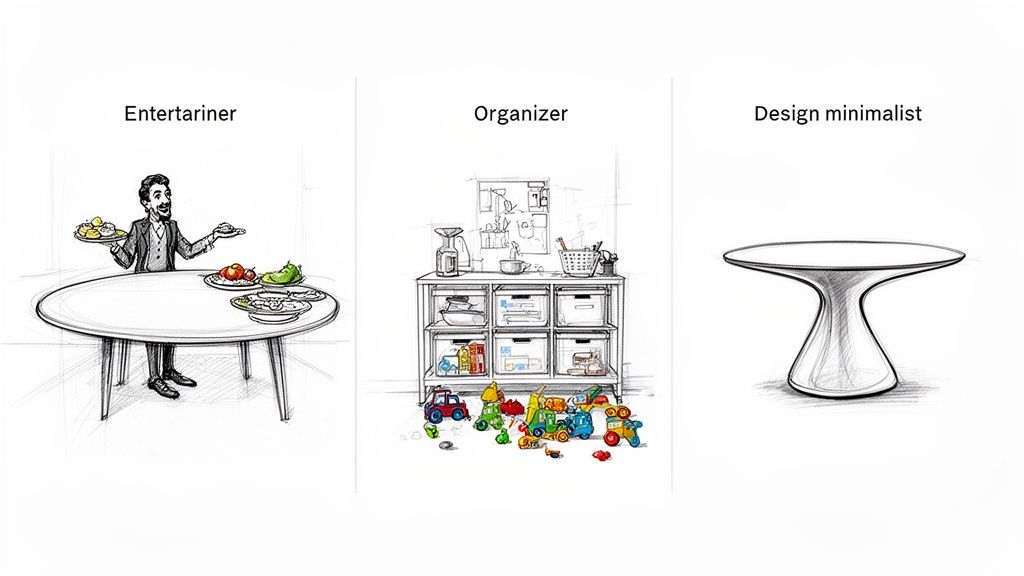
What's Your Coffee Table Persona?
Every living room has a different rhythm. Match your table to yours by identifying your primary 'persona'. This will help you zero in on the features that will make your life easier.
Which of these sounds most like you?
- The Weekend Entertainer: If your living room is party central, you need a large, sturdy surface for cheese boards, drinks, and games. Action: Choose a large, simple tabletop.
- The Family Organizer: If your world includes kids and pets, your priorities are durability and storage. Action: Look for drawers, shelves, or a lift-top to hide remotes, toys, and coasters.
- The Design Minimalist: You view a coffee table as sculpture. Form is more important than function. Action: Select a table with a clean, uncluttered aesthetic that makes a statement on its own.
- The Work-From-Home Pro: If your sofa doubles as your office, a coffee table with a lift-top that transforms into a desk is a must. Action: Prioritize a lift-top mechanism for better ergonomics.
Defining your persona is the key to choosing a table you'll love for years. It ensures your final pick supports your life, not just a trend.
Think of it this way: the perfect coffee table shouldn't force you to change your habits; it should effortlessly support them. Your lifestyle dictates the design—not the other way around.
Exploring Functional Features
Once you've identified your persona, you can zoom in on specific features that solve everyday problems. For inspiration on how a simple table can adapt to different social settings, check out these clever garden coffee table setups.
Here are some of the most popular functional options to look for.
Hidden Storage Solutions
To fight clutter, look for drawers, shelves, and secret compartments. A table with deep drawers is perfect for stashing magazines, cables, and board games. A lower shelf offers a spot for stylish books or decorative baskets.
Lift-Top Mechanisms
If you eat in front of the TV or need a temporary workspace, a lift-top is a game-changer. It elevates the tabletop to a more ergonomic height, turning your lounge area into a functional dining spot or office. This is especially useful in small spaces where furniture needs to be multifunctional.
Nesting Tables
For maximum flexibility, choose nesting tables. You get multiple tables that tuck together to save space but can be pulled apart when guests arrive. This is ideal for entertainers who need extra surfaces on demand but want a compact footprint for daily life.
By clearly defining your needs and understanding the features that support them, you can find a coffee table that is brilliantly practical, not just beautiful. This simple shift in thinking transforms the search from just buying furniture to finding an indispensable part of your home.
Choosing Materials for Style and Durability
Your coffee table’s material dictates how it looks, feels, and holds up to daily life. Use this field guide to pick a material that matches your style and stands up to your reality. The right material is a sensory experience—the warmth of wood, the cool touch of marble, the modern feel of glass. Balance personality with practicality.
Timeless Classics Meet Modern Demands
Start by considering materials that have been used for generations. These tried-and-true classics are beloved for their enduring appeal and proven resilience.
Solid Wood for Enduring Warmth
Wood is a quintessential choice because it brings unmatched warmth and organic texture to a room. From light oak to rich walnut, there's a wood for every interior.
Its greatest strength is durability. A solid wood table is an investment that can last a lifetime, gaining character with age. Minor scratches can often be sanded and refinished, making it a forgiving option for busy households. For instance, woods like acacia are known for exceptional hardness and stunning grain. You can learn more about the unique qualities of solid acacia wood in our detailed guide.
Glass for a Touch of Lightness
If you have a small space or love a clean, modern look, a glass coffee table is a brilliant choice. Its transparency creates a sense of openness, making the room feel larger. It allows your rug to remain visible while providing full function.
The main trade-off is maintenance. Glass shows every fingerprint, so keep a microfiber cloth handy. While tempered glass is strong, it's not indestructible and may not be the best fit for homes with active children.
A coffee table's material is a silent conversation with your lifestyle. Choose one that speaks your language—whether it's the forgiving warmth of wood, the sleek clarity of glass, or the bold strength of metal.
Metal for an Industrial Edge
Metal tables—from steel to brass—bring a cool, industrial, or glamorous vibe. They are incredibly durable and easy to clean, usually just needing a quick wipe-down.
A sleek black metal frame adds a sharp, graphic element, while brushed brass introduces sophisticated warmth. Metal is often paired with other materials, like a wood or marble top, to create compelling textural contrast.
Exploring Innovative and Conscious Materials
While the classics are always in style, new materials are redefining the coffee table. These options often prioritize sustainability and offer a unique, forward-thinking aesthetic.
Stone and Marble for Natural Luxury
Nothing says luxury like marble or travertine. Each slab is unique, making your coffee table a true one-of-a-kind piece. These heavy, substantial materials anchor a room with their powerful presence.
The catch is that natural stone can be porous. Marble is susceptible to staining from spills like coffee and red wine if not sealed properly and cleaned up quickly. It can also chip if struck, so it requires mindful care.
Sustainable and High-Tech Choices
For the eco-conscious, a world of exciting materials awaits. Recycled composites, sustainable bamboo, and 3D-printed polymers are changing the game. These materials often tell a story of conscious creation, blending beautiful design with reduced environmental impact. Choosing a table made from recycled or responsibly sourced materials allows you to align your home with your values.
Coffee Table Material Comparison
Use this quick-reference table to compare the key attributes of common materials and find the perfect match for your home.
| Material | Aesthetic | Durability | Maintenance | Best For |
|---|---|---|---|---|
| Solid Wood | Warm, classic, natural | High; can be refinished | Moderate; requires coasters | Families, traditional & rustic styles |
| Glass | Modern, airy, light | Moderate; can scratch/chip | High; shows fingerprints | Small spaces, minimalist decor |
| Metal | Industrial, glam, sleek | Very High; resistant to wear | Low; easy to wipe clean | Modern interiors, high-traffic areas |
| Marble/Stone | Luxurious, elegant, unique | Moderate; can stain/chip | High; needs sealing, quick cleanup | Formal living rooms, statement pieces |
| Composites | Contemporary, sustainable | High; often very resilient | Low to Moderate | Eco-conscious homes, modern design |
The best material balances your aesthetic vision with the practical demands of your household. Whether you're drawn to the timeless appeal of oak or the innovative story of a 3D-printed design, this choice is a foundational step in crafting a space that truly feels like you.
Investing in Conscious and Lasting Design
In a world of "fast furniture," choosing with intention is a powerful act. When you opt for a sustainable, made-to-order coffee table, you are investing in your home, your values, and the planet. This is your chance to choose a piece with a soul.
Mass-produced furniture often comes with a steep environmental cost, from resource depletion to waste from overproduction. Conscious craftsmanship presents a responsible alternative, creating pieces designed to last a lifetime, not just a season.
The Value of Mindful Creation
Choosing a consciously made table means you're supporting a better way of doing things. The benefits are tangible, going beyond aesthetics to create positive change. This philosophy puts quality over quantity, ensuring every item is crafted with purpose.
Here’s what you gain when you choose a made-to-order design:
- Zero Environmental Waste: Pieces are only created when ordered, eliminating excess inventory. This model, which we follow at Griseo Interior, sidesteps the material waste and energy drain of unsold stock.
- Ethically Sourced Materials: Conscious brands are transparent about their materials, favoring renewable resources, recycled content, and non-toxic finishes.
- Unmatched Quality: When an artisan focuses on one piece at a time, the attention to detail is superior. This skilled craftsmanship results in a product that mass production cannot replicate.
A thoughtfully chosen coffee table becomes a quiet statement. It says you value craftsmanship over convenience and longevity over fleeting trends. It's an anchor for your room and your principles.
This shift is reshaping the industry. A recent market analysis shows that over 70% of consumers now prioritize sustainability when buying home furnishings. Growing awareness and unpredictable material prices make on-demand production a smart model for the future. You can discover more about these market insights on Data Insights Market.
Reframing Time as a Mark of Quality
A bespoke piece requires a lead time. In our culture of instant gratification, waiting can feel like a downside. Reframe that wait: it's not a delay; it's a guarantee of quality and care.
That timeline represents the hours an artisan spends perfecting your table. It’s the time taken to source materials responsibly. It’s confirmation that this piece was made just for you, free from the shortcuts of a factory line. If you're inspired to bring this mindset to other areas of your home, our guide on how to shop sustainably offers more practical tips.
By choosing a made-to-order coffee table, you become part of a more thoughtful economy. You bring home something that is not just beautiful and functional, but also deeply meaningful—a true reflection of conscious and lasting design.
Styling Your Coffee Table Like a Designer
You’ve found the perfect coffee table. Now it's time to infuse it with your personality, transforming it from a simple surface into the heart of your living room. Styling your coffee table is less about following rules and more about telling your story. The goal is not to create an untouchable display, but to arrange things you love in a way that is both beautiful and livable.
The Secrets to Balanced Styling
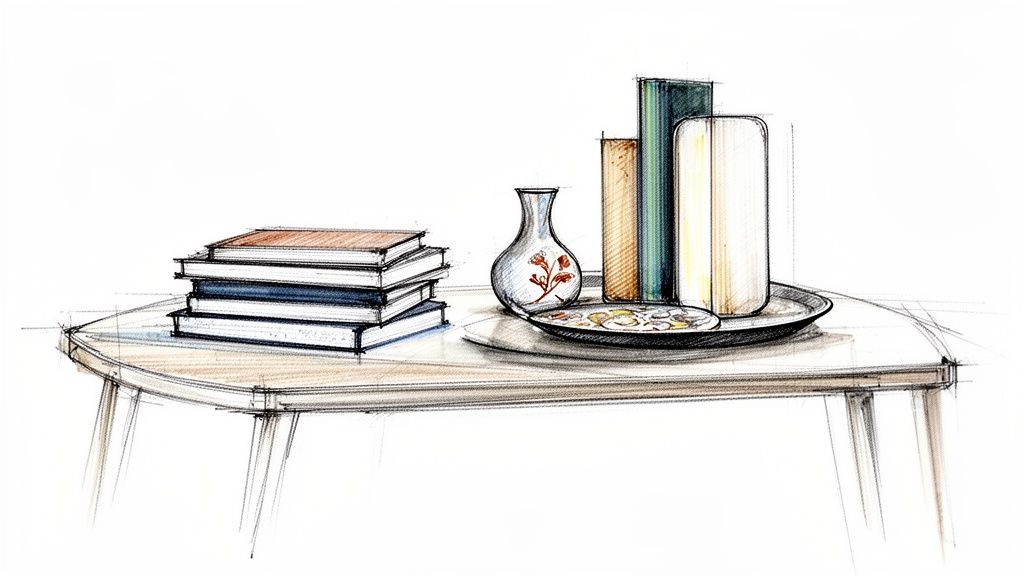
Designers often use a few core principles to create effortlessly chic arrangements. The most powerful is the Rule of Three, which suggests that items arranged in odd numbers are more engaging to the eye.
Instead of scattering objects, create a small vignette with three distinct items. For example, combine a stack of your favorite books, a sculptural vase, and a small decorative bowl. This simple trick adds instant harmony.
Your coffee table shouldn't just hold things; it should hold interest. Mix heights, textures, and shapes to create a dynamic landscape that draws the eye and invites a closer look.
Another pro tip is to play with different heights and textures to avoid a flat, lifeless look. Introduce vertical elements to create depth. For example, pair a tall, elegant vase with a low stack of books and a textured tray for a dynamic combination.
Easy Styling Recipes for Any Vibe
Styling should be creative, not complicated. Start with a simple “recipe” that you can adapt to your own taste. Use these as foundational formulas for a flawless arrangement.
Here are two ideas to get you started:
- Modern Minimalist: Start with a sleek tray to anchor the arrangement. Add a single, striking object like one of our Serenitatem vases and a curated stack of two art books. The result is clean, intentional, and impactful.
- Cozy Eclectic: Begin with a large coffee table book as your base. On top, layer a scented candle, a small plant to add life, and a personal item—like a piece of coral from a trip or a favorite vintage box.
Ultimately, choosing and styling your coffee table is an act of self-expression. It’s your chance to create a space that feels thoughtfully curated, beautifully functional, and entirely you.
A Few Final Questions You Might Have
Even with a solid plan, a few last-minute questions can arise before you make a purchase. Let’s address the most common dilemmas so you can feel completely confident in your final choice.
What If My Sofa Has a Chaise?
This is a common layout puzzle with a simple solution. With an L-shaped sectional, the standard two-thirds length rule doesn't work. The trick is to ignore the chaise.
Instead, base your measurements on the length of the main sofa section. A round or square table often fits perfectly into that L-shaped nook, making it easy to reach from every seat. A 36-inch round table, for instance, is a great choice to soften the sharp angles of a sectional while providing plenty of surface space.
Can I Put a Round Table with a Rectangular Sofa?
Absolutely. Mixing shapes is a great design move that prevents a room from feeling too boxy. A round coffee table perfectly counterbalances the long, straight lines of a traditional sofa and softens the room's overall vibe.
This pairing is especially useful in smaller living rooms. With no sharp corners to bump into, a round table improves traffic flow, making the area feel more open and inviting.
The most inspiring rooms are often built on contrast. Don't be afraid to mix a curvy table with a linear sofa—it's this gentle tension that creates a truly memorable and balanced space.
Should My Coffee Table Match My Side Tables?
No, they don't have to match. While buying a matching set is easy, it can sometimes make a room feel generic. The most interesting spaces are built by coordinating, not matching.
Aim for a common thread that ties the pieces together. This could be:
- A Shared Material: Pair a solid oak coffee table with side tables that have metal legs but a matching oak top.
- A Consistent Color: Mix different styles of tables that all share the same black finish.
- A Complementary Style: Combine a sleek, modern coffee table with vintage mid-century side tables for a layered, eclectic feel.
This approach creates a "collected-over-time" aesthetic that truly tells your story.
At Griseo Interior, we believe the perfect piece of furniture is where thoughtful design, conscious craftsmanship, and your own personal story meet. We invite you to discover our collection of made-to-order tables and decor that bring timeless Italian artistry right into your home.
Explore the collection at https://griseointerior.com.