

How to Shop Sustainably for a Home You Love
Learning how to shop sustainably is more than a trend; it's a practical approach to creating a home you'll love for years to come. It’s about choosing items that not only look good but are built to last, treading lightly on our planet. This mindset shifts you from a passive consumer to an active, thoughtful curator of your own space.
This guide provides actionable steps to make conscious choices second nature. It's about investing in pieces you’ll cherish for a lifetime, creating a home that is a true reflection of your values.
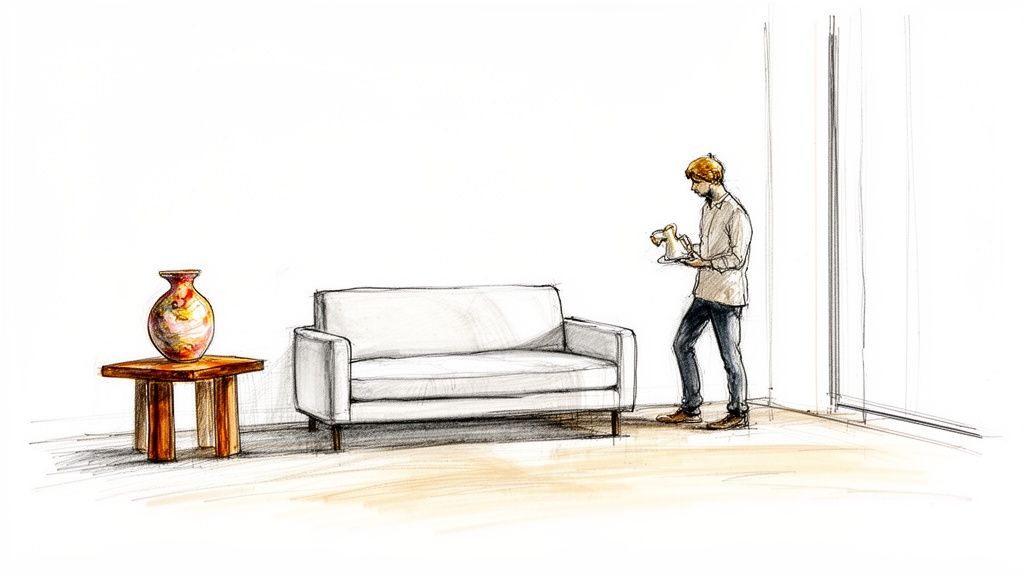
Shifting Your Mindset
The most crucial step in shopping sustainably is changing how you think about buying. Move away from the "more is more" mentality that fuels waste. Instead of asking, "What's new and trendy?", start asking, "What will last?".
This simple question creates a powerful ripple effect. When you prioritize longevity, you’ll naturally be drawn to better materials, superior construction, and classic designs that won’t feel dated next year. The result is a home that looks better, feels better, and generates far less waste. A single, well-made chair can easily outlive a dozen cheap alternatives, saving resources and money.
By choosing quality over quantity, you're doing more than buying a product. You're investing in a more responsible economy that champions craftsmanship and durability over disposability.
The Power of Conscious Curation
To become a conscious curator, make sure every item in your home earns its place. This doesn’t mean becoming a minimalist. It means every piece, from a vase on the mantel to an armchair in the corner, is a deliberate choice that adds to the harmony and function of your life.
This intentional approach leads you to ask questions and seek transparency from the brands you support. A great first step is to understand what goes into sustainable supply chain practices and see how every decision contributes to a healthier planet.
A truly sustainable product considers its entire lifecycle:
- Ethical Sourcing: Ensure raw materials were gathered with respect for the environment.
- Responsible Production: Choose items made with minimal waste and energy.
- Fair Labor: Support brands that treat their workers with dignity and respect.
- Durability: Invest in products designed to be loved for generations.
Adopting this mindset helps you create a home filled with pieces that bring you genuine joy and peace of mind.
Your Sustainable Shopping Blueprint Starts Here
The most impactful sustainable choices happen long before you click “add to cart.” By creating a personal shopping blueprint, you build a powerful defense against impulse buys and the buyer’s remorse that leads to waste.
This planning transforms buying from a reactive habit into an intentional process. It ensures every piece you bring into your home is a solution you’ll love and use for a lifetime. After all, the most sustainable item is the one you never have to replace.
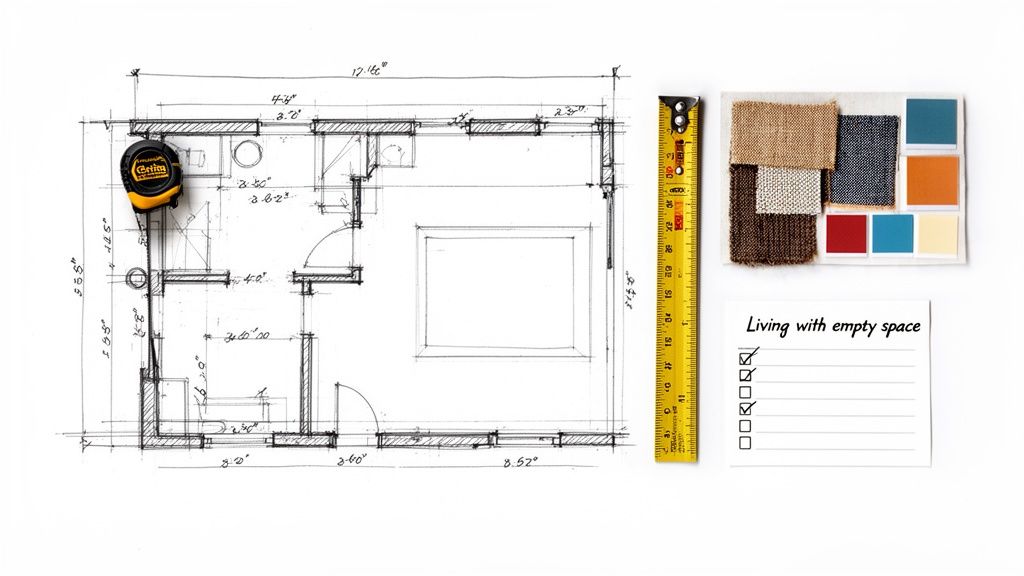
First, Separate Your Needs From Your Wants
Before browsing, take a moment for an honest gut-check about why you want something. Is there a genuine functional gap in your home, or are you chasing a fleeting trend?
For example, if you think you "need" a new accent chair, dig deeper. Is your current seating truly insufficient? Or does the space just feel empty? If it’s the latter, try rearranging existing furniture or adding a plant before buying something new.
Actionable Tip: Live with an empty space for a few weeks before filling it. If you still feel the need for that item after time has passed, you can feel confident it's a genuine need, not just a passing want.
This mindful pause is your best tool for sidestepping overconsumption. When you do decide to buy, having a clear intention helps you find the perfect piece. Getting familiar with expert thrift store shopping tips is a great way to source items intentionally and with purpose.
Then, Master Your Space and Style
Once you’ve confirmed a genuine need, get practical. An item that doesn’t fit your space or style is a primary source of waste. Avoid this common pitfall with two key actions.
First, measure everything. Don't just measure the spot where the new piece will live. Measure doorways, stairwells, and any tight corners it must pass through. A sofa that can’t get into your apartment is a logistical and environmental nightmare.
Second, create a focused mood board. Collect images, fabric swatches, and color palettes that capture the exact look and feel you want. This visual guide will keep you on track and prevent you from buying something that clashes with your vision. From here, you can start digging into specific eco-friendly home furnishings that fit your aesthetic.
Finally, Create Your Personal Purchase Checklist
With a clear need, precise measurements, and a defined style, you’re ready to build your personal checklist. Use this as a filter to ensure any potential purchase aligns with your values and vision.
This checklist transforms passive shopping into an active investigation, empowering you to make choices you can feel proud of.
Your Sustainable Purchase Planning Checklist
| Checklist Item | Why It Matters for Sustainability | Action Step |
|---|---|---|
| Function First | Ensures the item serves a real purpose, avoiding decorative clutter that goes unused and eventually becomes waste. | Clearly define the primary and secondary functions the item must fulfill. No exceptions! |
| Longevity and Durability | Prioritizes items built to last, reducing the need for replacements and minimizing what ends up in a landfill. | Examine the materials, construction quality, and scour reviews for comments on the product's lifespan. |
| Material Transparency | Helps you choose renewable, recycled, or responsibly sourced materials, dramatically reducing your environmental impact. | Research the brand’s sourcing practices. Look for third-party certifications like FSC for wood. |
| Timeless Aesthetic | A classic design that you truly love will outlast fleeting trends, ensuring it stays in your home for years to come. | Review your mood board and ask yourself honestly, "Will I still love this piece in five or ten years?" |
Use this checklist every time you consider a new purchase. It’s your secret weapon for building a home that is not only beautiful but also a true reflection of conscious, sustainable living.
Become a Materials Detective
With your plan in hand, it’s time to become a materials detective. Learn to move beyond vague “eco-friendly” labels to understand the true story behind an object.
It’s not about memorizing complex scientific terms. It’s about recognizing the signs of quality and responsibility. When you can confidently tell the difference between a renewable resource and a finite one, or spot a low-impact finish, you unlock a new level of purpose in your design choices.
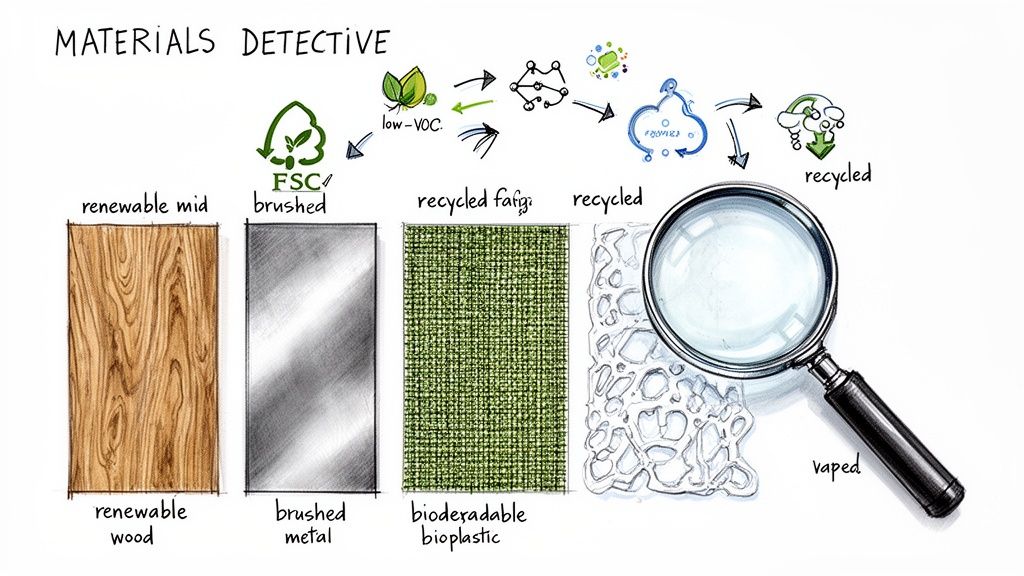
A Quick Guide to Sustainable Lingo
The world of sustainability has its own language. Here are a few key terms to look for to make smarter decisions.
- FSC-Certified: The Forest Stewardship Council (FSC) label guarantees that wood was harvested from responsibly managed forests. If you see this on a dining table or picture frame, you can trust it didn't contribute to deforestation.
- Low-VOC: Volatile Organic Compounds (VOCs) are chemicals in many paints and finishes that can pollute indoor air. Choosing low-VOC or zero-VOC pieces means a healthier, safer space for you and your family.
- Recycled vs. Upcycled: Recycled materials (like glass or plastic) are broken down to create something new. Upcycled materials are creatively repurposed without being broken down, transforming waste into something more valuable—like a vase crafted from discarded industrial metal.
Thinking About the Full Lifecycle
To shop with intention, think about an object’s entire life—from where its materials came from to where it will end up. To make choices that are good for the long haul, explore the full spectrum of eco-friendly building materials.
Consider a cheap, mass-produced plastic accent piece. It likely started as petroleum, was made in an energy-guzzling factory, and will end up in a landfill for centuries.
Now, compare that to a modern, 3D-printed vase made from a biodegradable bioplastic derived from corn starch. The material is renewable, and because it's produced on-demand, there’s no excess inventory or waste.
Choosing items made with circularity in mind—from renewable resources to thoughtful production—is how you vote for a system that respects our planet.
Asking the Right Questions
Genuinely sustainable brands are proud of their process and are happy to answer your questions. Your curiosity is a powerful tool that pushes the industry toward greater transparency.
And it’s working. Globally, 89% of consumers have already shifted their habits to be greener. This isn’t just about feeling good—80% are willing to pay more for products that align with their values.
Don’t hesitate to reach out to a brand before you buy. A quick email or message can tell you everything.
Here are a few great questions to ask:
- "Where do you source your raw materials?" (Look for specifics, not vague promises.)
- "Can you tell me more about your production process?" (This helps you learn about waste, energy use, and production scale.)
- "What's the end-of-life plan for this item?" (Is it repairable, recyclable, or biodegradable?)
A brand that gives you clear, honest answers is a brand that has woven sustainability into its DNA, not just its marketing. That's a company you can feel good about supporting.
Embrace the Slow Decorating Movement
Resist the pressure to have a perfectly finished home right now. The "slow decorating" movement is a thoughtful rebellion against the frantic cycle of disposable trends. Instead of instant gratification, choose intention.
This means championing two of the most soulful ways to furnish a home: commissioning made-to-order pieces and unearthing second-hand gems. You're either choosing an item crafted just for you or one with a rich history waiting for its next chapter.
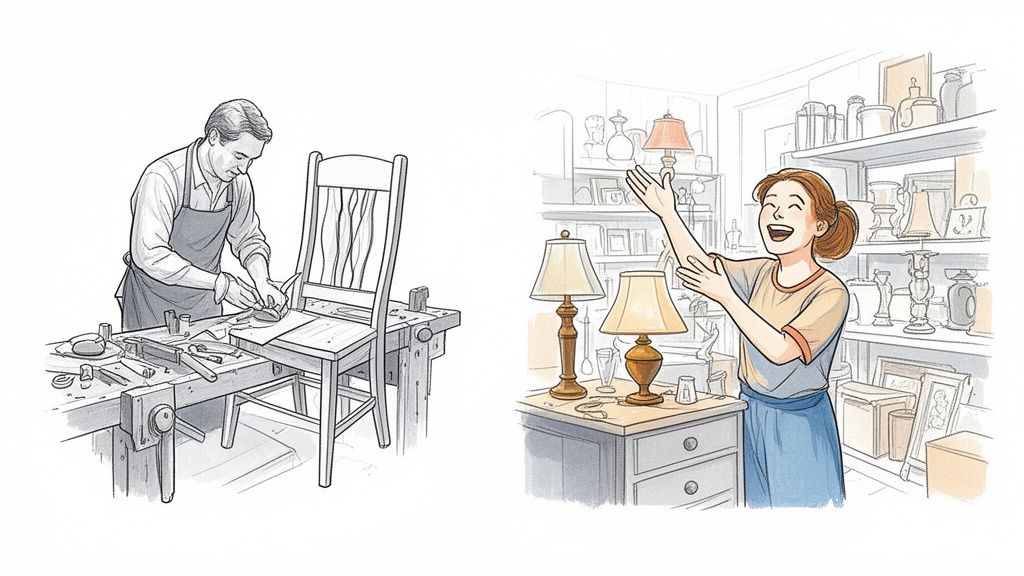
The Beauty of Made-to-Order
Overproduction is one of the home goods industry's biggest problems. When companies guess wrong about what consumers want, unsold inventory often heads to the landfill. Choosing made-to-order is a powerful way to fight this waste.
When something is made after you order it, the concept of "excess inventory" disappears. Every bit of material and artisan time goes into creating something that already has a home. It’s a responsible model that brands like Griseo Interior are built on, ensuring every single piece is crafted with purpose.
This is a major shift. A 2025 report found that 80% of European consumers now prefer short supply chains, a clear signal for more localized, responsible production. The same study highlights how Italy leads in sustainable practices, proving that concepts like "Made in Italy" connect with conscious buyers. You can dive deeper into these findings in the 2025 Sustainable Retail Barometer from BearingPoint.
Yes, this path requires patience. But the longer lead time is part of the experience. It transforms waiting into anticipation—a chance to appreciate the story and craftsmanship behind the piece being made just for you.
Unearthing Second-Hand and Vintage Treasures
The other side of slow decorating is the thrill of hunting for second-hand and vintage pieces. Every pre-loved item brings its own story into your home, adding layers of character that a new, mass-produced item cannot replicate.
Shopping this way is one of the most impactful sustainable actions you can take. You’re diverting objects from landfills and reducing the demand for new manufacturing, which saves water, energy, and raw materials.
Your home becomes a curated collection of stories. Some are from a modern artisan who crafted a vase just for you; others are from a past era, waiting for you to write their next chapter. This blend of new and old is what makes a space truly personal and timeless.
Practical Tips for Sourcing Pre-Loved Gems
Jumping into second-hand shopping can feel overwhelming at first, but it quickly becomes an inspiring treasure hunt. The secret is knowing where and what to look for.
Where to Hunt:
- Local Thrift Stores & Charity Shops: Go often, since the inventory is always changing. Look for pieces with great "bones" that a little TLC can transform.
- Online Marketplaces: Sites like Facebook Marketplace, Chairish, and Kaiyo make the hunt easier with searchable inventories. Set up alerts for specific designers or styles you’re after.
- Antique Malls & Flea Markets: These are great spots for unique, high-quality vintage. You'll often find solid wood furniture, original art, and one-of-a-kind décor built to last.
- Estate Sales: Estate sales are goldmines for well-maintained furniture from a specific era.
What to Look For:
When you find something promising, channel your inner detective with this quick checklist.
- Check the Bones: Is it solid? For furniture, look for quality details like dovetail joints and choose solid wood over particleboard. Give the piece a wiggle—does it feel sturdy?
- Inspect for Deal-Breakers: A few scratches are character and often easily fixed. Be wary of major structural damage, deep water stains, or strong, musty smells that are nearly impossible to remove.
- Imagine the "After": Look past dated fabric or a questionable paint color. A chair with a classic silhouette can be reborn with new upholstery. A dresser with great lines is just a coat of low-VOC paint away from being a showstopper.
By embracing both the patient art of made-to-order and the adventurous spirit of second-hand hunting, you’re creating a home that is layered, interesting, and authentically yours.
Give Your Pieces a Long and Happy Life
Bringing a new piece into your home isn’t the finish line; it’s the beginning of its sustainable journey. True sustainability happens in the small, daily acts of care that turn an object into a cherished heirloom. It's about becoming a steward of your belongings, nurturing them so they can bring you joy for a lifetime.
When you restore instead of replace, you build a deeper connection to the things you own. By investing time and care into the items you’ve thoughtfully chosen, you're honoring the natural materials they're made from and the skilled hands that crafted them.
Master the Art of Material-Specific Care
Every material has its own needs. Learning the language of wood, ceramics, and textiles is the secret to extending their life and keeping them beautiful for years. Proper care prevents small issues from becoming big problems.
-
For Wooden Furniture: Dust regularly with a soft, dry cloth to prevent surface scratches. Keep wood out of direct sunlight and away from heat sources to prevent fading and drying. Once or twice a year, nourish it with a quality polish or wax to restore moisture and shine.
-
For Ceramic Vases: Handle ceramics with care to avoid chips. Clean with a soft cloth and mild soap; avoid abrasive scrubbers that can scratch glazes. For stubborn stains inside a vase, a paste of baking soda and vinegar works wonders.
-
For Textiles: Always check the care label first. For throw blankets or cushion covers, wash in cold water on a gentle cycle to prevent shrinking and fading. Line-drying is the most sustainable choice, as it saves energy and is gentler on the fabric.
See Repair as a Creative Act
In a disposable culture, a small chip or tear can feel like a failure. Instead, see it as an opportunity. Embracing repair is one of the most powerful sustainable acts, turning moments of "damage" into creative restoration projects.
This mindset challenges the idea that things must be perfect to be valuable. It celebrates resilience and history, allowing the story of an object to grow with you.
A small chip in your favorite vase doesn't have to be the end of its story. With a kintsugi-style repair, using gold lacquer to mend the break, that "flaw" becomes its most beautiful and defining feature. It’s a powerful reminder that there is profound beauty in imperfection and healing.
This approach not only saves an item from the landfill but also gives it a unique character. By learning a few simple repair skills, you empower yourself to become a creator, not just a consumer. Looking for more inspiration? Discover practical tips in our guide on how to reduce waste at home, where we explore other simple swaps and habits.
Repurpose with Imagination
Sometimes, an item's original purpose runs its course, but its life is far from over. This is where creative repurposing comes in. Before discarding something, ask yourself: "What else could this be?"
The answer might surprise you. A ceramic pitcher with a hairline crack might not hold water, but it could become a stunning utensil holder or a pot for a succulent. An old wooden ladder can be transformed into a unique, rustic bookshelf.
This imaginative thinking is the heart of a circular mindset. It lets you see potential where others see waste, helping you shrink your environmental footprint while adding personal ingenuity to your home. By caring for, repairing, and creatively repurposing your belongings, you're practicing the deepest form of sustainable living.
Your Go-To Sustainable Shopping Checklist
You’ve explored the mindset, mastered planning, and learned to decode materials. Now, let’s pull it all together into a final filter to run through before you welcome anything new into your home.
This isn’t about perfection. It’s about making real progress, one thoughtful choice at a time. This framework turns abstract ideas about sustainability into easy, actionable questions.
The Foundation: Have I Planned for This?
Pause before adding something to your cart. The most sustainable purchase is an intentional one. This first step stops waste before it starts.
Ask yourself these quick questions:
- Is this a genuine need or just a fleeting want? Have I lived with this empty space and truly felt the need for something there?
- Does it actually fit my space and my style? Have I measured everything twice and confirmed it aligns with my mood board?
- Will I still love this in five years? Does it feel timeless to me, or am I just jumping on a trend?
This initial gut check ensures that anything you bring into your home has a real purpose and a guaranteed place in your life for the long haul.
The Materials: Do I Understand Its Origin?
Next, channel your inner materials detective. A sustainable piece is made with respect for the planet, from raw material to final form. Look past pretty marketing for genuine transparency.
Every material tells a story. When you learn to read them, you're not just buying an object; you're supporting an entire supply chain that either helps or harms our world. Your choice really does make a difference.
Before you commit, do a little digging:
- What is it actually made of? Look for renewable resources like FSC-certified wood, durable metals, or innovative bioplastics.
- Are there any third-party certifications? Look for trusted labels like GOTS for textiles or Cradle to Cradle for products designed for a circular economy.
- Is the brand transparent? A responsible company won't hide its story. They’ll be proud to tell you where and how their products are made.
The Make: Is It Built to Last?
Quality is the cornerstone of sustainable living. An item built with care and craftsmanship is an investment that avoids the need for replacement. This step is about choosing durability over disposability.
Examine any potential purchase with a critical eye:
- Inspect the Construction: Get hands-on. Look for signs of quality, like solid wood instead of particleboard, or clean, strong seams on upholstery.
- Read the Reviews: What are others saying about its longevity? Hunt for comments about how it holds up after a year or two, not just one week.
- Consider Repairability: Does it look like something that could be fixed if it broke? High-quality items are often designed with maintenance in mind, using standard screws instead of glue.
The Model: Does This Support Responsible Production?
Your money is your voice. Every purchase is a vote for the kind of world you want. By choosing to support responsible production models, you’re directly pushing back against waste and overconsumption.
This is your chance to champion a better way of doing things:
- Is it made-to-order or small-batch? This is a direct stand against the waste of overproduction and unsold inventory.
- Is it second-hand or vintage? Choosing pre-loved is one of the most powerful sustainable acts there is.
- Does the brand value its workers? Support companies that are open about prioritizing fair labor and ethical working conditions.
The Heart: Will I Love and Care for This?
Finally, the most important question of all. A truly sustainable home is filled not just with "stuff," but with objects that you genuinely cherish. This is the emotional core of conscious consumption.
Ask yourself, honestly: Does this item bring me true joy?
If the answer is a resounding yes, then you know you’ll be inspired to care for it, repair it if needed, and appreciate it for years to come. This final check connects your head to your heart, completing the circle of intentional, beautiful, and sustainable living.
Your Questions on Sustainable Living, Answered
Starting to shop more consciously can bring up a lot of questions. Let's clear up some of the most common ones so you can feel confident in building a home that’s not just beautiful, but also kind to our planet.
Does "Sustainable" Just Mean "More Expensive"?
This is a common misconception. While it's true that some thoughtfully made pieces have a higher upfront price, the real story is about long-term value.
Think of it as an investment. A well-crafted piece built to last for generations means you're not spending money to replace a cheap, broken alternative every few years. Additionally, shopping second-hand is one of the most budget-friendly ways to find incredible, one-of-a-kind treasures.
What's the Real Difference Between Eco-Friendly and Sustainable?
These words are often used interchangeably, but they point to different levels of impact.
-
Eco-friendly usually focuses on a single aspect of a product. A good example is a cleaning spray made with non-toxic ingredients—it's kinder to the environment in that specific way.
-
Sustainable takes a much wider, holistic view. It considers the entire lifecycle of an item: where the raw materials came from, whether workers were treated fairly, how the product is made, how long it will last, and what happens at its end of life.
A genuinely sustainable piece is eco-friendly, ethically made, and built for the long haul. It’s a complete philosophy that considers people, the planet, and purpose.
How Do I Avoid "Greenwashing"?
Greenwashing is a marketing trick where a brand tries to look more sustainable than it is. Your best tool against it is a curious mind and an eye for detail.
Watch out for vague words like "all-natural," "green," or "eco" without any proof to back them up. Real sustainability is transparent. If a brand isn’t open about its practices, that's often a red flag.
The most reliable way to cut through marketing fluff is to look for credible, third-party certifications. For wood, look for the FSC (Forest Stewardship Council) logo. For textiles, certifications like GOTS (Global Organic Textile Standard) are the gold standard. These logos tell you that a product has met strict environmental and social criteria, giving you the confidence to support brands that are truly doing the work.
At Griseo Interior, we live by the power of intentional design and responsible production. Discover our collection of made-to-order vases, furniture, and décor, where timeless Italian craftsmanship meets modern, sustainable practices. Each piece is created just for you, eliminating waste and bringing a story of purpose into your home. Explore authentic Italian design at griseointerior.com.